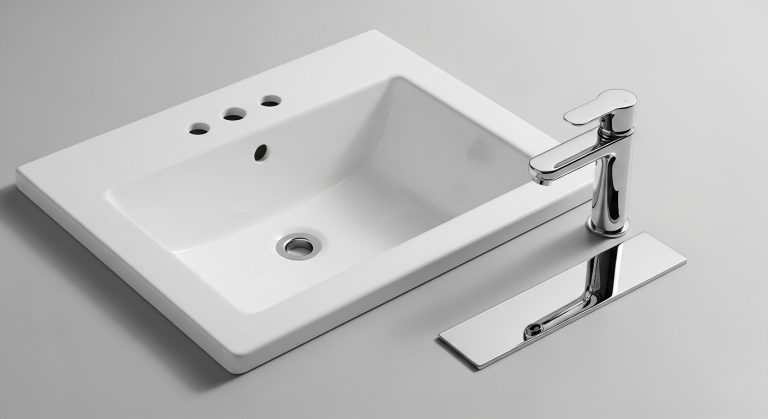
Where Can You Find a Deck Plate Faucet Nearby, and How Do You Pick the Right One?
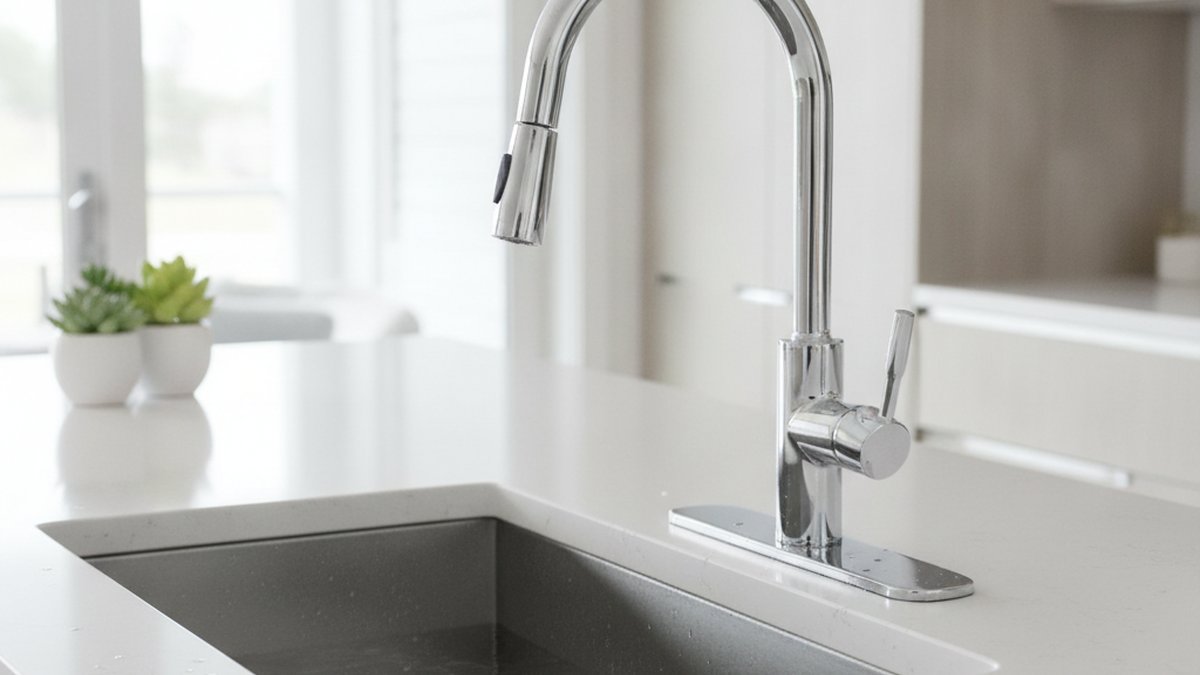
If you’ve been searching for a deck plate faucet nearby, you’re almost certainly looking at a sink with three holes and trying to cover them cleanly with one faucet. A deck plate (also called an escutcheon plate) is the wide base that sits under the faucet and hides the two outer holes, so a single-handle faucet can live on a sink that was drilled for a three-piece set. The good news: these are one of the most common faucets sold, so “nearby” options exist almost everywhere. The trick is matching the plate to your hole spacing and finish before you drive across town.
Below, we’ll answer the real questions people ask before buying — what a deck plate faucet actually is, where to find one locally versus online, how to measure so it fits, and how to tell a good one from a rattly one that leaks in a year. At Afinion Home we design and test deck-mount faucets, so we’ll give you the honest fit-and-finish details, not just a shopping list.
What Exactly Is a Deck Plate Faucet, and Why Would You Need One?
A deck plate faucet is a faucet that comes with (or accepts) a wide base plate that covers extra sink or countertop holes. You need one when your sink is drilled for three holes — typically spaced 4 inches apart from center to center — but you want the clean look of a single-handle or single-hole faucet. The deck plate bridges the gap so you’re not staring at two empty, exposed holes.
Here’s the situation almost everyone is in when they search this: you have an older sink or a builder-grade sink with three pre-drilled holes. A modern single-hole faucet only needs one hole. Without a deck plate, you’d have two orphan holes flanking your new faucet. The deck plate solves that in one part. It’s the same idea whether it’s a bathroom lavatory or a kitchen sink — cover the holes, keep it watertight, make it look intentional.
There are two ways deck plates show up:
- Integrated: the faucet is built on a permanent wide base (common on many kitchen faucets and “centerset” bathroom faucets where spout and handles share one 4-inch body).
- Optional/included accessory: a single-hole faucet ships with a separate deck plate you can install or leave off. This is the flexible choice — use the plate on a 3-hole sink, skip it on a 1-hole sink.
Not sure whether you even need the plate? We break down every scenario in our guide on whether you need a deck plate for your faucet — worth two minutes before you buy the wrong thing.
Where Can I Buy a Deck Plate Faucet Nearby Today?
The fastest local options are big-box home-improvement stores, plumbing-supply houses, and kitchen-and-bath showrooms — in that order for speed, price, and selection respectively. If you need it in your hands this afternoon, a big-box store almost certainly has several single-handle kitchen and bathroom faucets with deck plates in stock.
Here’s how the “nearby” choices stack up so you can pick the right trip:
| Where to buy nearby | Best for | Typical price range | Watch out for |
|---|---|---|---|
| Big-box (Home Depot, Lowe’s, Menards) | Same-day pickup, common finishes | $40–$250 | Limited premium finishes; boxes sometimes missing the deck plate accessory |
| Plumbing-supply house | Higher-quality valves, expert advice | $120–$500+ | May be trade-focused; call ahead for retail hours |
| Kitchen & bath showroom | Seeing finishes in person, full sets | $150–$600+ | Often order-to-ship, not same-day |
| Hardware store (Ace, True Value) | Quick basics, repair parts | $35–$180 | Thin selection of styles and finishes |
| Online (direct or marketplace) | Exact model, finish, and price match | $50–$400 | 1–5 day wait; verify hole spacing before ordering |
One honest tip: “nearby” is great for grabbing a standard chrome or brushed-nickel faucet today, but it’s a bad way to shop for a specific finish like matte black or champagne bronze. Local shelves carry the safe sellers. If you have your heart set on a particular look, checking the exact model online — then matching it to a nearby store’s stock — beats settling for whatever’s on the endcap. The same logic applies to specialty finishes generally, as we cover in our piece on finding an oil rubbed bronze bathroom faucet nearby that actually lasts.
How Do I Know a Deck Plate Faucet Will Fit My Sink?
Measure the distance between the centers of your outer sink holes. If it’s 4 inches, you have a standard “centerset” 3-hole configuration and virtually every deck plate faucet will fit. If it’s 8 to 16 inches, you have a “widespread” layout that needs a different faucet type, not a single deck plate.
This one measurement decides everything, so do it before you shop:
- Count your holes. Look under the sink or on the deck — 1, 3, or (rarely) 2 or 4.
- Measure center-to-center on the outer holes. 4 inches = centerset/3-hole. 6–16 inches = widespread. Single hole = you only need a faucet with an optional deck plate.
- Check the hole diameter. Standard faucet holes are 1⅜ inches (about 35 mm). Most faucets fit; oversized bodies may need 1½ inches.
- Measure your deck plate footprint. A typical kitchen deck plate is about 10 inches long; a bathroom centerset plate is about 4–6 inches. Make sure it clears your backsplash and any soap dispenser hole.
If your holes are spaced 8 inches apart, a deck plate faucet is the wrong tool — you want a widespread faucet with separate spout and handles. The difference trips people up constantly, so if your spacing came back wide, read centerset vs. widespread faucets before you buy. Guessing here is the number-one reason a “nearby” faucet gets returned.
And if you’re covering a single leftover hole rather than mounting a faucet over it — say, an old sprayer or soap-dispenser hole you don’t want — a deck plate isn’t the right fix at all; a dedicated hole cover is. We compare those in our guide to the best faucet hole cover for an unused sink hole.
What Should I Look for So the Faucet Actually Lasts?
Prioritize a solid-brass or stainless body, a ceramic-disc cartridge, and a certified lead-free waterway (NSF/ANSI 61 and 372) — those three things separate a faucet that lasts 15 years from one that drips in 18 months. Finish and brand name matter less than the guts.
Quick rundown of what each spec buys you:
- Ceramic-disc cartridge: the valve that turns water on and off. Ceramic discs resist wear and hard-water grit far better than rubber washers — this is the single biggest predictor of a drip-free life.
- Solid brass or stainless body: heavier in your hand, resists corrosion. Zinc-alloy bodies are cheaper and lighter and tend to fail at threaded connections over time.
- Certified lead-free waterway: look for NSF/ANSI 372 compliance. It’s the law in the U.S. under the Safe Drinking Water Act, but quality varies — reputable brands publish it. If you care about water quality generally, see the best lead free faucet brands.
- Finish rating: PVD (physical vapor deposition) finishes resist scratching and tarnish much better than plated ones. Worth it in a hard-water home.
- Real warranty: a limited lifetime warranty on the faucet and finish signals the maker expects it to last. A 1-year warranty is a quiet warning.
A faucet you can pick up nearby and a faucet built to last aren’t mutually exclusive — but the cheapest boxed unit on the shelf is usually zinc-bodied with a rubber-washer valve. Spend a little more, or order the better-built model.
Can I Install a Deck Plate Faucet Myself, or Do I Need a Plumber?
Most people can install a deck plate faucet themselves in 45–90 minutes with basic tools — a basin wrench, an adjustable wrench, plumber’s putty or silicone, and a towel. You only need a plumber if your shutoff valves are seized, your supply lines are corroded, or you’re moving the faucet’s location.
The basic sequence for a deck-mount install:
- Turn off the hot and cold shutoff valves under the sink and open the faucet to release pressure.
- Disconnect the supply lines and remove the old faucet’s mounting nuts (a basin wrench earns its keep here).
- Clean the deck, then set the new deck plate with its gasket or a bead of silicone so water can’t seep under it.
- Drop the faucet through, hand-tighten the mounting nut from below, then snug it with the basin wrench — firm, not gorilla-tight.
- Connect the supply lines, turn the water back on slowly, and check every joint for drips.
Kitchen installs follow the same logic with a couple extra steps for the sprayer hose and weight; our full step-by-step kitchen faucet install guide walks through it. If you’re brand-new to picking fixtures altogether, how to choose the right bathroom faucet is a good primer. The one place people slip up: over-tightening the deck plate and cracking it, or skipping the gasket and getting a slow leak that pools under the sink. Take the extra minute on the seal.
Which Finish Should You Choose for a Deck Plate Faucet?
Choose the finish that matches your other hardware and hides your home’s water conditions — chrome and brushed nickel are the safe, widely stocked, easy-to-clean choices, while matte black and bronze look great but show water spots and dust more in hard-water homes. The finish is the part you’ll see every day, so match it to your maintenance tolerance, not just the photo.
A few real-world notes by finish:
- Chrome: cheapest to buy nearby, most reflective, shows water spots but wipes clean instantly. Nearly universal fit with existing hardware.
- Brushed nickel: warm, forgiving of fingerprints and spots, the best “hides everything” choice for busy kitchens.
- Matte black: striking and modern, but hard water leaves visible chalky spots — plan on wiping it more.
- Bronze / oil-rubbed bronze: traditional and rich; living finishes can patina over time, which some people love and some don’t.
If your home has hard water, whatever finish you pick, you’ll fight mineral spotting — and it’s worth knowing how to clean hard water stains from a faucet before they etch in. A brushed finish plus a quick weekly wipe is the lowest-maintenance combo for most families.
Author Note & Why Trust Afinion Home
About the author: This guide was written by the Afinion Home fixtures team, who spec, install, and pressure-test deck-mount faucets as part of our product development. We’ve mounted these on everything from 30-year-old cast-iron sinks to new quartz countertops, so the fit-and-seal advice here comes from actual installs, not a spec sheet.
Brand credibility: Afinion Home designs bath and kitchen faucets built around solid-brass bodies, ceramic-disc cartridges, and certified lead-free waterways that meet NSF/ANSI 61 and 372. Our deck-mount faucets are cycle-tested to the industry-standard ASME A112.18.1 / CSA B125.1 durability benchmark — hundreds of thousands of open-close cycles — and backed by a limited lifetime warranty on the faucet and finish. That’s the standard we hold whether you buy from us or use this guide to buy elsewhere.
FAQ
Is a deck plate faucet the same as a centerset faucet?
Mostly, yes, in the bathroom. A centerset faucet combines the spout and handles on a single 4-inch base that acts as a deck plate over a 3-hole sink. In the kitchen, “deck plate faucet” usually means a single-hole faucet sitting on a wide optional plate. Both cover extra holes — the difference is just how the parts are packaged.
Can I use a deck plate faucet on a single-hole sink?
Yes. If your sink has one hole, you can install the faucet without the deck plate for a clean minimal look, or add the plate if you like the wider base. That flexibility is exactly why single-hole faucets with an included deck plate are so popular — one product fits both 1-hole and 3-hole sinks.
What size deck plate do I need?
For a standard 3-hole bathroom sink with 4-inch spacing, a 4–6 inch centerset plate covers it. For a kitchen sink, deck plates run about 10 inches to span three holes with room for the spout base. Measure your outer-hole center-to-center distance and buy a plate at least that wide plus overlap.
Will any store nearby have my exact finish in stock?
Not reliably. Local stores stock chrome and brushed nickel deeply but carry limited matte black, bronze, or champagne bronze. If you want a specific finish, call ahead to confirm stock or order the exact model online and pick a nearby store only for a same-day, common-finish faucet.
Do I need plumber’s putty or silicone under the deck plate?
You need one or the other to seal the plate against splashed water. Many modern deck plates include a rubber gasket, in which case you don’t add anything. If yours doesn’t, run a thin bead of 100% silicone or a rope of plumber’s putty under the edge, set the plate, and wipe the squeeze-out. This prevents slow leaks under the sink.
How much should a good deck plate faucet cost?
Expect $60–$150 for a solid mid-range faucet with a brass body and ceramic cartridge, and $150–$350 for premium finishes and features like pull-down sprayers. Below about $50 you’re usually getting a zinc body and rubber-washer valve that won’t last. The cartridge and body material matter far more than the sticker.