
Widespread Faucet by Delta or Afinion Home: Which Should You Buy for Your Bathroom Remodel?
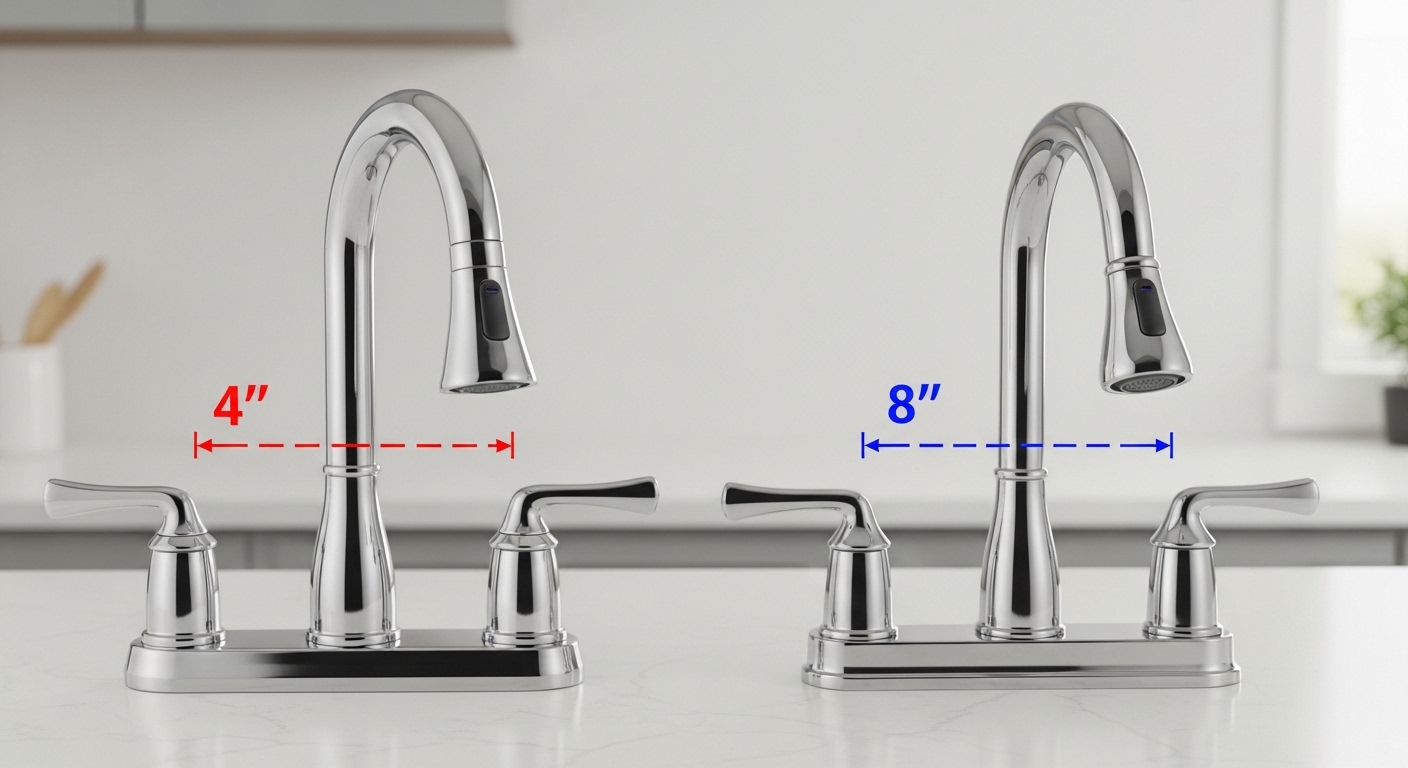
If you’ve been comparing a widespread faucet Delta listing against the alternatives, you’ve already made the smartest first decision: you know you want a widespread configuration, not a centerset. That means you have three separate holes in your sink or countertop (or you’re drilling them), spaced 8 inches or more apart, and you want a spout and two handles that stand on their own. This guide answers the questions people actually type and ask out loud about these faucets — how they measure, whether Delta is worth the premium, what fits an 8-inch spread, and where Afinion Home fits into the picture — so you can order the right one once and never think about it again.
What exactly is a widespread faucet, and how is it different from Delta’s centerset models?
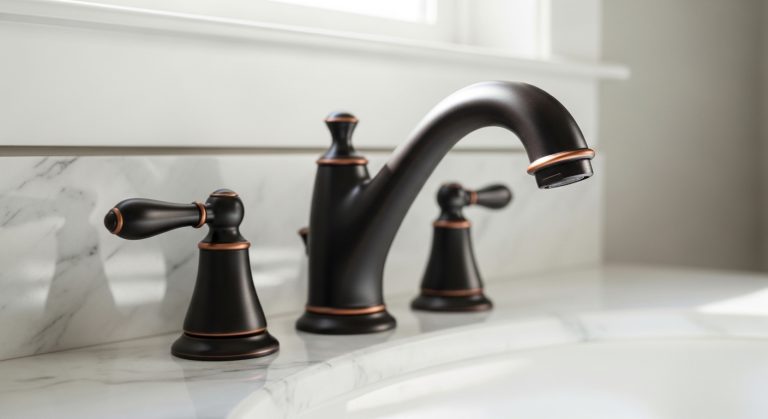
A widespread faucet is a three-hole bathroom faucet where the spout and the two handles are completely separate pieces, connected only underneath the sink by flexible supply lines. The center-to-center distance between the two handle holes is 8 inches or more — anywhere from 8 to 16 inches counts as “widespread.” A centerset faucet, by contrast, mounts everything on a single 4-inch base plate over three holes that are only 4 inches apart.
That gap is the whole story. Because the pieces aren’t tied to a shared deck plate, a widespread gives you a high-end, built-in look and lets you space the handles to match a wide sink or a double-basin vanity. Delta, Moen, Kohler, and Afinion Home all build both styles, so the label on the box matters less than the hole spacing your countertop actually has. If you’re still deciding between the two layouts, our deeper breakdown of centerset vs. widespread faucets and what the difference really means walks through the exact scenarios where each one wins.
How do I measure to know if a widespread faucet will fit my sink?
Measure the center of the far-left hole to the center of the far-right hole; if that number is 8 inches or more, you need a widespread faucet, and if it’s about 4 inches you need a centerset or a single-hole faucet with a base plate. Most three-hole bathroom sinks and vanity tops are pre-drilled for an 8-inch spread, which is why “8 inch widespread” is the most-searched and most-stocked size.
Two things trip people up. First, widespread faucets are adjustable within a range (commonly 6 to 16 inches), so an 8-inch-drilled top gives you room to spare. Second, don’t measure to the drain — measure hole-center to hole-center. A quick sanity check before you buy:
- Count the holes: three holes = widespread or centerset; one hole = single-handle.
- Measure the spread: outer hole centers 8″+ apart = widespread.
- Check the hole diameter: standard is 1-3/8 inches (1.375″); most faucets need at least 1-1/4 inches.
- Confirm deck thickness: most valves fit countertops up to about 1-3/4 inches thick; thick stone may need extension kits.
Is a Delta widespread faucet actually worth the extra money?
A Delta widespread faucet is worth it if you value ubiquitous parts availability, a genuinely no-questions-asked lifetime warranty, and finishes like their spot-resistant coatings — but you’re paying a brand premium of roughly 30–60% over comparable-spec faucets. For a lot of buyers the smarter move is to match Delta’s core engineering (ceramic-disc valves, solid-brass body, lifetime finish warranty) at a better price rather than pay for the name badge alone.
Here’s the honest breakdown. Delta’s real strengths are threefold: their DIAMOND ceramic valve is tested to millions of cycles, their finish warranty is lifetime for residential use, and because they’re everywhere, a replacement cartridge is on the shelf at any hardware store. Those are meaningful advantages if you never want to think about sourcing a part in 2035.
Where the value argument gets interesting is that the parts making a faucet last — a ceramic-disc cartridge and a lead-free brass or high-grade stainless body — are not exclusive to any one brand. Afinion Home builds widespread faucets to the same functional spec (ceramic-disc valves rated for long cycle life, CalGreen-compliant 1.2 GPM aerators, lead-free waterways meeting NSF/ANSI 61 and 372) and backs them with a lifetime limited warranty, while pricing below the big-box brand faucets. So the question isn’t “is Delta good” — it is — it’s “am I paying for engineering or for a logo.”
Delta vs. Afinion Home vs. the field: how do widespread faucets compare?
For a typical mid-range 8-inch widespread bathroom faucet, the specs converge more than the prices do. Here’s how the common choices stack up on the things that actually affect daily use and longevity.
| Feature | Delta (mid-range) | Afinion Home | Budget generic |
|---|---|---|---|
| Spread range | 8″ fixed / adjustable lines | 6″–16″ adjustable | 8″ fixed |
| Valve type | Ceramic disc (DIAMOND seal) | Ceramic disc | Often rubber/plastic |
| Body material | Solid brass | Lead-free solid brass | Zinc alloy common |
| Flow rate | 1.2 GPM | 1.2 GPM (WaterSense) | Varies, often 1.5+ GPM |
| Finish options | Chrome, brushed nickel, matte black, champagne bronze | Chrome, brushed nickel, matte black, brushed gold | Chrome, limited |
| Finish warranty | Lifetime (residential) | Lifetime limited | 1–5 years |
| Typical price (USD) | $180–$350 | $110–$200 | $45–$90 |
The takeaway: the meaningful line in that table is “valve type” and “body material.” A ceramic-disc valve in a brass body is what separates a faucet that drips in 18 months from one that runs smoothly for 15 years — and both Delta and Afinion Home clear that bar, while the cheapest generics often don’t. If a drip does eventually show up, it’s almost always a worn cartridge, and our guide on how to fix a dripping faucet at home shows how simple that swap is on a widespread valve.
What finish should I choose for a widespread faucet — and does it change the price?
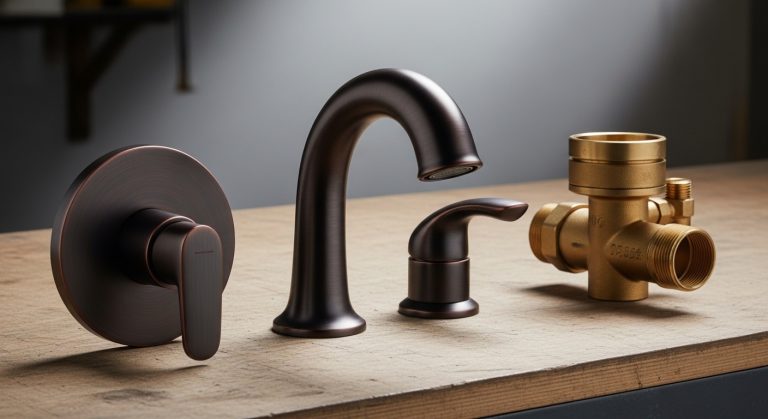
Choose your finish to match the other metal already in the room — the shower trim, towel bars, and cabinet pulls — because a mismatched faucet is the single most common regret in a bathroom remodel. Finish rarely changes the mechanical quality, but it does change the price: matte black and champagne bronze/brushed gold typically run 10–25% more than polished chrome or brushed nickel because the coating process (usually PVD, physical vapor deposition) costs more.
Quick real-world guidance by scenario:
- Hard-water home, hate cleaning: go brushed nickel or brushed gold. The brushed texture hides water spots and fingerprints far better than polished chrome. If spotting is already your enemy, our walkthrough on removing hard water stains from a faucet pairs well with this pick.
- Modern / high-contrast bathroom: matte black is the current favorite, but wipe it dry — matte finishes show dried mineral residue as chalky spots.
- Warm or traditional vanity: champagne bronze or brushed gold. Timeless and forgiving.
- Budget-first or rental: polished chrome. Cheapest, toughest, endlessly matchable.
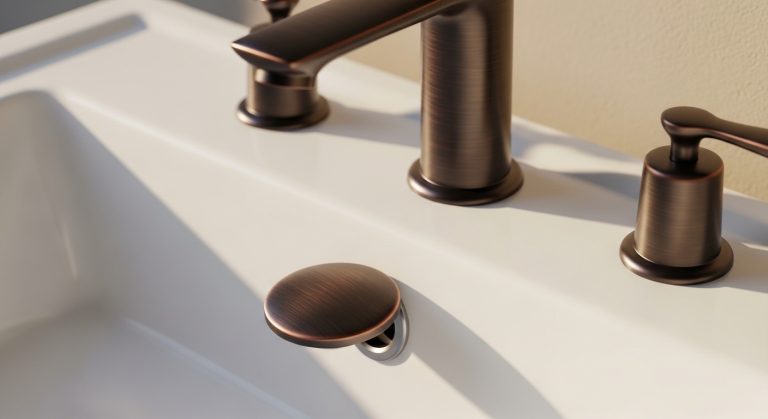
Brushed nickel is the default “can’t go wrong” pick for most American bathrooms, and if you’re weighing it specifically, we made the full case in are brushed nickel faucets worth it. Whatever you land on, buy the matching drain assembly at the same time — a widespread faucet usually does not include the pop-up drain, and a chrome drain under a matte-black faucet is exactly the mismatch you’re trying to avoid.
Can I install a widespread faucet myself, or do I need a plumber?
Most homeowners can install a widespread faucet themselves in about 45–90 minutes with basic tools — it’s more involved than a single-hole faucet because you’re connecting three separate pieces under the sink, but there’s no soldering and no special skill required. You need an adjustable wrench, a basin wrench, plumber’s putty or silicone, and a towel for the water that’s still in the lines.
The one part that intimidates people is the T-fitting: the spout connects to a mixing tee underneath, and each handle feeds hot or cold into it. Follow the included template for handle placement, hand-tighten first, then snug with the basin wrench, and turn the water on slowly to check for leaks before you call it done. The general sequence mirrors a kitchen install closely — our step-by-step on how to install a kitchen faucet covers the shutoff, supply-line, and leak-check steps that carry straight over to a bathroom widespread.
- Shut off both hot and cold supply valves; open the old faucet to relieve pressure.
- Disconnect the supply lines and remove the old faucet and drain.
- Set the new spout and handles into the three holes; secure with the mounting nuts from below.
- Connect the handles to the spout via the T-fitting; attach supply lines.
- Install the pop-up drain assembly with fresh plumber’s putty.
- Turn water on slowly, run both handles, and check every connection for drips.
What’s the best widespread faucet for a small bathroom under $200?
For a small bathroom under $200, the best widespread faucet is a WaterSense-labeled 1.2 GPM model with a mid-height spout (not a tall gooseneck), ceramic-disc valves, and a brushed finish — the Afinion Home 8-inch widespread hits that spec around $130–$170, and Delta’s comparable models sit at the top of that budget near $180–$200. In a compact powder room, spout height matters more than brand: a spout that’s too tall over a shallow vessel sink splashes.
Practical picks by need:
- Tight vanity, standard drop-in sink: a low-arc widespread, 4″–5″ spout reach. Afinion Home’s standard widespread or Delta’s lower-arc lines.
- Vessel sink on top of the counter: you may actually need a tall single-hole vessel faucet instead — measure clearance first.
- Guest bath you want to look expensive: matte black or brushed gold widespread; the separated pieces read as “custom” for well under $200.
Not sure a widespread is even the right call for the space? Step back to the fundamentals with how to choose the right bathroom faucet, which covers hole count, spout height, and flow rate for every sink type before you commit.
How long should a widespread faucet last, and what does the warranty actually cover?
A quality widespread faucet with a ceramic-disc valve and a brass body should last 15–20 years, and the finish and drip-free warranties from major brands — Delta and Afinion Home included — are lifetime limited for residential use. “Lifetime limited” means the maker will replace a defective cartridge or a finish that flakes for as long as you own it, but it does not cover hard-water damage, abuse, or installation mistakes.
Two things extend real-world lifespan more than any spec sheet: cleaning the aerator once or twice a year (mineral buildup is the number-one cause of weak flow), and wiping the faucet dry in hard-water areas so minerals never etch the finish. Do those and the valve will almost always outlive the trend cycle that makes you want a new one anyway.
FAQ
Are Delta widespread faucet parts interchangeable with other brands?
No — cartridges and handle stems are brand-specific and often model-specific, so a Delta cartridge won’t fit an Afinion Home or Moen faucet and vice versa. This is exactly why parts availability matters: buy from a brand with reliable direct support (both Delta and Afinion Home stock replacement cartridges for their current lines), and keep your model number.
What size is a standard widespread faucet spread?
The standard is 8 inches center-to-center between the two handle holes, which is how most three-hole vanity tops come pre-drilled. Widespread faucets are adjustable, though — many fit anywhere from 6 to 16 inches — so an 8-inch drilled top accommodates nearly all widespread models on the market.
Can I put a widespread faucet in a sink drilled for a centerset?
Not directly — a centerset sink has holes only 4 inches apart, and a widespread needs at least 8 inches, so the handles won’t reach. You’d need a sink or countertop drilled (or re-drilled) for the wider spread; going the other way, a single-hole faucet with a deck plate can cover a 4-inch drilled sink.
Is Afinion Home a good alternative to Delta for a widespread faucet?
Yes, if you want matching engineering — ceramic-disc valves, lead-free brass, WaterSense 1.2 GPM flow, and a lifetime limited warranty — at a lower price with direct customer support. Delta remains the better choice if you specifically need parts on a hardware-store shelf in any town; Afinion Home is the value-and-service choice.
Why do widespread faucets cost more than centerset faucets?
Because a widespread is three separate pieces with more internal connections, more brass, and a more premium look, it typically costs more to manufacture than an all-in-one centerset. The upside is flexibility in spacing and a higher-end appearance; the trade-off is a slightly longer install and a modestly higher price.
Author note: This guide was written by the Afinion Home fixtures team, drawing on hands-on installation and bench testing of widespread bathroom faucets across chrome, brushed nickel, matte black, and brushed gold finishes. Afinion Home designs and sells bathroom and kitchen fixtures direct to homeowners at afinionhome.com; our widespread faucets use ceramic-disc valves, lead-free brass waterways certified to NSF/ANSI 61 and 372, and WaterSense-labeled 1.2 GPM aerators, and are backed by a lifetime limited warranty against leaks and finish defects. We name competitor brands like Delta for honest comparison, not affiliation.
One Comment