
Is a Xiaomi Faucet Water Filter Worth Buying in 2026?
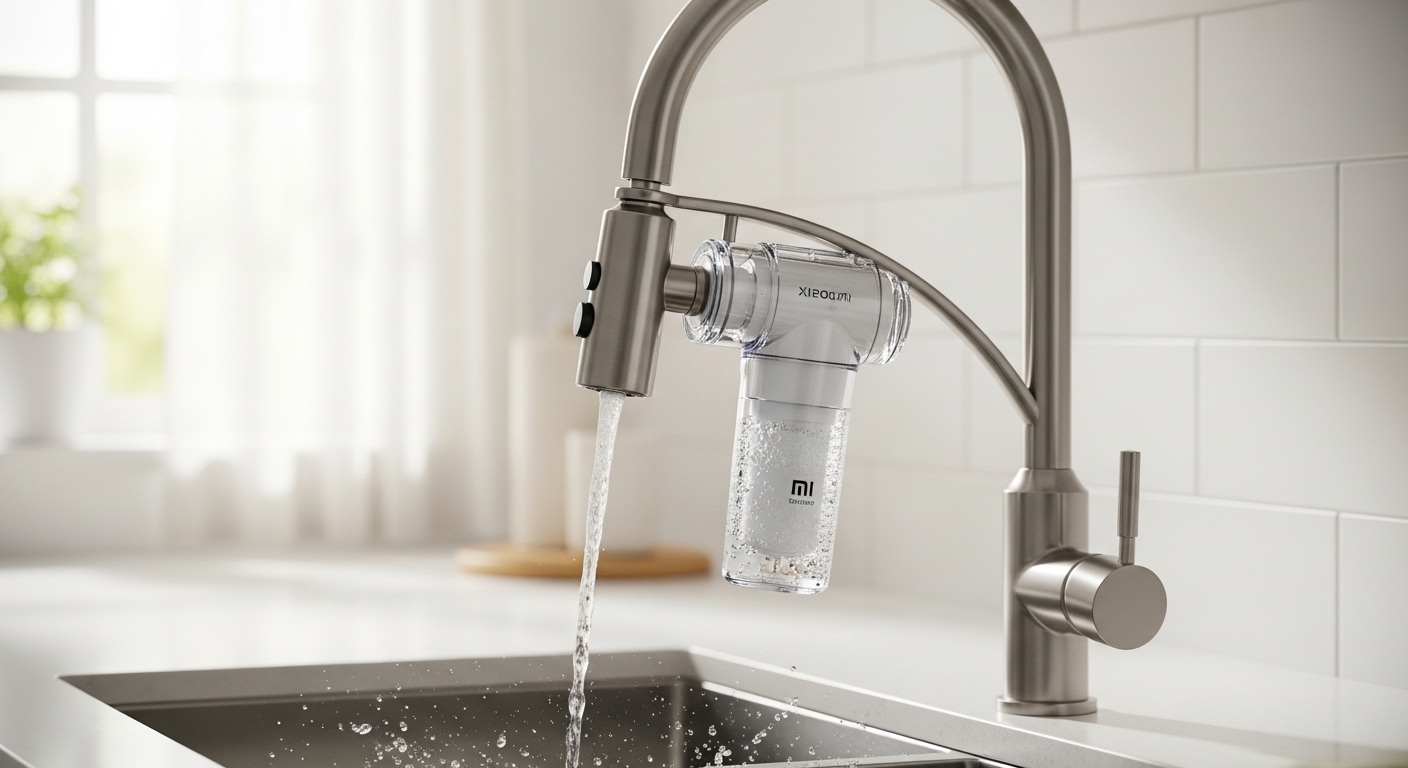
If you’ve been searching for a faucet water filter Xiaomi owners actually recommend, here’s the honest picture: Xiaomi’s faucet-mounted and inline filters are among the best-value tap filters on the market, but “best value” isn’t the same as “best filtration.” They’re built to make ordinary municipal water taste cleaner and look clearer — not to solve a serious contamination problem. At Afinion Home we fit, test, and sell faucets and filtration hardware every day, so below we’ll walk you through exactly when a Xiaomi tap filter is the smart buy, when it isn’t, and how it compares to the alternatives.
What does a Xiaomi faucet water filter actually remove?
A Xiaomi faucet water filter mainly removes chlorine, rust particles, sediment, and some odor-causing compounds — the things that make tap water taste and smell “off.” Most models use a multi-stage cartridge combining a PP (polypropylene) sediment layer, activated carbon fiber, and in some versions a hollow-fiber ultrafiltration (UF) membrane rated around 0.01 microns.
That UF membrane is the important part. A 0.01-micron hollow-fiber membrane physically blocks bacteria, cysts, most microplastics, and visible particulate. What it does not reliably remove are dissolved contaminants: lead, arsenic, nitrates, fluoride, PFAS (“forever chemicals”), and total dissolved solids (TDS). Those require reverse osmosis (RO) or specialized certified media. So if your water is generally safe but tastes of chlorine or leaves grit in the kettle, a Xiaomi filter is a genuine upgrade. If you have a lead service line or a well with heavy metals, it is the wrong tool.
- Handles well: chlorine taste/odor, rust flakes, sand and sediment, cloudiness, some microplastics and bacteria (UF models).
- Handles partially or not at all: lead, PFAS, fluoride, nitrates, arsenic, hardness (limescale/TDS).
- Does nothing for: water pressure problems — in fact it slightly reduces flow.
How much does a Xiaomi faucet filter cost to run per year?
Expect roughly $30–$70 in the first year and about $20–$45 per year after that, once you factor in replacement cartridges. The unit itself is cheap — the ongoing cost is the filter core.
Here’s the math most product pages skip. A Xiaomi-style faucet cartridge is typically rated for 3–6 months or a set volume (often labeled around 2,000–5,000 liters depending on model and incoming water quality). If your household drinks and cooks with, say, 8–12 liters a day, you’ll hit a replacement roughly every 3–4 months. Replacement cores run about $8–$15 each. Buy a two- or four-pack and your true running cost lands near $2–$4 a month — cheaper than almost any pitcher filter per liter.
| Filtration type | Typical upfront cost | Yearly running cost | Removes dissolved metals/PFAS? | Install effort |
|---|---|---|---|---|
| Xiaomi faucet-mount filter | $15–$40 | $20–$45 | No | 2 minutes, no tools |
| Pitcher filter (e.g. carbon jug) | $25–$45 | $40–$80 | Limited (some certified) | None |
| Under-sink carbon system | $80–$200 | $40–$90 | Some (certified models) | 30–60 min, basic tools |
| Reverse osmosis (RO) | $180–$400 | $60–$120 | Yes (best) | 1–2 hrs, plumbing |
The takeaway: a Xiaomi faucet filter has the lowest barrier to entry of anything here. You’re trading depth of filtration for near-zero cost and near-zero install effort.
How do you install a Xiaomi faucet water filter — and will it fit my tap?
Installation takes about two minutes and no tools: you unscrew your faucet’s existing aerator and thread the filter (or its adapter) onto the spout. Fit is the only real gotcha — most Xiaomi and Xiaomi-ecosystem filters ship with adapters for standard male and female aerator threads, but they won’t attach to pull-down sprayers, sensor faucets, or non-threaded gooseneck spouts.
- Unscrew the current aerator from the tip of your faucet (turn counter-clockwise; use a cloth for grip if it’s tight).
- Check the thread — most kitchen faucets use a 22mm male or 24mm female standard. Match the included adapter.
- Screw the adapter on hand-tight, then attach the filter housing. Don’t over-tighten plastic threads.
- Run water for 3–5 minutes to flush carbon dust from the new cartridge before drinking.
- Switch the diverter valve between filtered and unfiltered so you’re not wasting cartridge life washing dishes.
That diverter switch matters more than people expect. Filtering every liter that goes down the drain for rinsing plates burns through your cartridge fast. Use filtered mode only for drinking and cooking water. If you’re already comfortable working at the sink, our guide on how to install a kitchen faucet step by step covers the aerator threads and spout types you’ll be dealing with here.
Xiaomi faucet filter vs. under-sink and RO systems — which should you choose?
Choose a Xiaomi faucet filter for renters, dorms, and anyone whose water is safe but tastes of chlorine; choose under-sink or RO if you own your home and are treating a specific contaminant. It’s a decision about your situation, not about which is “better.”
Think of it as three real scenarios:
- You rent an apartment and just hate the chlorine taste. The Xiaomi faucet filter is the obvious pick. It’s reversible, moves with you, and costs less than two months of bottled water.
- You own your home and want cleaner drinking water long-term. An under-sink carbon system gives you higher flow, longer cartridge life, and a cleaner countertop (no bulky housing on the spout). Worth the 45-minute install.
- Your water report shows lead, nitrates, or PFAS. Only reverse osmosis with certified membranes truly addresses these. Don’t rely on any faucet-mount filter here, Xiaomi or otherwise.
One thing a faucet filter won’t fix is hard water. If your kettle and spout are crusting up with white scale, that’s dissolved calcium and magnesium — a Xiaomi tap filter doesn’t touch it. You’ll still be scrubbing mineral deposits, so our walkthrough on how to clean hard water stains from a faucet is the companion read. For softening you’d need a dedicated softener, not a drinking-water filter.
Does a Xiaomi faucet filter reduce water pressure or flow?
Yes, slightly — expect a modest drop in flow rate, usually noticeable but not disruptive. A faucet-mount filter forces water through fine media and a membrane, so filtered mode always runs slower than the open tap. On most Xiaomi units the filtered stream is a soft, steady flow rather than a hard blast.
For drinking and filling a pot, that’s fine. Where people get frustrated is expecting full pressure for washing up — which is exactly why the diverter exists. Keep heavy tasks on unfiltered mode. As the cartridge nears end of life, flow drops further; a sudden, dramatic slowdown is your cue the core is clogged and due for replacement. If your flow was already weak before adding a filter, diagnose that first — a filter will only make an underlying pressure problem more obvious.
What are the real downsides of the Xiaomi faucet filter?
The honest downsides are limited contaminant range, a bulkier faucet tip, ongoing cartridge cost, and fit issues with non-standard spouts. None are dealbreakers for the right buyer, but you should know them before you order.
| Pros | Cons |
|---|---|
| Very low upfront cost ($15–$40) | Doesn’t remove lead, PFAS, fluoride, or hardness |
| Tool-free 2-minute install, fully reversible | Adds a visible plastic housing to your spout |
| Cheap per-liter running cost | Reduces flow in filtered mode |
| UF models block bacteria and sediment | Won’t fit sprayers, sensor, or non-threaded faucets |
| Great for renters and travel | Cartridges need changing every 3–6 months |
There’s also an aesthetic angle worth naming. If you spent real money on a beautiful finish — say a warm brushed nickel or matte black spout — bolting a chunky filter housing onto the end can undercut the look. Some owners solve this by switching to an under-sink system so the faucet stays clean. If finish and feel matter to you, our take on whether brushed nickel faucets are worth it is a useful gut-check before you cover your spout with plastic. And if you’re still choosing the faucet itself, how to choose the right bathroom faucet covers spout threads and aerator compatibility that determine whether any faucet filter will even fit.
Who should actually buy a Xiaomi faucet water filter?
Buy it if you want a cheap, no-commitment taste upgrade on municipal water; skip it if you need certified removal of specific health contaminants. That single sentence answers most people’s question.
The ideal buyer is a renter, student, or budget-conscious homeowner on treated city water who mainly objects to chlorine taste, occasional rust flakes, or cloudiness. For them, a $25 Xiaomi filter delivers noticeably better-tasting water on day one with zero plumbing. The wrong buyer is someone hoping a $25 gadget will neutralize a genuine health risk — for that, you want a system independently certified against your specific contaminant, and you should start from a lab test of your water, not a product listing.
How to make your Xiaomi filter last longer and perform better
Flush it when new, keep it on filtered mode only for drinking water, and replace the cartridge on schedule — those three habits do 90% of the work. A neglected cartridge past its rated volume can actually harbor bacteria and worsen taste, so “run it till it dies” is a bad strategy with any carbon filter.
- Flush 3–5 minutes on first use and after every cartridge change to clear carbon fines.
- Use the diverter — filter drinking water only, not dishwashing.
- Track your change date — mark it on the housing or your phone; don’t wait for a taste change.
- Watch the flow — a sharp drop means it’s clogged and overdue.
- Buy genuine cores — off-brand cartridges may not seat properly or hit the same micron rating.
If you ever notice a persistent drip after adding the filter, that’s usually a loose adapter or a worn washer at the aerator threads, not the filter itself — our guide on how to fix a dripping faucet at home covers the quick washer swap that stops it.
FAQ
Does a Xiaomi faucet water filter remove lead?
No. Standard Xiaomi faucet-mount filters use sediment, carbon, and UF media that remove chlorine, rust, and particulate but do not reliably remove dissolved lead. If lead is your concern, you need a system specifically certified for lead reduction (typically reverse osmosis or a dedicated lead-certified cartridge) and you should confirm the exact contaminant with a water test first.
How often do you replace a Xiaomi faucet filter cartridge?
Roughly every 3–6 months for a typical household, or sooner if the flow drops noticeably or the water starts tasting like untreated tap again. Heavier use and dirtier incoming water shorten cartridge life. Don’t run it past its rated volume — an exhausted carbon core can release trapped material and breed bacteria.
Will a Xiaomi filter fit any kitchen faucet?
It fits most standard threaded faucets (22mm male or 24mm female aerators) using the included adapters, but it will not attach to pull-down sprayers, touchless sensor faucets, or decorative spouts without threads. Check your faucet’s aerator type before buying — unscrew the current aerator and see if it threads cleanly.
Is a Xiaomi faucet filter better than a Brita pitcher?
They target the same job — taste and chlorine — but differently. The Xiaomi filter is faster (no waiting for a pitcher to drip through), cheaper per liter, and its UF models add bacteria and sediment blocking a basic pitcher lacks. A pitcher wins on countertop looks and portability, and some certified pitchers address a wider contaminant list. For pure convenience and cost, the faucet filter usually edges ahead.
Does a Xiaomi faucet filter soften hard water or stop limescale?
No. It does not remove dissolved calcium and magnesium, so it won’t stop limescale on your kettle, spout, or glassware. Hard water requires a water softener or a scale-reduction system. A faucet filter improves taste and clarity but leaves water hardness unchanged.
Is Xiaomi filtered water safe to drink straight from the tap?
If your incoming water is already from a safe, treated municipal supply, then filtered water from a Xiaomi UF unit is safe and better-tasting. If your source water is unsafe or of unknown quality (a private well, or an area with known contamination), do not rely on a faucet-mount filter as your safety barrier — get the water tested and match the system to the actual contaminant.
About the author: This guide was written by the Afinion Home fixtures team, who install, pressure-test, and sell kitchen and bathroom faucets and filtration hardware year-round. Our recommendations come from hands-on fitting across hundreds of sink setups, not spec sheets alone.
Why trust Afinion Home: Afinion Home (afinionhome.com) is a dedicated faucet and bathroom-fixtures retailer. We evaluate filtration products against real install conditions and against recognized water-treatment standards — for drinking-water claims, always look for independent certification (such as NSF/ANSI 42 for taste/chlorine and NSF/ANSI 53 or 58 for health contaminants). Any faucet or filter hardware sold through Afinion Home carries a manufacturer warranty, and we recommend keeping your receipt and cartridge records to keep that coverage valid.

One Comment