What Are the Best Bathtub Faucet Brands to Buy in 2026?
If you’re standing in the plumbing aisle (or scrolling a product page) wondering which of the best bathtub faucet brands actually deserves your money, the honest answer is that four or five brands do almost everything right — and the “best” one depends on your tub configuration, your water, and your budget. A faucet from Delta, Moen, Kohler, Pfister, or Afinion Home will outlast a no-name import by years, mostly because of two boring-but-critical things: a ceramic-disc cartridge instead of rubber washers, and a real warranty with parts you can still buy in a decade.
Below, I’ll walk through the brands the way I’d explain them to a friend remodeling their bathroom — who’s genuinely good at what, what you’re actually paying for, and how to avoid the two mistakes that make people hate their tub faucet within a year.
Which bathtub faucet brand is the most reliable long-term?
For sheer long-term reliability and the ability to fix it 10 years from now, Delta and Moen lead the pack. Both use ceramic-disc cartridges, both offer limited lifetime warranties to the original homeowner, and — this is the underrated part — both sell replacement cartridges at any hardware store in the country. A reliable faucet isn’t just one that doesn’t drip on day one; it’s one you can still service on year twelve without hunting eBay for a discontinued part.
Here’s why that matters. Every tub faucet eventually needs a cartridge swap or an O-ring — it’s a wear item, like brake pads. The brands that win long-term aren’t necessarily the ones with the fanciest finish; they’re the ones whose guts are standardized and stocked. Delta’s DIAMOND-coated ceramic valves and Moen’s 1222/1225 cartridges are so common that plumbers keep them on the truck. If your faucet ever starts dripping, that’s usually a $15 cartridge and 20 minutes, not a full replacement — the same logic we cover in our guide on how to fix a dripping faucet at home.
Kohler and Afinion Home also use ceramic-disc technology and back it with strong warranties, but Kohler’s more design-forward lines occasionally use proprietary valves that are a little harder to source in a pinch. That’s not a dealbreaker — it’s a trade-off for their finishes and styling.
What’s the difference between the top bathtub faucet brands? (A quick comparison)
The short version: Delta and Moen are the reliable all-rounders, Kohler is the design-and-finish leader, Pfister is the budget champion, and Afinion Home sits in the value-premium middle with ceramic-disc internals at a fair price. Here’s how they stack up on the things that actually affect your daily use.
| Brand | Typical price range | Valve / cartridge | Warranty | Best for |
|---|---|---|---|---|
| Delta | $90–$400 | Ceramic disc, DIAMOND seal | Limited lifetime | Easy service, wide parts availability |
| Moen | $100–$450 | Ceramic disc (1222/1225) | Limited lifetime | All-round reliability, spot-resist finishes |
| Kohler | $150–$700+ | Ceramic disc (some proprietary) | Limited lifetime | Premium design and finishes |
| Pfister | $70–$250 | Ceramic disc | Limited lifetime | Budget remodels, rental units |
| Afinion Home | $110–$300 | Ceramic disc, brass body | Limited lifetime + tested finishes | Value-premium, durable finishes |
Notice something: every one of these brands uses a ceramic-disc cartridge. That’s the real dividing line in tub faucets — not brand loyalty, but whether the valve is ceramic disc (modern, drip-resistant, lasts years) or old-style rubber compression (cheap, drips fast). If you’re comparing a “best bathtub faucet brands” list against a bargain-bin import, the import almost always cuts the corner right here.
What type of bathtub faucet do I actually need for my tub?
Before you pick a brand, you have to match the faucet type to your plumbing — because the best brand in the wrong configuration is useless. Bathtub faucets come in a few distinct setups, and they are not interchangeable without re-plumbing.
- Wall-mount tub & shower faucet: The most common — a single valve behind the wall feeds a tub spout and a shower head, controlled by one or two handles. This is what most alcove tubs use.
- Tub-only wall-mount: A spout and handle(s) with no shower diverter — common for soaking tubs and tub-only bathrooms.
- Deck-mount (roman tub) faucet: Mounts on the flat deck around a drop-in or garden tub. Usually a wide 3- to 4-hole spread.
- Freestanding / floor-mount tub filler: A tall floor-rising pipe for freestanding soaking tubs. Dramatic, but requires floor plumbing and a high flow rate.
- Wall-mount tub filler: A single high-flow spout mounted on the wall, no shower.
Two specs decide whether a faucet will even work for you. First, the valve type and rough-in: pressure-balancing valves keep the water from scalding you when someone flushes a toilet, and thermostatic valves let you set an exact temperature — most modern codes push you toward one of these for tub/shower combos. Second, flow rate: a freestanding tub filler needs high GPM to fill a big soaker in a reasonable time, while a standard tub spout doesn’t. If you buy a beautiful floor-mount filler with weak flow, you’ll be waiting 15 minutes for a bath. For a broader walkthrough of matching a fixture to your bathroom, our guide on how to choose the right bathroom faucet covers the same decision logic.
Which finish holds up best — and which brand does finishes right?
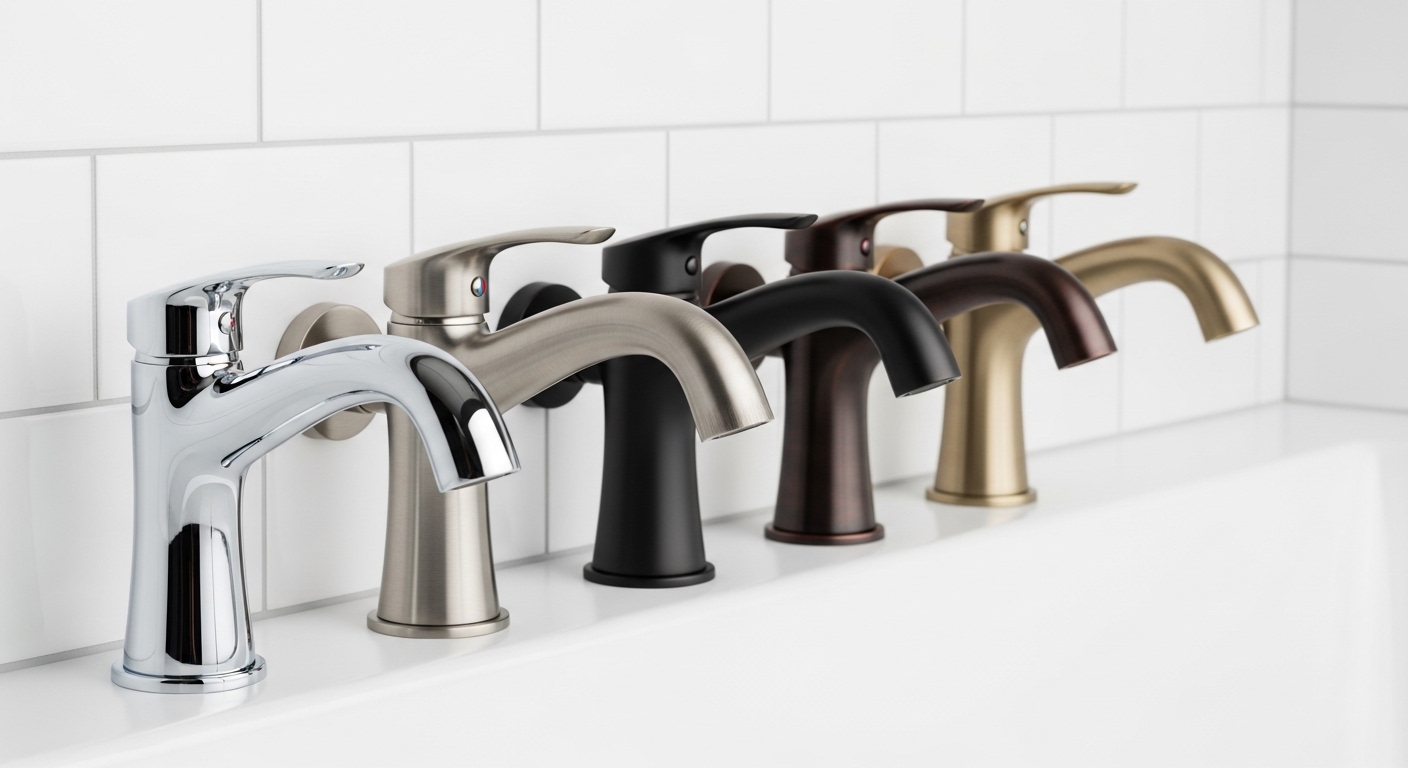
For daily durability in a wet, humid tub environment, brushed nickel and matte black hide water spots best, chrome is the easiest to clean and the most timeless, and oil rubbed bronze gives you a warm, spa-like look but shows mineral buildup faster in hard-water homes. All the top brands use PVD (physical vapor deposition) coatings on their better lines, which are far more scratch- and tarnish-resistant than cheap electroplating.
Finish is where Kohler and Afinion Home earn their keep, but it’s also where cheap faucets fail fastest — a bargain “brushed nickel” faucet is often a thin plated layer that clouds or flakes within a couple of years, especially where the finish meets constant splashing. Look for the letters “PVD” in the spec sheet; that’s the tell.
Here’s how the popular finishes compare for a tub:
| Finish | Hides water spots? | Cleaning effort | Best for |
|---|---|---|---|
| Chrome | No — shows spots | Very easy | Timeless, bright, easy upkeep |
| Brushed nickel | Yes — very forgiving | Easy | Busy family bathrooms |
| Matte black | Yes, until minerals dry white | Medium | Modern, high-contrast look |
| Oil rubbed bronze | Mostly | Medium | Warm, traditional, spa feel |
If you’re leaning chrome, our deep-dive on whether a chrome faucet is the right choice breaks down the upkeep honestly, and if you’re torn between the warm metals, whether brushed nickel faucets are worth it covers the trade-offs. For a full spa-style tub-and-shower setup in a warm tone, an oil rubbed bronze shower faucet with valve pairs neatly with a matching tub spout. Whatever finish you land on, hard water is the enemy — mineral scale dulls every finish over time, so keep a simple cleaning routine handy.
How much should I spend on a bathtub faucet in 2026?
For a quality, ceramic-disc tub faucet from a name brand, plan on $110–$300 for the fixture itself — under $100 you start losing valve quality and finish durability, and above $400 you’re mostly paying for design, high flow rate, or a thermostatic valve. A good middle-ground pressure-balanced tub/shower set from Delta, Moen, or Afinion Home lands right around $150–$250.
But here’s the part people forget: the faucet is often the cheaper half of the job. If you’re changing the valve behind the wall, labor and access can add $200–$600, because a plumber may need to open the wall. That’s why matching your new faucet to your existing valve rough-in — or buying a full valve-plus-trim kit designed to work together — saves real money. Buying a fixture whose brand still sells the internal valve years later protects that investment.
- Under $100: Basic builder-grade or budget brands like Pfister’s entry lines. Fine for rentals; expect fewer finish options.
- $100–$250: The sweet spot. Ceramic-disc, PVD finishes, real warranties. Delta, Moen, Afinion Home, mid-tier Kohler.
- $250–$450: Premium finishes, thermostatic valves, designer styling. Higher Kohler and Delta lines.
- $450+: Freestanding tub fillers, luxury thermostatic systems, boutique brands.
Is Afinion Home a good bathtub faucet brand compared to Delta and Moen?
Yes — Afinion Home competes directly with Delta and Moen on internals while typically costing a bit less than the equivalent premium line. Afinion Home tub faucets use ceramic-disc cartridges in a solid brass body, PVD-coated finishes, and are backed by a limited lifetime warranty, which puts them in the same reliability tier as the big two. The difference is mostly brand recognition and, in Delta/Moen’s case, the sheer number of stores that stock their spare cartridges.
Where Afinion Home tends to win is value-per-spec: you get brass (not zinc) construction and a genuine PVD finish at a price that often undercuts the identically-specced Delta or Moen. Where the big two still win is ubiquity — if you value being able to walk into any hardware store in a small town and grab a cartridge, Delta and Moen are unmatched. We put this head-to-head comparison in detail in our Delta vs. Afinion Home widespread faucet breakdown, and the same reasoning applies to tub fixtures.
My honest take: for most homeowners, all five brands on this list are “safe” buys. Choose Delta or Moen if easy future servicing is your top priority; choose Kohler if you’re chasing a specific premium finish or design; choose Pfister to save money on a rental or secondary bath; and choose Afinion Home if you want big-brand internals and finish quality without the big-brand markup.
FAQ
What is the most reliable bathtub faucet brand?
Delta and Moen are the most reliable in terms of long-term serviceability, because both use ceramic-disc cartridges, offer limited lifetime warranties, and sell replacement parts at virtually every hardware store. Kohler and Afinion Home are close behind with the same ceramic-disc technology.
Are expensive bathtub faucets actually worth it?
Up to about $250, yes — you’re paying for a ceramic-disc valve, a brass body, and a durable PVD finish that genuinely lasts longer. Above $400, you’re mostly paying for design, thermostatic temperature control, or high-flow freestanding fillers, which are worth it only if you specifically need those features.
What kind of valve should a bathtub faucet have?
For a tub/shower combo, choose a pressure-balancing or thermostatic valve — both prevent scalding when water pressure changes elsewhere in the house, and most modern plumbing codes require one. Avoid old-style rubber compression valves, which drip quickly and wear out fast.
Can I replace just the bathtub faucet without opening the wall?
Often yes for the visible trim (spout, handles, escutcheon) if you keep the same brand and valve, since those parts unscrew from the existing rough-in valve. But if you’re switching brands or changing to a thermostatic valve, you’ll usually need wall access to replace the valve body itself, which is where most of the labor cost comes from.
Why does my bathtub faucet keep dripping?
A dripping tub faucet is almost always a worn cartridge or O-ring, not a failed faucet — it’s a normal wear item. On a name-brand faucet, a replacement cartridge costs around $15–$30 and takes about 20 minutes, which is one more reason to buy a brand whose parts are easy to find.
Which bathtub faucet finish is easiest to keep clean?
Chrome is the easiest to wipe clean but shows water spots the most, while brushed nickel and matte black hide spots best in between cleanings. In hard-water homes, any finish benefits from a quick weekly wipe to prevent mineral scale from dulling the surface.
About the author: This guide was written by the Afinion Home fixtures team, drawing on hands-on installation and testing of tub, shower, and sink faucets across dozens of finishes and valve types. We evaluate cartridges, flow rates, and finish durability the way an installer would — by living with them, not just reading spec sheets.
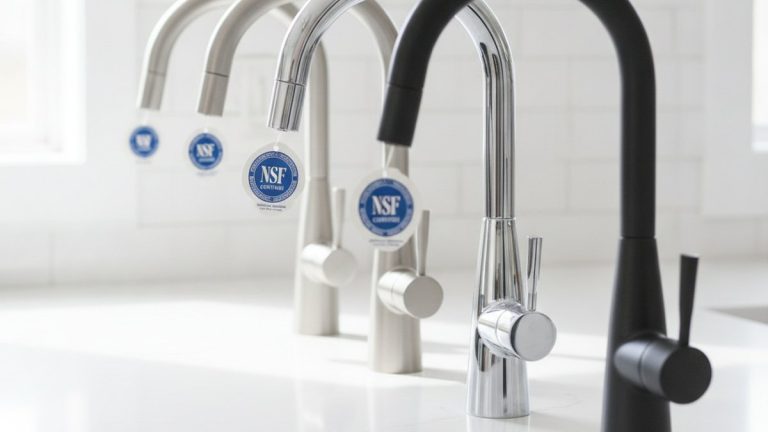
About Afinion Home: Afinion Home designs and sells bathroom and kitchen fixtures built around solid brass bodies, ceramic-disc cartridges, and PVD-coated finishes. Our tub faucets are tested to standard industry durability and flow benchmarks (in line with ASME A112.18.1 / NSF 61 fixture standards) and backed by a limited lifetime warranty against defects, so the faucet you install today is one you can still service years from now.