
Kohler vs Grohe Kitchen Faucets: Which One Should You Actually Buy in 2026?
If you’re comparing kohler vs grohe kitchen faucets, you’re really asking two questions at once: which brand builds a faucet that will still work smoothly in ten years, and which one fits your kitchen, your water, and your budget right now. Both are premium, widely respected brands — this isn’t a “good vs bad” matchup. It’s a “which set of trade-offs is right for you” matchup, and the honest answer depends on your finish, your water hardness, and how much you care about parts you can grab locally on a Sunday afternoon.
I’ve installed, serviced, and pulled apart faucets from both brands for years, so below I’ll skip the marketing and give you the real differences: cartridge quality, spray performance, finishes, price, warranty, and who each brand is genuinely best for.
Kohler vs Grohe kitchen faucets: what’s the real difference?
The core difference is philosophy. Kohler is an American brand that competes on choice and serviceability — dozens of finishes, styles, and price points, plus parts you can find at almost any U.S. home center. Grohe is a German brand that competes on engineering precision — tighter tolerances, exceptionally smooth ceramic cartridges, and spray technology (their SpeedClean nozzles and dual-spray systems) that tends to feel a notch more refined in daily use.
Put simply: Kohler gives you more ways to match your kitchen and easier repairs down the road. Grohe gives you a faucet that often just feels better every time you touch the handle. Neither is “cheap” — both sit in the mid-to-upper tier — but they win on different things.
| Factor | Kohler | Grohe |
|---|---|---|
| Origin | USA (Wisconsin) | Germany |
| Typical price (pull-down) | $180–$450 | $250–$550 |
| Cartridge | Ceramic disc, very reliable | Ceramic disc, class-leading smoothness |
| Finish selection | Extensive (Vibrant line, matte black, bronze, brass) | Focused/minimalist (SuperSteel, chrome, matte black) |
| Spray tech | Sweep/boost spray, DockNetik magnetic docking | SpeedClean nozzles, dual-spray, silky pull-down hose |
| U.S. parts availability | Excellent | Good, occasionally slower |
| Residential warranty | Limited lifetime | Limited lifetime |
| Best for | Style range + easy service | Feel, precision, longevity |
Which lasts longer — a Kohler or a Grohe kitchen faucet?
Both are built to last 15–20 years, but Grohe generally has a slight edge in cartridge longevity and hose feel, while Kohler wins on how easily you can fix it when something does wear out. The difference between them in raw durability is smaller than most people think — installation quality and water hardness matter more than the badge.
Here’s what actually determines lifespan:
- The cartridge. This is the heart of any faucet. Both brands use ceramic-disc cartridges, which resist wear far better than old rubber-washer valves. Grohe’s cartridges are famous for a buttery, drip-free feel that holds up for years. Kohler’s are also excellent and — crucially — easier and cheaper to replace in the U.S.
- The finish. Kohler’s Vibrant PVD finishes and Grohe’s StarLight/SuperSteel coatings both resist scratching and tarnish extremely well. Cheaper electroplated finishes on lesser brands peel; these don’t.
- The spray head and hose. This is where daily wear shows. Grohe’s pull-down hoses are notably smooth to retract; Kohler’s DockNetik magnetic docking keeps the sprayer locked firmly in place instead of drooping over time.
- Your water. Hard water is the #1 killer of any faucet. Mineral buildup clogs aerators and spray nozzles regardless of brand.
That last point matters more than most buyers realize. If you have hard water, even a $500 faucet will spray sideways within a year if you don’t clean it. Both brands fight this — Grohe with SpeedClean silicone nozzles you wipe clean with a finger, Kohler with easy-clean spray faces — but you still need a maintenance habit. If your faucet is already spitting or slowing down, our guide on how to clean hard water stains from a faucet walks through the exact vinegar-soak method that restores flow in about ten minutes.
Are Grohe kitchen faucets worth the extra money over Kohler?
For most homeowners, Grohe is worth the premium only if you specifically value pull-down feel, cartridge smoothness, and a minimalist European look — otherwise Kohler delivers 90% of the experience for less money and with easier local support. You’re typically paying $50–$150 more for a comparable Grohe model.
Think of it this way. If you use your kitchen faucet 30 times a day and you’re the kind of person who notices how a car door closes, Grohe’s precision will quietly reward you every day — the handle motion, the hose retract, the spray switch all feel engineered rather than assembled. That tactile quality is real and it’s Grohe’s whole pitch.
But if you mostly want a good-looking, reliable faucet that matches your cabinet hardware and can be fixed with a part you order overnight, the extra Grohe money is spent on refinement you may not consciously feel. Kohler’s mid-range pull-downs (like the Simplice or Malleco lines) are genuinely excellent and cost less.
A quick gut check:
- You want the widest finish and style selection → Kohler.
- You want the smoothest daily feel and don’t mind paying for it → Grohe.
- You want the easiest long-term repairs in the U.S. → Kohler.
- You want a clean, minimalist European silhouette → Grohe.
- You’re on a tighter budget but still want premium → Kohler.
Which brand has better finishes for a modern kitchen?
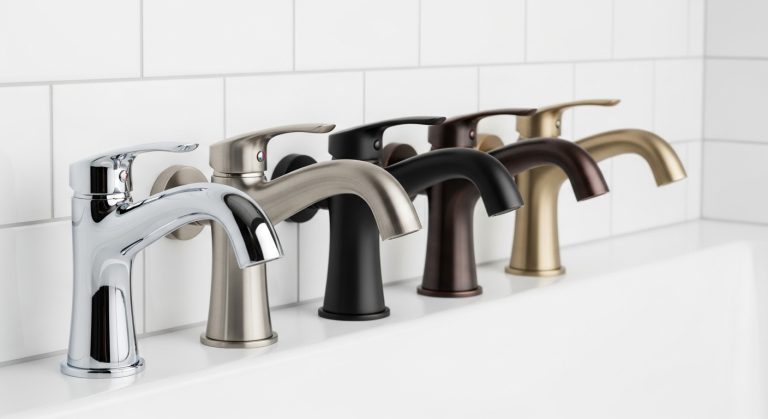
Kohler wins on finish variety and color matching, while Grohe wins on finish consistency and that understated stainless look. If you’re trying to match specific cabinet hardware, appliances, or a bold design statement, Kohler’s larger palette makes coordination easier.
Kohler’s signature is its Vibrant PVD finish line — Vibrant Stainless, Vibrant Brushed Moderne Brass, Vibrant Rose Gold — plus deep matte black and oil-rubbed bronze options. That range is a real advantage when your kitchen has a specific color story.
Grohe keeps it tighter and more architectural: SuperSteel (a refined brushed stainless that hides fingerprints beautifully), chrome, and matte black. The SuperSteel finish in particular is a favorite for modern and Scandinavian kitchens because it reads clean and never looks flashy.
Finish choice isn’t just looks — it affects maintenance too. Brushed and matte finishes hide water spots and fingerprints far better than polished chrome, which is worth remembering if you have hard water or kids. If you’re weighing finishes across your whole kitchen and bath, our breakdown of whether brushed nickel faucets are worth it covers the fingerprint and cleaning trade-offs in detail, and it applies directly to these two brands’ brushed options.
Do Kohler and Grohe kitchen faucets fit standard sinks and installs?
Yes — both brands build to standard U.S. plumbing specs and fit the common 1- and 3-hole sink configurations, but you’ll want to confirm hole count, deck thickness, and included escutcheon (deck plate) before you buy. Neither brand requires special plumbing; they connect to standard 3/8″ supply lines.
The practical install differences come down to two things:
- Hole coverage. Most single-handle pull-downs need one hole. If your sink has three holes, you’ll want the included deck plate to cover the extras. Both brands typically include one, but check the box. Not sure whether you even need one? Read do I need a deck plate for my faucet before you order.
- Mounting hardware. Grohe’s mounting system is precise but occasionally feels more “European” — fewer, tighter parts. Kohler’s mounting is very DIY-friendly with tool-free or single-wrench installs on many models.
Honestly, either one is a manageable DIY job for a confident homeowner — usually 45 to 90 minutes. If you’ve never done it, our step-by-step tutorial on how to install a kitchen faucet covers shutoffs, supply lines, and leak-testing so you don’t end up under the sink twice.
Kohler vs Grohe: which is better for hard water and high use?
For hard water and heavy daily use, Grohe’s SpeedClean silicone nozzles give it a slight edge because you can rub the mineral buildup off the spray face with your fingertip, but both brands hold up well if you keep the aerator clean. High-use households — big families, home cooks — will be happy with either as long as they don’t ignore maintenance.
The single biggest cause of “my expensive faucet stopped working right” is a clogged aerator or spray head, not a brand defect. Minerals build up, flow drops, and the stream splits or weakens. This happens to Kohler and Grohe equally because it’s a water problem, not a build problem. Catching it early is easy once you know the signs — our guide on whether faucet aerators get clogged and how to tell shows exactly what to watch for before your flow drops to a trickle.
If your water is genuinely hard (over ~7 grains per gallon), lean toward Grohe’s SpeedClean models, keep a small habit of wiping the nozzle weekly, and deep-clean the aerator every few months. Do that, and either brand will give you a decade-plus of trouble-free service.
How much do Kohler and Grohe kitchen faucets cost?
Expect $180–$450 for a quality Kohler pull-down and $250–$550 for a comparable Grohe — Grohe generally runs $50–$150 higher for a similarly specced faucet. Below premium, both brands also make simpler models, but the sweet spot for value is Kohler’s mid-range and Grohe’s entry-premium lines.
| Tier | Kohler example range | Grohe example range | What you get |
|---|---|---|---|
| Entry premium | $180–$250 | $250–$320 | Single-handle pull-down, ceramic cartridge, 1–2 finishes |
| Mid premium | $250–$350 | $320–$430 | Better spray tech, magnetic docking, more finishes |
| Upper premium | $350–$450 | $430–$550 | Pro-style/high-arc, dual spray, top finishes |
My value pick for most kitchens: a mid-range Kohler pull-down with Vibrant Stainless finish and magnetic docking. You get 90% of the Grohe experience, easier parts, and you keep $100 in your pocket. Spend up to Grohe when the feel and minimalist look genuinely matter to you — and they do to a lot of people.
So which should you buy — Kohler or Grohe?
Buy Kohler if you want maximum finish and style choice, easy U.S. parts, DIY-friendly installs, and strong value. Buy Grohe if you want the smoothest handle and hose feel, class-leading spray nozzles, and a clean European look, and you’re willing to pay a premium for that refinement.
There’s no wrong answer here — both are brands I’d happily put in my own kitchen. The decision is really about whether you optimize for selection and serviceability (Kohler) or precision and feel (Grohe). Match that to how you actually live in your kitchen and you’ll be happy for the next 15 years.
FAQ
Is Kohler or Grohe better for a budget under $300?
Under $300, Kohler is usually the better buy because its mid-range pull-downs land squarely in that budget with great spray tech and finishes, while comparable Grohe models often start slightly above it. You can still find entry Grohe faucets under $300, but you’ll get more features per dollar from Kohler at that price.
Which brand is easier to repair in the United States?
Kohler is easier to repair in the U.S. because replacement cartridges, spray heads, and parts are stocked at most home centers and ship fast, and Kohler’s customer service commonly sends free warranty parts. Grohe parts are available but can occasionally take longer to source, especially for older or discontinued models.
Do Kohler and Grohe kitchen faucets come with a lifetime warranty?
Both offer a limited lifetime warranty on finish and function for residential use, covering leaks, drips, and finish defects for the original owner. Always register your faucet and keep the receipt — warranty claims go much faster when you can prove the purchase date, and commercial installations carry shorter terms.
Which faucet feels more premium day to day?
Grohe generally feels more premium in daily use thanks to its exceptionally smooth ceramic cartridge and silky pull-down hose retract. Kohler feels solid and reliable with excellent magnetic sprayer docking, but if tactile refinement is your priority, Grohe usually edges it out.
Are Kohler and Grohe kitchen faucets certified to U.S. plumbing standards?
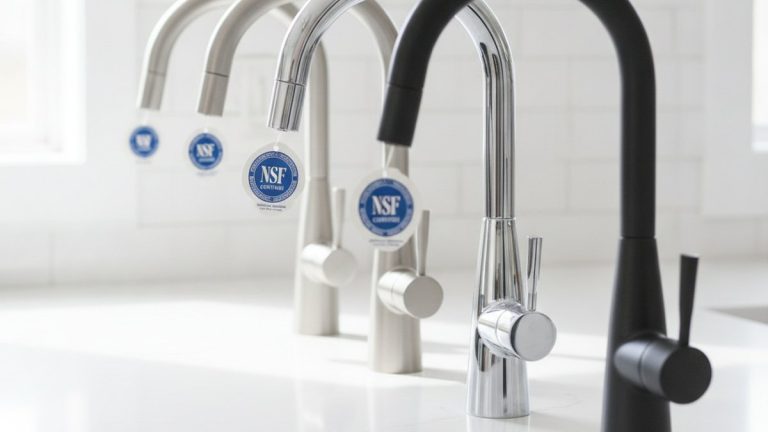
Yes — reputable Kohler and Grohe kitchen faucets sold in North America are certified to ANSI/NSF and cUPC/UPC standards and meet federal 1.5–1.8 GPM flow limits (lower in California and other tightened states). Check the model’s spec sheet or box for the NSF/ANSI 61 and cUPC marks to confirm lead-free, code-compliant construction before you buy.
Can I mix a Kohler faucet with a Grohe sink or accessories?
Yes, you can mix brands freely because both build to standard U.S. plumbing dimensions and 3/8″ supply connections, so a Kohler faucet fits a Grohe sink and vice versa. Just match hole count and finish family so the look stays cohesive across your faucet, soap dispenser, and drain hardware.
Author note: This guide was written by the Afinion Home fixtures team, drawing on hands-on installation and servicing of Kohler and Grohe pull-down faucets across real kitchens with a range of water conditions. We test for cartridge feel, spray performance, finish durability, and how easily each brand can be repaired years after purchase.
About Afinion Home: Afinion Home is a specialist in kitchen and bathroom faucets, shower systems, and sink fixtures. We compare brands on the specs that actually matter over a fixture’s lifetime — cartridge type, finish coatings, spray technology, certifications, and warranty terms — so you can buy once and buy right. Our recommendations reference manufacturer warranties and NSF/ANSI plumbing standards, never marketing hype.
One Comment