
Can You Put a Faucet Water Filter for Pull Out Faucet on Your Kitchen Sprayer?
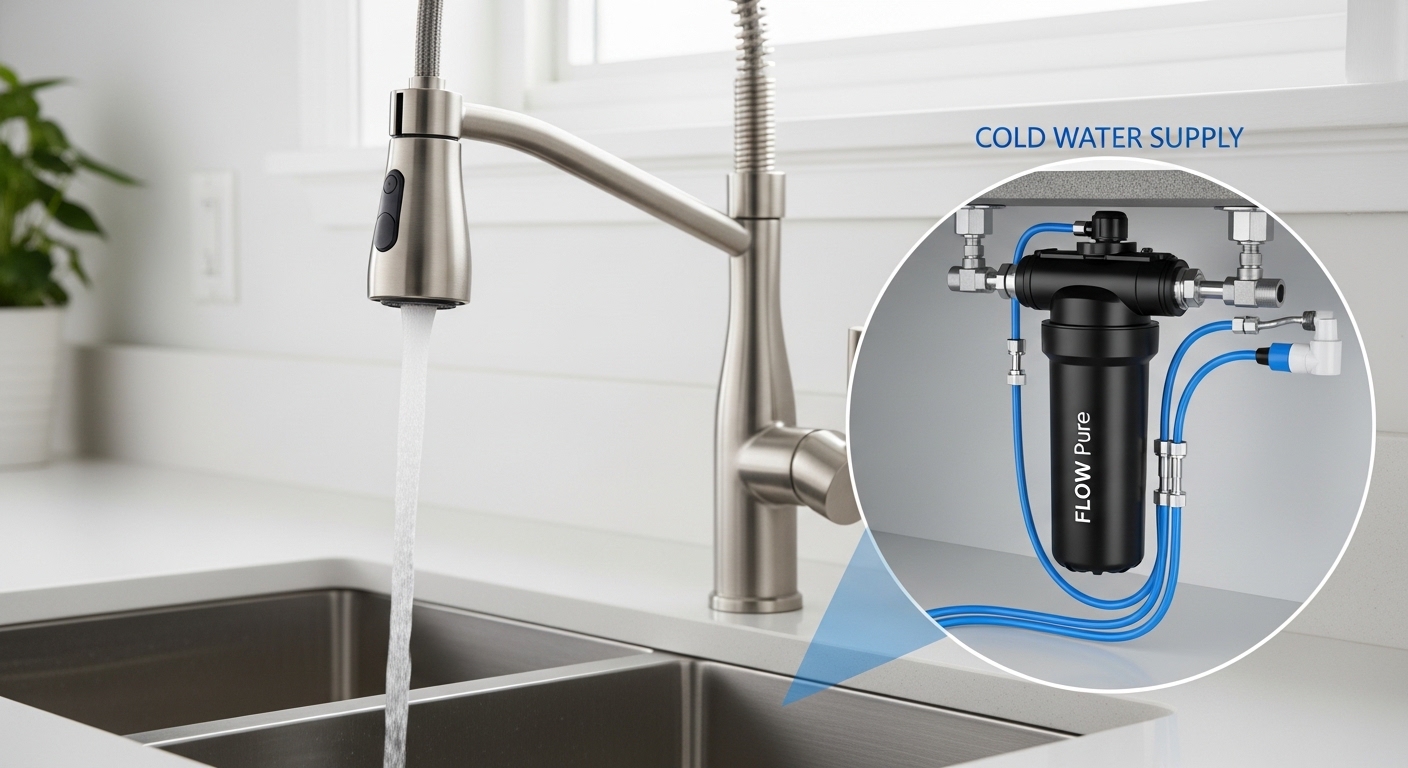
If you own a pull-out or pull-down kitchen faucet and you’ve been eyeing a faucet water filter for pull out faucet setups, here’s the short version: the little screw-on filters you see clamped to a bathroom tap will not work on your sprayer. The spray head detaches and moves, so there’s nothing to bolt a filter to. Instead, you filter the water before it reaches the faucet — with an inline cartridge on the cold supply line or a small under-sink system. This guide walks through exactly which options fit a pull-out faucet, what they cost, how long the filters last, and how to pick the right one for your water.
Why Can’t You Just Clip a Faucet-Mount Filter Onto a Pull-Out Faucet?
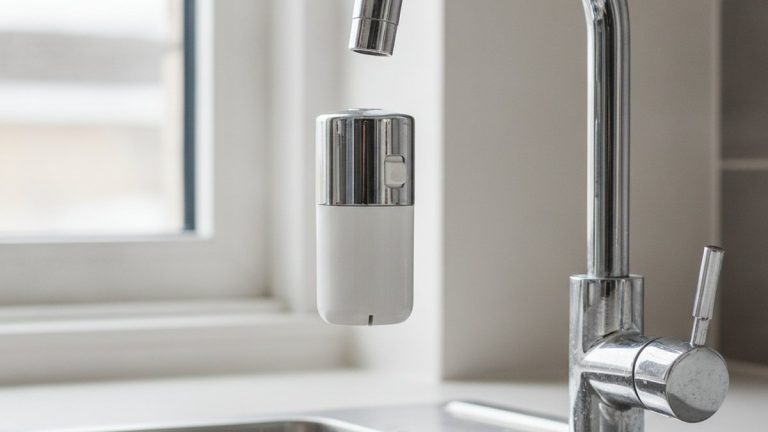
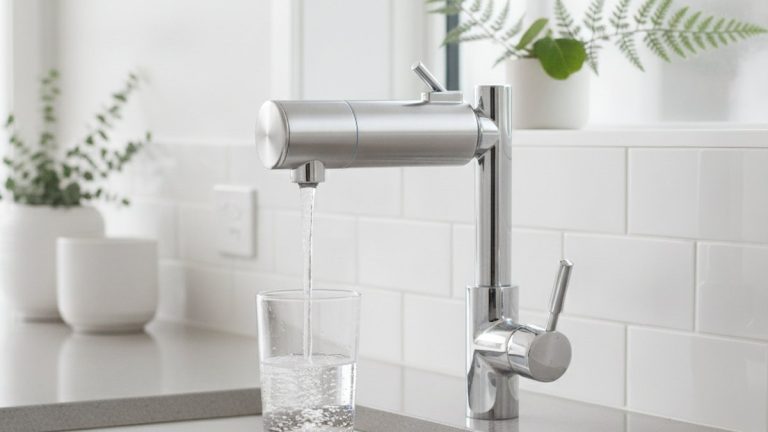
Because there’s no aerator to screw it onto. A classic faucet-mount filter (think PUR or Brita) threads onto the tip of a fixed spout where the aerator normally sits. A pull-out or pull-down faucet has a detachable spray head instead of a fixed spout — it clicks into a docking collar and pulls out on a hose. There are no external threads, the head is often a non-standard shape, and clamping a heavy filter on it would ruin the retraction and the magnetic dock.
So for pull-out faucets you have three realistic routes, and all of them filter upstream of the spray head:
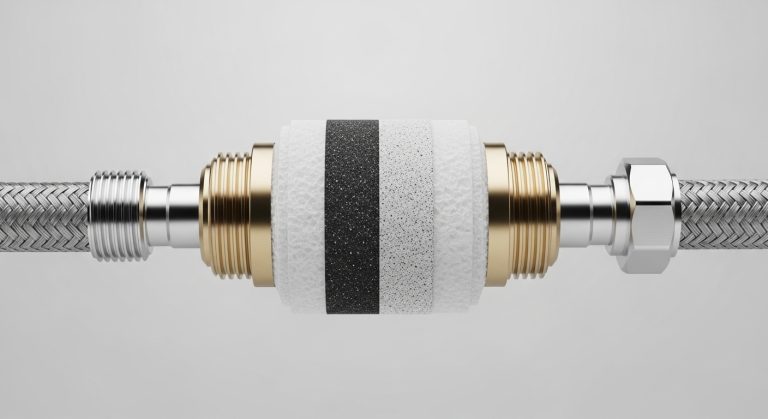
- Inline supply-line filter — a sealed cartridge spliced into the 3/8″ cold water line under the sink. Every drop from the faucet is filtered.
- Under-sink filter system — a bracket-mounted canister (or two) with its own cartridge; usually higher capacity and finer filtration.
- Inline hose filter — a compact cartridge added to the flexible supply or pull-out hose. Easiest DIY, lower capacity.
If you want the deep dive on that last option specifically, we cover it in detail in what a faucet water filter hose is and whether you actually need one — it’s the most beginner-friendly path for a pull-out setup.
Which Type of Filter Is Best for a Pull-Out Kitchen Faucet Under $150?
For most homes, an inline supply-line filter in the $50–$120 range is the best balance of price, filtration, and zero clutter on the counter. It hides under the sink, doesn’t touch the spray head, and delivers filtered water from both the stream and the spray. Go with a full under-sink system only if you have serious contaminant concerns (lead, PFAS) or want a dedicated drinking tap.
Here’s how the realistic options stack up for a pull-out faucet:
| Filter Type | Typical Price | Cartridge Life | What It Removes | Best For |
|---|---|---|---|---|
| Inline supply-line filter | $40–$120 | 6–12 months (200–600 gal) | Chlorine, sediment, taste & odor | Most pull-out faucets, easy install |
| Under-sink single-stage | $60–$150 | 6–12 months (500–1,000 gal) | Chlorine, sediment, some VOCs | Higher volume households |
| Under-sink multi-stage | $120–$300 | 6–12 months per stage | Lead, cysts, PFAS, chlorine, sediment | Well water or known contaminants |
| Inline hose filter | $25–$70 | 2–4 months (100–300 gal) | Chlorine, sediment, basic taste | Renters, quick DIY, low budget |
| Clip-on faucet-mount filter | $25–$50 | 2–3 months | Chlorine, lead (some models) | ❌ Does not fit pull-out spray heads |
Notice the bottom row: the cheap, popular clip-on filter is the one option that won’t work on your faucet. That’s the mistake most people make when they search for a filter for a pull-out sprayer.
How Do You Install a Water Filter on a Pull-Out Faucet Yourself?
You install it on the water line under the sink, not on the spray head — and for an inline filter it’s about a 20-minute job with no soldering. The filter goes on the cold supply line so every stream and spray comes out filtered.
Here’s the basic sequence for an inline supply-line filter:
- Shut off the cold water at the angle stop valve under the sink and open the faucet to release pressure.
- Disconnect the cold supply hose from the shut-off valve (keep a towel and bowl handy — a little water will spill).
- Install the filter inline between the shut-off valve and the faucet’s supply hose, matching the arrow on the filter to the direction of flow (valve → filter → faucet).
- Use the included fittings or adapters (usually 3/8″ compression or push-to-connect) and hand-tighten, then a quarter turn with a wrench.
- Turn the water back on slowly, check every connection for drips, and run the faucet 5 minutes to flush the new carbon cartridge before drinking.
If you’re comfortable swapping a supply line, you already have the skills. And if you’re doing this as part of a larger faucet swap, our walkthrough on how to install a kitchen faucet step by step covers the plumbing connections you’ll be working around. Under-sink systems follow the same logic but add a mounting bracket and sometimes a dedicated spigot.
Does a Water Filter Reduce the Pressure or Flow on a Pull-Down Sprayer?
A little, but a properly sized inline filter should drop flow by only about 5–15%, which most people never notice on a pull-down sprayer. The bigger flow killers on a pull-out faucet are almost always a clogged spray head or a fouled aerator, not the filter.
Pull-out and pull-down heads have tiny nozzle holes that scale up fast in hard-water areas. If your spray goes weak or splits into a spitting pattern, don’t blame the new filter first — check the head. Mineral buildup is the usual culprit, and it’s the same problem we break down in whether faucet aerators get clogged and how to tell before your water slows to a trickle. A quick vinegar soak of the spray face often restores full flow.
To keep pressure healthy after adding a filter:
- Match the filter’s rated flow (in GPM) to your faucet — most kitchen faucets run 1.5–1.8 GPM, so any filter rated 1.5 GPM or higher is fine.
- Replace the cartridge on schedule; a clogged, overdue filter is the #1 cause of pressure loss.
- Soak the pull-out spray head in white vinegar every few months if you have hard water.
How Long Does a Faucet Water Filter Last, and What Does Replacement Cost?
Most inline and under-sink cartridges last 6 to 12 months, or roughly 200–1,000 gallons depending on the model, and replacement cartridges typically run $15–$45 each. Inline hose filters are cheaper up front but need swapping every 2–4 months, so they can cost more over a year.
The real driver is your water. Hard water and heavy sediment clog carbon faster, shortening cartridge life. If your faucet already fights mineral buildup — you’re constantly wiping chalky spots off the finish — you’ll go through filters quicker, and you’ll want to stay on top of cleaning too. Our guide on how to clean hard water stains from a faucet pairs well with a filter, since filtering the water and de-scaling the fixture attack the same problem from both ends.
A quick annual cost snapshot for a family of four:
- Inline supply-line filter: ~$30–$60/year in cartridges.
- Under-sink single-stage: ~$40–$70/year.
- Inline hose filter: ~$60–$90/year (more frequent swaps).
- Multi-stage under-sink: ~$80–$130/year.
Smart-monitoring options exist too — some models track usage electronically so you’re not guessing. We compared one of the popular connected units in whether a Xiaomi faucet water filter is worth buying in 2026 if you like the idea of an app telling you when to change the cartridge.
What Should You Look For When Buying a Filter for a Pull-Out Faucet?
Buy for your actual water problem, your faucet’s flow rate, and independent certification — in that order. Don’t overpay for lead-and-PFAS filtration if your city water just tastes like chlorine, and don’t under-buy a basic carbon filter if you’re on a well with real contaminants.
Run through this checklist before you buy:
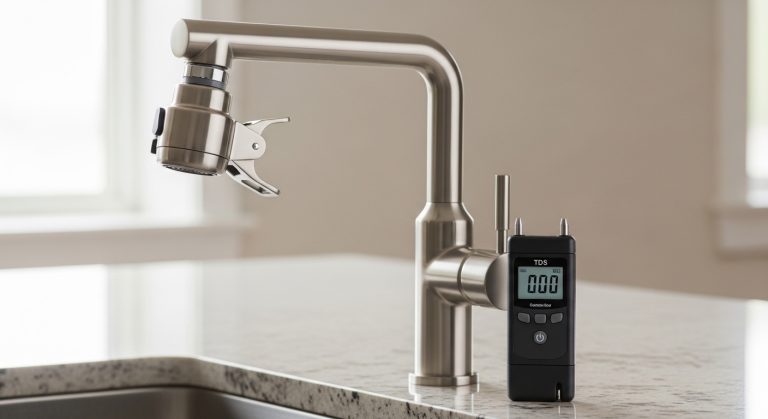
- Test your water first. A cheap home test strip or your utility’s annual water-quality report tells you what you actually need to remove.
- Check for NSF/ANSI certification. NSF/ANSI 42 covers taste and odor (chlorine); NSF/ANSI 53 covers health contaminants (lead, cysts); NSF/ANSI 401 covers emerging contaminants like PFAS.
- Match the flow rate. Look for a filter rated at or above your faucet’s GPM so the sprayer doesn’t feel weak.
- Confirm fitting size. Most kitchen supply lines are 3/8″ compression — make sure the filter includes the right adapters.
- Mind the space under your sink. Pull-out faucets have a hose and weight assembly hanging down; measure clearance before choosing a bulky canister.
- Read the warranty. A quality inline or under-sink system should carry at least a 1-year warranty on the housing.
Afinion Home’s Take: Matching the Filter to Your Faucet
Short answer: keep the filtration under the counter and keep the spray head clean. At Afinion Home we design and test kitchen and bath fixtures — including pull-down and pull-out sprayers — so we see this pairing constantly. A pull-out faucet gives you reach and flexibility; an inline or under-sink filter gives you clean water without cluttering that sleek spray head or fighting its retraction. The two work together beautifully as long as you filter upstream.
One more practical note: if you’re shopping for a new pull-out faucet at the same time, prioritize a model with a ceramic disc cartridge and a de-scaling silicone spray face (the little rubber nozzles you can rub clean). That combination shrugs off hard water and keeps flow strong long after your filter is installed.
FAQ
Can I use a regular Brita or PUR faucet filter on a pull-out faucet?
No. Clip-on faucet-mount filters like Brita and PUR need to screw onto a fixed spout’s aerator threads. A pull-out or pull-down faucet has a detachable spray head with no external threads, so those filters simply have nothing to attach to. Use an inline or under-sink filter instead.
Will adding a filter void my pull-out faucet’s warranty?
Generally no, because an inline or under-sink filter connects to the supply line, not the faucet body itself, so it doesn’t modify the fixture. That said, always check your faucet manufacturer’s terms — installing anything that alters the faucet’s internal components could affect coverage. Filtering upstream on the water line is the safe, warranty-friendly approach.
Does a filtered pull-out faucet still work for both stream and spray?
Yes. Because the filter sits on the supply line before the water reaches the faucet, both the aerated stream and the spray pattern come out filtered. You lose nothing in functionality — the spray head still pulls out, retracts, and switches modes exactly as designed.
How do I know when to replace the cartridge?
Replace it when flow noticeably drops, when taste or odor returns, or simply on the manufacturer’s schedule — usually every 6–12 months for under-sink and inline filters, or every 2–4 months for hose filters. Mark the install date on the housing with a marker, or use a smart filter that tracks gallons for you.
Is an under-sink filter overkill for city water?
For most city water, a single-stage inline or under-sink carbon filter certified to NSF/ANSI 42 is plenty — it handles the chlorine taste and odor that bother most people. Step up to a multi-stage NSF/ANSI 53 or 401 system only if your water test shows lead, cysts, or PFAS, or if you’re on a private well.
Do these filters slow down a pull-down sprayer?
Only slightly. A correctly sized inline filter reduces flow by about 5–15%, which is hard to notice. If your sprayer feels weak, the filter usually isn’t the problem — check the spray head for mineral clogging and replace an overdue cartridge before assuming the filter is at fault.
About the author: This guide was written by the Afinion Home fixtures team, who design, install, and stress-test kitchen and bathroom faucets — including pull-out and pull-down sprayers — across hard- and soft-water regions. Our recommendations reflect hands-on installation experience and real cartridge-life testing, not spec-sheet guesswork.
About Afinion Home: Afinion Home (afinionhome.com) is a B2C brand specializing in faucets, shower heads, and bathroom fixtures. Every fixture we sell is built to meet recognized plumbing standards and backed by our warranty. When we discuss filtration, we cross-reference NSF/ANSI 42, 53, and 401 certifications so you can trust the guidance is grounded in real testing standards, not marketing claims.
One Comment