What Is a Tap Water Hammer Arrestor, and Do You Need One to Stop That Banging Pipe Noise?
If you’ve ever turned off a faucet and heard your walls thud like someone knocked on a door, a tap water hammer arrestor is almost certainly what you’re missing. That bang isn’t your imagination and it isn’t harmless — it’s a pressure spike traveling back through your plumbing, and left alone it loosens joints, cracks solder, and shortens the life of every faucet, valve, and hose in the house. This guide walks you through what an arrestor actually does, how to tell if it’s the right repair, how to size and install one, and where people get it wrong.
Why do my pipes bang when I turn off the tap?
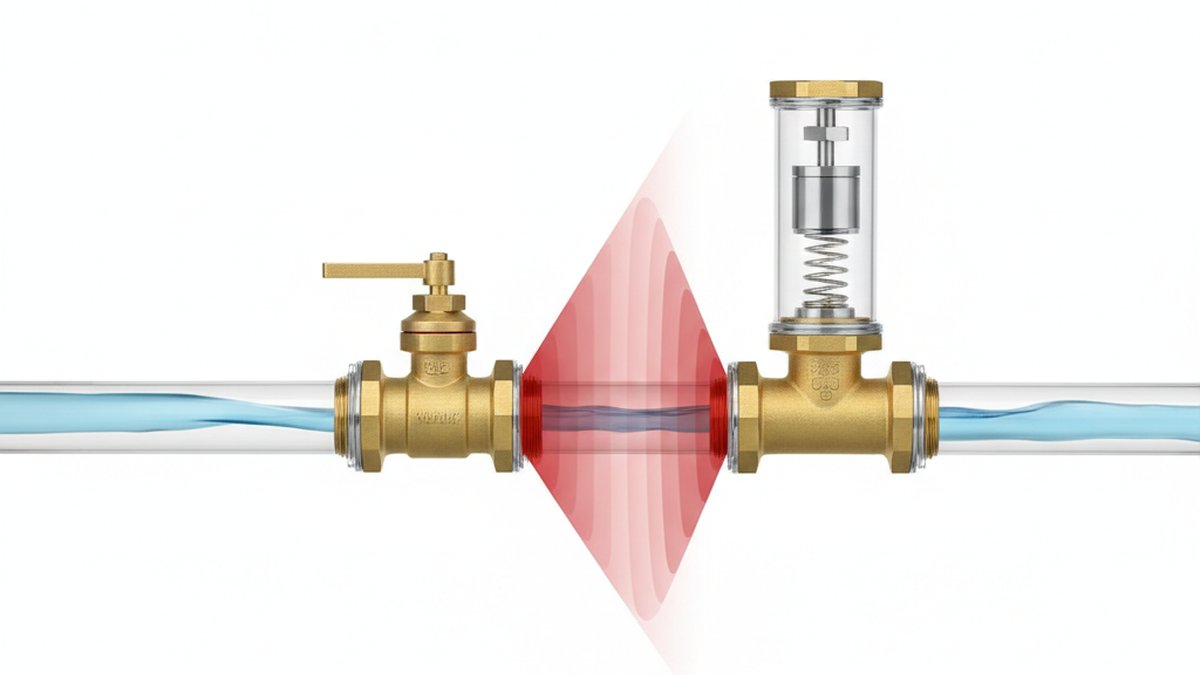
Your pipes bang because water has mass and momentum. When you shut a faucet or a solenoid valve closes fast, water moving at 6–8 feet per second suddenly has nowhere to go, so it slams into the closed valve and sends a pressure shock wave backward through the pipe. Plumbers call this “water hammer,” and the noise is that shock wave rattling the pipe against framing.
A few things make it worse: high household water pressure (anything over 60–70 psi), long straight runs of rigid copper or steel pipe, quick-closing valves like the ones in washing machines and dishwashers, and pipes that aren’t strapped tightly to the studs. Single-lever and touchless faucets tend to trigger it more than old two-handle taps because they close in a fraction of a second.
What is a tap water hammer arrestor and how does it actually work?
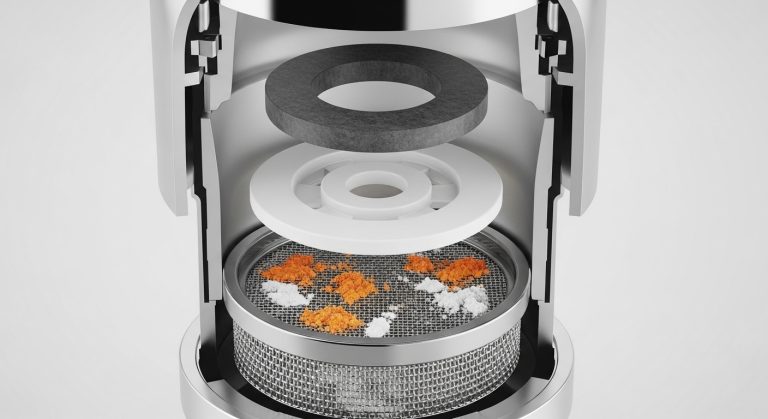
A tap water hammer arrestor is a sealed cylinder containing a spring-loaded piston (or a cushion of compressed air or gas) that gives the shock wave somewhere to go. When the pressure spike hits, the piston briefly compresses, absorbs the energy, and then resets — like a shock absorber on a car soaking up a pothole. Instead of a bang, you get silence.
This is very different from the old “air chamber” approach — a capped vertical stub of pipe left full of air behind the wall. Those work at first, but the trapped air slowly dissolves into the water and they go dead within a year or two, which is why so many older homes started banging again. A modern sealed arrestor keeps its cushion permanently, needs no maintenance, and is the version building codes now expect.
- Piston type: a stainless or plastic piston with an O-ring seals against a small gas charge. Most common and most durable.
- Air/bladder type: a diaphragm separates water from a sealed air chamber. Common in whole-house units.
- Mini “tee” arrestors: compact units that thread right onto a washing-machine hose bib or under-sink supply line — no soldering.
How do I know if I actually need a water hammer arrestor?
You need one if you hear a sharp single “bang” or “thud” at the moment a valve closes — not a continuous rattle while water runs. That instant-on-shutoff timing is the giveaway that it’s water hammer and not something else. Run this quick check before you buy anything:
- Turn a faucet on full, then shut it off fast. A bang on closing = water hammer.
- Start and stop your washing machine or dishwasher fill cycle. A bang when the valve clicks shut = water hammer (this is the #1 culprit).
- Check your static pressure with a $10 gauge on an outside hose bib. Over 80 psi means you may also need a pressure-reducing valve, not just an arrestor.
- If the noise happens while water is flowing (a hum, whine, or continuous rattle), that’s usually a loose pipe, a worn faucet cartridge, or a bad aerator — not water hammer.
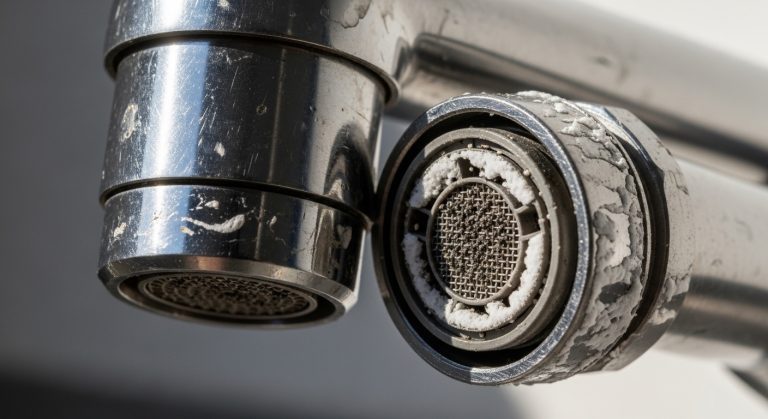
That last point matters. Plenty of “banging pipe” complaints are actually a chattering faucet cartridge or a partially blocked aerator, and no arrestor will fix those. If your noise shows up during flow and your water has slowed down too, it’s worth ruling out a clog first — our guide on whether faucet aerators get clogged and the step-by-step sink aerator unclogging walkthrough will tell you in about ten minutes whether the aerator is the real problem.
What size and type of arrestor do I need for my faucet or washing machine?
Match the arrestor to the fixture’s flow demand, measured in “fixture units,” and to the connection you’re working with. For a single bathroom or kitchen faucet, the smallest residential unit (an “AA” size, rated 1–11 fixture units) is plenty. For a washing machine, a hammer arrestor tee that threads between the shutoff and the hose is the easiest correct choice. Here’s how the common options compare:
| Type | Best for | How it installs | Typical price | Lifespan |
|---|---|---|---|---|
| Mini screw-on (tee/hose bib) | Washing machine, dishwasher, single faucet supply | Hand-tighten, no tools/solder | $10–$20 | Permanent, sealed |
| Piston arrestor (AA size) | Individual sink or lav faucet | Thread or push-fit onto supply line | $12–$30 | Permanent, sealed |
| Solder/press-in line arrestor | Fixtures without accessible connections | Cut pipe, solder or press a tee | $20–$40 | Permanent, sealed |
| Whole-house arrestor | Multiple fixtures, main line noise | Plumbed near main or manifold | $40–$90 | Serviceable/permanent |
| Old air chamber (capped stub) | Legacy only — not recommended | Vertical pipe stub | DIY pipe cost | Fails in 1–2 years |
Rule of thumb: install the arrestor as close to the noisy valve as possible. The shock wave is strongest right at the fast-closing valve, so an arrestor six inches away kills it far better than one placed twenty feet upstream. If two fixtures on the same line both bang (say a washer and a nearby laundry sink), one well-placed unit between them can often handle both.
Can I install a tap water hammer arrestor myself, or do I need a plumber?
For any screw-on or push-fit arrestor, this is a genuine DIY job — most people finish in 15–30 minutes with no special tools. You only need a plumber if the correct location has no accessible fitting and requires cutting into the wall or soldering into a rigid line. Here’s the DIY path for the two most common cases.
Washing machine (easiest):
- Turn off the hot and cold laundry shutoff valves.
- Unscrew the washer supply hoses from the valves.
- Thread a hammer-arrestor tee onto each valve, then reattach the hose to the tee. Hand-tighten plus a quarter turn with pliers — don’t overtighten and crush the washer.
- Turn the water back on, check for drips, and run a fill cycle to confirm the bang is gone.
Under-sink faucet:
- Close the angle stop under the sink and open the faucet to relieve pressure.
- Disconnect the supply line (braided riser) from the stop or the faucet tailpiece.
- Install the arrestor inline — most thread on with a standard 3/8″ or 1/2″ compression fitting. Use fresh PTFE tape on any tapered threads.
- Reconnect, open the stop slowly, and test.
A quick standards note: reputable arrestors are certified to ASSE 1010, the American plumbing standard for water hammer arresting devices. Buying an ASSE 1010–listed unit means it’s been pressure-cycle tested (typically 10,000+ cycles) to keep working for the life of the plumbing. It’s the same reason we tell people to stick with established, tested fixture makers when they’re buying the faucet itself — if you’re upgrading hardware at the same time, our roundup of the best bathroom faucet tap brands and the best lead-free faucet brands both filter for certification and warranty, not just looks.
What happens if I just ignore the banging?
Ignoring water hammer is a slow-motion plumbing failure. Each spike can momentarily hit 3–5 times your normal line pressure, and that repeated hammering does real damage over months and years:
- Loosened joints and fittings — compression nuts back off and threaded joints weep, leading to slow leaks inside walls.
- Cracked solder joints on copper, which can go from a weep to a burst.
- Worn faucet cartridges and valve seats — the shock accelerates wear, so faucets start dripping years early.
- Ruptured supply hoses — braided washer hoses are a leading cause of home flooding, and hammer fatigue is a direct contributor.
- Damaged appliance solenoids in dishwashers, washers, and ice makers.
In short, a $15 arrestor is cheap insurance against a four-figure water-damage claim. It’s one of the highest-value small repairs in a house.
Where exactly should the arrestor go for the best results?
Put the arrestor within a few feet of the fastest-closing valve, on the same branch line, ideally between the shutoff and the fixture. That placement lets it intercept the shock at its source. A few practical placement tips:
- For a washer, mount one on each supply (hot and cold) — both solenoids slam shut.
- For a whole floor of noisy fixtures, a single larger unit at the manifold or the top of a riser can quiet several at once.
- Orientation doesn’t matter for modern sealed/piston units — they work vertical, horizontal, or upside down. (That’s another reason the old vertical air chamber is obsolete.)
- If pressure is above 80 psi, add a pressure-reducing valve at the main. An arrestor treats the symptom; high pressure is often the disease.
How much does fixing water hammer really cost?
DIY, expect $10–$40 in parts per fixture and about half an hour of your time. Hiring a plumber for a simple screw-on install typically runs $100–$200 with the service call; a soldered-in line arrestor or a whole-house solution with a new pressure-reducing valve can run $250–$600 depending on access and local labor rates. Compared with replacing a burst supply line and drying out a wall, it’s the definition of money well spent.
FAQ
Will a water hammer arrestor fix a faucet that hums or rattles while running?
No. An arrestor only stops the bang that happens the instant a valve closes. A hum, whistle, or rattle during flow is usually a worn faucet cartridge, a loose washer, or a clogged aerator. Fix those separately — start by checking and cleaning the aerator.
Do water hammer arrestors wear out or need recharging?
Modern sealed piston and bladder arrestors are maintenance-free and last the life of the plumbing — that’s the whole point of the sealed design. The only thing that “goes dead” is the old-style capped air chamber, whose air cushion dissolves into the water within a year or two. If you have those, replacing them with a sealed ASSE 1010 unit is the permanent fix.
Can I install a tap water hammer arrestor without soldering?
Yes, in most homes. Screw-on tee arrestors for washing machines and push-fit or compression-fitting arrestors for under-sink faucets require no torch and no special skills. You only need soldering (or push-fit tees) when the correct spot is a rigid copper line with no accessible threaded connection.
My washing machine bangs but my faucets don’t — do I only need one for the washer?
Usually yes. Washing machine and dishwasher solenoid valves close faster than hand-operated faucets, so they’re the most common source of water hammer. Installing arrestors on the washer’s hot and cold supplies often solves the whole problem. Add more only if other fixtures still bang.
Is high water pressure the same thing as water hammer?
They’re related but not identical. High static pressure (over 80 psi) makes water hammer louder and more damaging, but hammer is specifically the shock wave from a fast valve closure. If your pressure is high, install a pressure-reducing valve and an arrestor; if pressure is normal and only one fast valve bangs, an arrestor alone is enough.
Are cheap screw-on arrestors as good as the expensive built-in ones?
For a single fixture, yes — as long as it’s ASSE 1010 certified. Certification means it passed the same fatigue and pressure testing regardless of price. The pricier line and whole-house units aren’t “better” so much as designed for permanent, concealed, multi-fixture installs.
Author note: This guide was written by the Afinion Home fixtures team, drawing on hands-on faucet and supply-line installs and current U.S. plumbing standards. Afinion Home designs and sells bathroom and kitchen faucets and fixtures at afinionhome.com, and we back our hardware with tested, lead-free, warranty-supported components. We recommend arrestors certified to ASSE 1010 and always suggest confirming your local plumbing code before permanent installs. When in doubt on a soldered or in-wall job, bring in a licensed plumber.