What Is a Wide Faucet Deck Plate, and Do You Need One to Cover a 3-Hole Sink?
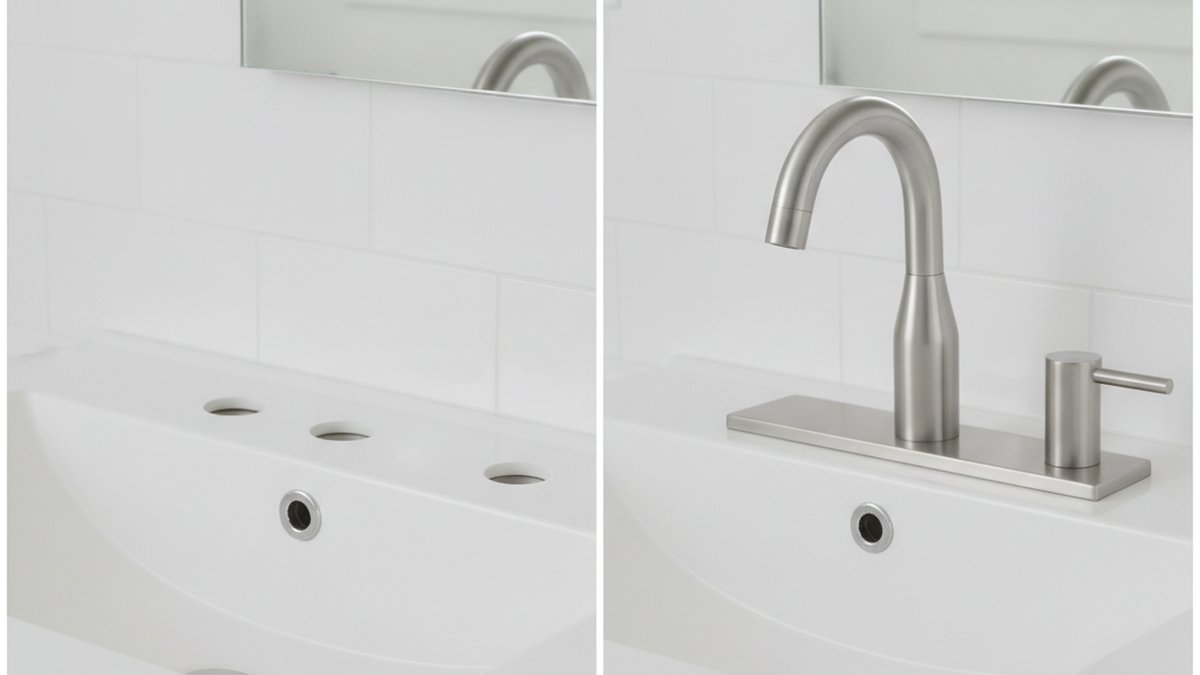
A wide faucet deck plate is the part that lets a single-hole faucet live happily on a sink that was drilled for three. Most bathroom and kitchen sinks come with three holes on 4-inch or 8-inch centers — one for the spout and two for separate hot/cold handles or a sprayer. When you upgrade to a sleek single-handle faucet, those extra holes sit there empty and ugly. A deck plate (also called an escutcheon or base plate) bridges across them, and a wide one is sized specifically for the 8-inch “widespread” hole layout so it hides everything in one clean sweep.
At Afinion Home we sell a lot of single-handle faucets to people replacing older two- and three-piece sets, and “will this cover my existing holes?” is easily the most common pre-purchase question we get. So let’s answer it properly — what a wide deck plate actually does, how to measure for one, when you need the wide version versus a standard one, and how to pick a finish and material that won’t peel in two years.
What exactly does a wide faucet deck plate do?
It covers the unused holes on your sink and gives a single-hole faucet a finished, stable base. That’s the whole job — but it does it in two ways that matter. First, it’s cosmetic: instead of two chrome-ringed gaps or plastic hole caps flanking your new faucet, you get one continuous plate that makes the installation look factory-designed. Second, it’s functional: the plate adds a broad, flat mounting surface that helps a tall single-handle faucet sit rock-steady on a thin sink deck, and it seals against water and gunk creeping into the holes.
The word “wide” is doing real work here. A standard deck plate is often around 4 to 6 inches long, made to sit under a centerset faucet on 4-inch centers. A wide deck plate is typically 8 to 12 inches long because it has to reach across the outer holes of an 8-inch widespread configuration. Buy the wrong length and you’ll either leave a hole peeking out the side or have a plate that overhangs the back of the basin.
Do I actually need a wide deck plate, or can I skip it?
You need one if your sink has three holes drilled roughly 8 inches apart and your new faucet is a single-hole model — otherwise you’ll be staring at two open holes. You can skip it in three situations: your faucet already comes with an escutcheon in the box, your sink has only one hole to begin with, or your holes are on 4-inch centers (in which case you want a standard plate, not a wide one). If you’re on the fence about whether a plate is even necessary for your setup, our deeper walkthrough on whether you need a deck plate for your faucet lays out every scenario.
Here’s the quick decision path most homeowners land on:
- 3 holes, 8″ apart, single-handle faucet → yes, get a wide deck plate.
- 3 holes, 4″ apart, single-handle faucet → get a standard (short) deck plate.
- 3 holes, and you want to keep the outer holes empty → skip the plate, use individual faucet hole covers instead.
- 1 hole only → no plate needed, though a small optional base plate is a style choice.
One thing people miss: even if your single-hole faucet could mount without a plate on a 3-hole sink using separate hole caps, the caps rarely match the faucet finish exactly, and they draw the eye to the gaps rather than hiding them. A single wide plate almost always looks more deliberate.
How do I measure my sink for a wide faucet deck plate?
Measure the distance from the center of the left hole to the center of the right hole — if it’s about 8 inches, you need a wide (widespread) deck plate; if it’s about 4 inches, you need a standard 4-inch one. This center-to-center number is the single most important measurement, and getting it right is what separates a clean install from a return trip.
Do it in this order:
- Clear the sink and look at the deck (the flat surface where the faucet sits). Count the holes.
- Measure center-to-center between the two outermost holes with a tape measure. 4″ and 8″ are the two common standards; anything in between is usually a 6″ “mini-widespread.”
- Check hole diameter. Standard faucet holes are 1⅜ inch (about 35 mm). Make sure your faucet’s shank and the plate’s opening line up with this.
- Measure your available depth from the back edge of the sink to the front lip, so the plate doesn’t overhang.
If your measurement comes back at 8 inches, you’re in wide-deck-plate territory. If you’re seeing 4 inches, a wide plate will be far too long — you’d want the setup we cover in our guide to the widespread lavatory faucet in chrome, which explains the difference between centerset, mini-widespread, and true widespread layouts in detail.
Wide deck plate vs. individual hole covers vs. a new sink — which is right?
For most people replacing a faucet, a wide deck plate is the cheapest, cleanest, and fastest option — you’re looking at $10–$40 and 15 extra minutes, versus hundreds of dollars and a plumber for a new sink. Individual hole covers are a fine choice only when you specifically want the outer holes empty for a soap dispenser or filtered-water tap later.
| Option | Typical Cost | Best For | Downside |
|---|---|---|---|
| Wide faucet deck plate | $10–$40 | Single-handle faucet on an 8″ 3-hole sink | Must match faucet finish |
| Individual hole covers | $5–$15 each | Keeping outer holes for future accessories | Two visible caps, harder to color-match |
| New drop-in sink | $120–$400+ | Sink is also worn or wrong hole count | Cost, labor, possible countertop work |
| Countertop-mount (no plate) | $0 | Single-hole sink or vessel setup | Not an option on a 3-hole deck |
The deck plate wins on value almost every time. The only reason to go with separate covers is intent — if you’re planning to add a soap dispenser, an instant-hot tap, or a dedicated filtered-water faucet down the road, keeping those outer holes accessible under matching caps makes sense. Replacing the whole sink only pays off if the basin itself is chipped, stained, or the wrong size.
What finish and material should a wide deck plate be?
Match the plate’s finish exactly to your faucet, and buy solid brass or stainless steel rather than coated plastic if you want it to last. A mismatched finish is the number-one giveaway of a DIY faucet swap, and a cheap plastic-chrome plate will yellow and flake near the water line within a couple of years. The good news: most quality faucets sold with a wide deck plate include a plate in the identical finish, so the safest move is to buy the faucet and plate as a matched set.
Here’s how the common finishes hold up:
- Chrome — brightest, easiest to clean, hides water spots the worst but wipes clean instantly. See our rundown on whether a chrome faucet is the right choice for your space.
- Brushed nickel — warm, satin look that hides fingerprints and water spots best; the most forgiving everyday finish.
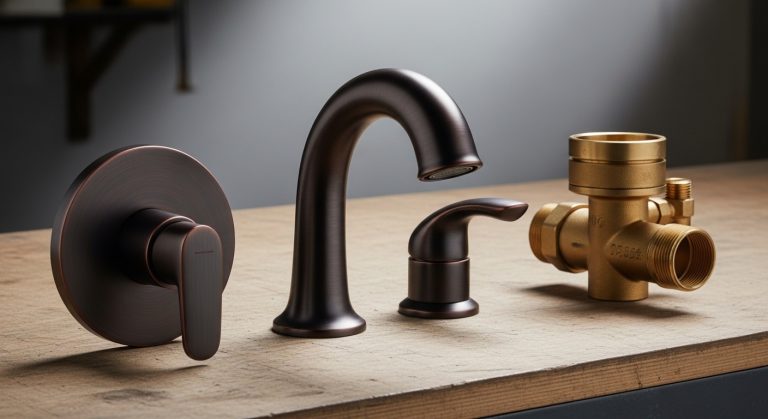
- Oil-rubbed bronze — dark, traditional, dramatic; needs a well-matched plate because the finish varies between makers. Our guide to the oil-rubbed bronze one-hole bathroom faucet covers finish consistency in depth.
- Matte black — modern and high-contrast; shows dust and dried water more than nickel.
On material: a solid brass or 304 stainless deck plate resists corrosion and keeps its finish because the color is plated or PVD-bonded onto real metal. Zinc-alloy and ABS-plastic plates are lighter and cheaper, and they’re fine for a low-use guest bath, but for a daily-driver kitchen or primary bathroom, spend the extra few dollars on metal. Also confirm any faucet touching your drinking water is lead-free certified — a wide deck plate itself doesn’t carry water, but the faucet on top of it should meet the standard; our list of best lead-free faucet brands is a good starting point.
How do you install a wide faucet deck plate?
You slide the plate over the faucet’s mounting shank, set it flat on the sink deck (usually over a rubber gasket or a bead of plumber’s putty), then tighten the faucet’s mounting nut underneath to clamp the whole assembly down — no extra tools beyond a basin wrench in most cases. On a 3-hole sink the plate simply spans the two outer holes while the faucet shank drops through the center hole.
The basic sequence:
- Shut off the hot and cold supply valves under the sink and disconnect the old faucet.
- Clean the sink deck so the gasket seals against a smooth surface.
- Place the wide deck plate over the center hole, seated on its gasket or a thin ring of plumber’s putty.
- Feed the faucet’s shank and supply lines down through the deck plate and the center hole.
- From below, thread on the mounting nut and hand-tighten, then snug it with a basin wrench until the plate sits flush.
- Reconnect supply lines, turn the water back on, and check for drips.
Budget about 20–30 minutes total for a straightforward swap. The most common mistake is over-tightening on a ceramic or thin stainless deck, which can crack the sink or dimple the plate — snug is enough. If your supply lines are old, replace the braided connectors while you’re under there; they’re a few dollars and save a future flood.
Will a wide deck plate fit any faucet and any sink?
No — a wide deck plate only fits when your faucet is a single-hole (one-piece) model and your sink’s outer holes fall within the plate’s length, typically up to 8-inch centers. It won’t work with a true widespread faucet (those use three separate pieces and don’t need a bridging plate), and it won’t cover holes spaced wider than the plate itself.
Before you buy, confirm three things: your faucet is single-hole, your sink’s hole spacing is 8 inches or less, and the plate’s finish matches. Most single-handle kitchen and bathroom faucets are compatible, including tall gooseneck models — if you’re eyeing that style, our guide to the oil-rubbed bronze gooseneck faucet shows how a deck plate anchors a taller spout. For prep or bar sinks, note that many compact bar faucets come as single-hole units that pair nicely with a shorter deck plate rather than a wide one.
FAQ
What size deck plate do I need for an 8-inch sink?
For a sink with holes on 8-inch centers, you need a wide (widespread) deck plate, usually 8 to 12 inches long. Measure center-to-center between the two outer holes to confirm — if it reads 8 inches, a standard 4- to 6-inch plate will be too short to cover both outer holes.
Is a deck plate the same as an escutcheon?
Yes, essentially. “Deck plate,” “base plate,” and “escutcheon” all refer to the plate that sits between the faucet and the sink to cover holes and finish the base. In faucet catalogs the terms are used interchangeably, though “escutcheon” is also used for the round trim rings on shower and tub valves.
Can I use a wide deck plate to cover just one extra hole?
You can, but it’s often overkill. If you only have one unused hole, a single matching faucet hole cover is cheaper and less bulky. Use a wide deck plate when you need to cover two outer holes at once under a single-handle faucet, which is exactly the job it’s designed for.
Do wide deck plates leak?
Not if installed correctly. The deck plate itself doesn’t carry water — leaks come from the faucet connections below, not the plate. Seat the plate on its rubber gasket or a thin ring of plumber’s putty, don’t over-tighten, and check the supply-line connections after turning the water back on.
Are wide deck plates universal, or brand-specific?
Many are sold as universal aftermarket parts that fit any single-hole faucet with a standard 1⅜-inch shank, but the safest match is the plate that ships with or is made for your specific faucet, so the finish is identical. Aftermarket plates can vary slightly in shade even within the same “brushed nickel” name, so buy from the same maker when you can.
How much should a good wide faucet deck plate cost?
Expect $10–$40 for a quality solid-brass or stainless plate. Plates included with a faucet are effectively free, and standalone metal plates from reputable brands sit in the $15–$30 range. Anything under $10 is likely plastic and better suited to a low-traffic guest bathroom than a daily-use sink.
About the author: This guide was written by the Afinion Home fixtures team, drawing on hands-on installation of single-handle and widespread faucets across kitchen and bathroom remodels. We test hole spacing, plate fit, and finish durability on real sinks before recommending any product.
Why trust Afinion Home: Afinion Home (afinionhome.com) specializes exclusively in faucets, shower heads, and bathroom fixtures. Every faucet we sell is chosen against durability, finish-wear, and lead-free (NSF/ANSI 61 and 372) standards, and our deck plates and faucets are backed by manufacturer warranties so a peeling finish or a bad fit is covered, not your problem.