
Do Faucet Aerators Get Clogged, and How Do You Know Before Your Water Slows to a Trickle?
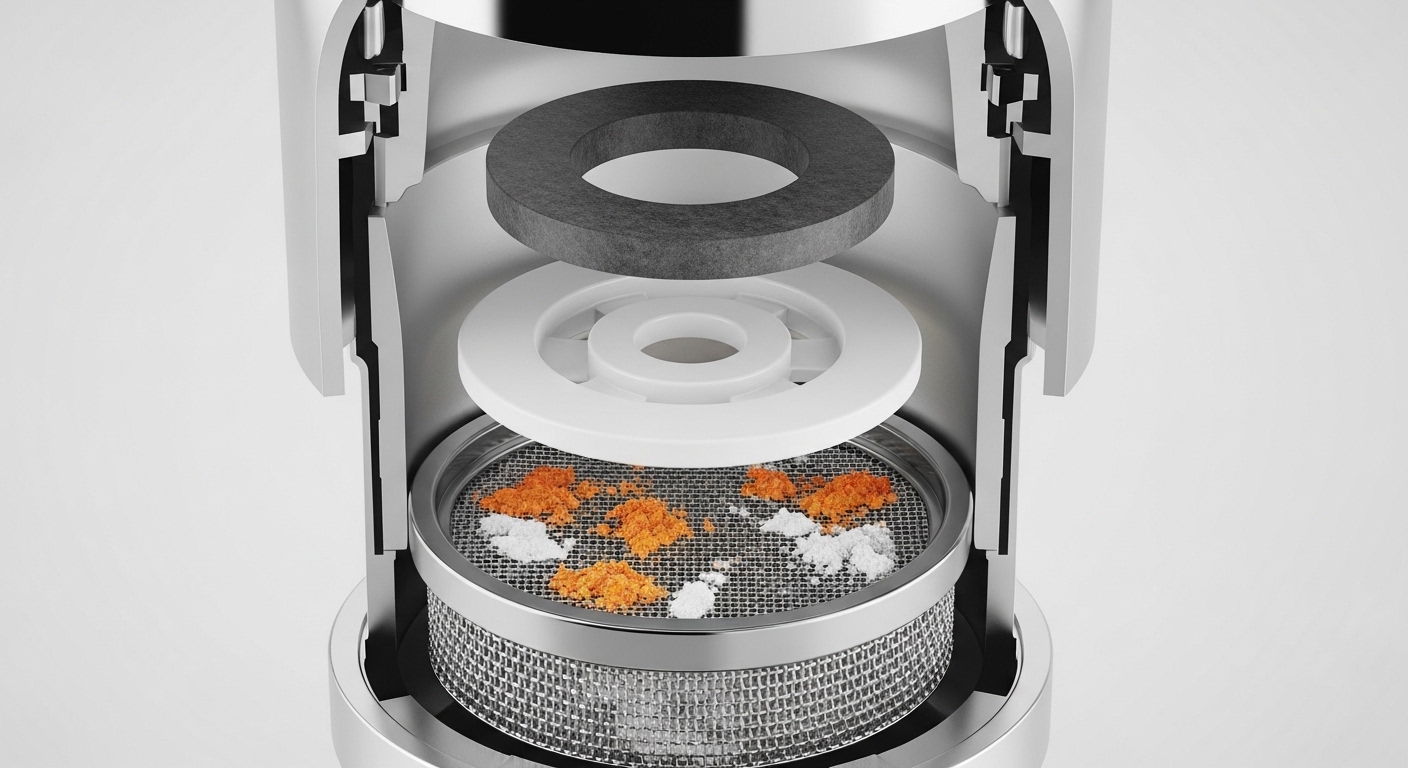
If you’ve ever wondered do faucet aerators get clogged, the answer is an emphatic yes, and it’s one of the single most common reasons a perfectly good faucet suddenly feels weak, sputtery, or lopsided. The aerator is that little screw-on tip at the very end of your spout, and its job is to mix air into the water so you get a soft, splash-free, even stream while using less water. Because it’s essentially a fine sieve sitting at the lowest, last point of your plumbing, it catches everything the water carries — and over months, that “everything” adds up to a clog.
At Afinion Home, our product team fields this exact question constantly from customers who assume a slow faucet means a failing valve or a bad cartridge. Nine times out of ten, it’s just the aerator. Below we’ll walk through why they clog, how to spot it, exactly how to clean one, when to replace instead of clean, and how to keep it from happening again.
Why do faucet aerators clog in the first place?
Faucet aerators clog because they’re a fine mesh screen sitting at the very end of your water line, so they physically strain out everything the water carries — hard-water minerals, sediment, and pipe debris — until the openings choke off. It’s not a defect; it’s the aerator doing its job until it fills up.
Here are the four culprits, roughly in order of how often we see them:
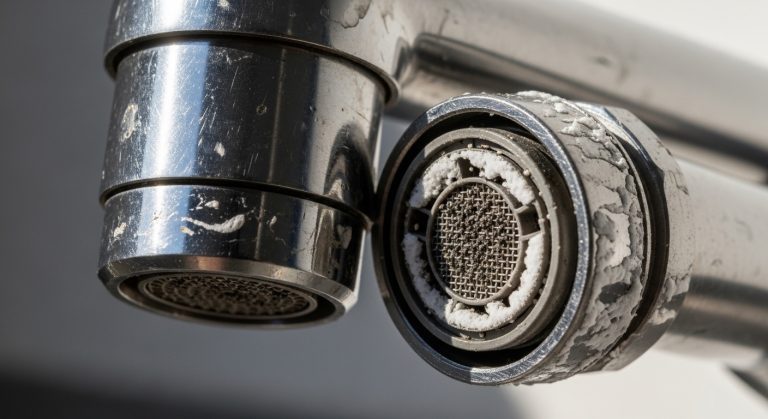
- Hard-water mineral scale (calcium and magnesium). This is the number-one cause. As water sits and evaporates in the aerator between uses, dissolved minerals crystallize into chalky white or greenish scale that welds itself to the screen. If you have hard water — most of the U.S. does to some degree — this is your likely villain.
- Sediment and grit. Sand, silt, and fine particles ride along in municipal or well water and get trapped in the mesh. Well-water homes see this far more often.
- Rust and pipe scale. Older galvanized pipes shed tiny orange-brown flakes. A single plumbing repair upstream can dislodge a slug of debris that lands right in your aerator.
- Post-construction or post-repair debris. Any time the water main is shut off and turned back on — a repair, a new water heater, city line work — the surge pushes loosened gunk downstream, and your aerator is the last filter it hits.
Because the aerator is the final checkpoint before water reaches your hands, it protects the rest of your fixture — but it pays the price by collecting the buildup itself. That’s actually a feature: a $5 part is sacrificing itself so your $250 faucet keeps running clean.
How do I know if my aerator is clogged and not something worse?
You almost certainly have a clogged aerator — rather than a failing valve or supply problem — if the weak flow is limited to one faucet and the stream is uneven, sputtery, or shoots off at an angle. A clogged aerator is a localized problem; a pressure problem affects the whole house.
Run through this quick self-diagnosis:
- Is it just one faucet? If every tap in the house is weak, your problem is house pressure, a main valve, or the municipal supply — not the aerator. If only the kitchen or one bathroom sink is affected, suspect the aerator first.
- Does the stream spray sideways or split? A partially blocked screen deflects water at odd angles. That crooked, spitting stream is a classic clogged-aerator signature.
- The unscrew test. Unscrew the aerator entirely and turn the faucet on gently. If the flow roars back to full strength with the aerator off, you’ve found your culprit — the clog is in that little part, not in your plumbing.
- Cold vs. hot difference? If only hot water is weak, that can point to the water heater or hot-side lines rather than the aerator, which restricts both equally.
That unscrew test is the definitive one. It takes 20 seconds and tells you instantly whether you’re dealing with a two-dollar fix or something that needs deeper attention like our guide on how to fix a dripping faucet at home.
How do you clean a clogged faucet aerator in about 10 minutes?
To clean a clogged faucet aerator, unscrew it from the spout, disassemble the parts, soak them in white vinegar for 30 minutes to loosen mineral scale, scrub the screen with an old toothbrush, rinse, and reassemble. Total hands-on time is under 10 minutes plus soak time.
Here’s the step-by-step:
- Close the drain or lay a towel in the sink so you don’t lose small parts.
- Unscrew the aerator. Most twist off by hand (righty-tighty, so turn counter-clockwise from your view looking up at it). If it’s stuck with scale, wrap the housing in a cloth or a few layers of tape to protect the finish, then use pliers gently. Don’t crank on bare metal — you’ll mar the finish.
- Disassemble and note the order. Inside you’ll typically find the outer housing, a rubber or silicone washer, a flow restrictor, and the mesh screen. Lay them out in order so reassembly is easy.
- Soak in white vinegar. Drop the metal and plastic parts into a small bowl of undiluted white vinegar for 30 minutes (or overnight for heavy scale). Vinegar’s mild acetic acid dissolves calcium and lime without harming brass, chrome, or stainless.
- Scrub and poke. Use an old toothbrush on the screen, and a straight pin or needle to clear individual clogged holes. Flush loosened debris out under running water.
- Reassemble and reattach. Put the parts back in the same order, hand-tighten onto the spout (don’t over-torque), and run the faucet. The stream should be full and straight again.
One caution: never leave a plated finish soaking in vinegar for more than an hour, and skip vinegar entirely on the outer visible housing if it has a delicate specialty coating — wipe those with a damp cloth instead. For a fuller walkthrough with photos, our companion article on a clogged sink aerator and how to unclog it in about 10 minutes covers the same process step by step.
While you have the aerator off, it’s the perfect moment to tackle any surrounding buildup — our guide on how to clean hard water stains from a faucet uses the same vinegar principle on the spout and handles.
When should you replace the aerator instead of cleaning it?
Replace the aerator instead of cleaning it when the mesh screen is torn, corroded through, cracked, or so scaled that flow doesn’t recover after a thorough soak — or simply when a new one costs a few dollars and your time is worth more. Aerators are cheap, standardized, and consumable.
Consider replacement if:
- The screen is physically damaged — a hole or tear means it can’t strain properly anymore.
- You see corrosion or crumbling metal, common on old brass aerators in aggressive water.
- The flow is still weak or crooked after cleaning — the internal geometry may be permanently fouled.
- You want a different flow rate. Aerators are rated in gallons per minute (GPM); swapping to a lower-GPM model is the cheapest way to save water.
Replacement aerators run about $3 to $12 and thread onto virtually any standard faucet. The one thing you must match is the thread type and size — see the table below.
| Aerator Type / Spec | What It Means | Best For | Typical Flow (GPM) |
|---|---|---|---|
| Male thread (M) | Threads are on the outside of the aerator; screws into a spout with internal threads | Most kitchen faucets | 1.5–2.2 |
| Female thread (F) | Threads are inside; screws onto a spout with external threads | Many bathroom faucets | 1.0–1.5 |
| Regular / Standard (15/16″–27 M or 55/64″–27 F) | The most common U.S. sizes | General replacement | 1.5–2.2 |
| Junior / Tom Thumb | Smaller diameter for compact spouts | Bar and prep faucets | 1.0–1.5 |
| Cache / Hidden (recessed) | Sits flush inside the spout, removed with a special key | Modern designer faucets | 1.2–1.8 |
If you’re not sure which you have, bring the old aerator to the hardware store, or measure the diameter with the mesh facing you. Kitchen aerators tend to be male-threaded and higher-flow; bathroom ones are often female-threaded and lower-flow.
How often do aerators clog, and does hard water make it worse?
In soft-water homes an aerator may go 1 to 2 years between cleanings; in hard-water areas it can clog noticeably every 3 to 6 months. Hard water is by far the biggest accelerant — the more dissolved calcium and magnesium in your supply, the faster scale builds on the screen.
Water hardness is measured in grains per gallon (gpg) or parts per million (ppm). Here’s roughly how that translates to aerator maintenance:
| Water Hardness | Grains/Gallon | How Often You’ll Likely Clean the Aerator |
|---|---|---|
| Soft | 0–3 gpg | Once a year or less |
| Moderately hard | 3–7 gpg | Every 6–12 months |
| Hard | 7–10 gpg | Every 3–6 months |
| Very hard | 10+ gpg | Every 1–3 months |
Well-water homes face a double challenge: they often have both hardness and sediment, so aerators clog with a mix of scale and grit. If you’re constantly cleaning aerators, that’s a strong signal it’s worth addressing the water itself — either with a whole-home softener or with point-of-use filtration. Our overview of a faucet water filter hose and whether you actually need one is a good place to weigh those options, since reducing the mineral and sediment load protects every aerator in the house.
Does removing the aerator to boost pressure work?
Removing the aerator does increase the raw flow, but you lose the air-mixing that makes the stream soft and splash-free, and you’ll use significantly more water. It’s fine as a diagnostic test, but living without an aerator means a harder, splashier stream and higher water bills. Clean or replace it instead.
How do you keep a faucet aerator from clogging so fast?
The most effective way to keep an aerator from clogging is to reduce the minerals and sediment reaching it — via a water softener or filter — and to do a quick preventive vinegar soak every few months before buildup gets bad. Prevention is far easier than waiting for the trickle.
Practical habits that stretch the time between clogs:
- Schedule a soak. In hard-water homes, mark a quarterly reminder to pull and soak the aerator. Cleaning light scale takes minutes; cleaning cemented scale takes elbow grease.
- Wipe the spout tip dry. Scale forms as water evaporates. Occasionally wiping the aerator face slows surface crusting.
- Consider softening or filtering. A softener attacks the root cause for the whole house; an under-sink or inline filter helps at a single tap.
- Flush after plumbing work. Any time the water’s been off, remove the aerator and run the faucet for 15–30 seconds to blow out debris before it lodges in the screen.
- Keep a spare. A matching replacement aerator in a drawer turns a “call the plumber” moment into a 60-second swap.
If you’re shopping for a new fixture altogether and want one that’s easy to maintain, our guide on how to choose the right bathroom faucet covers what to look for, including accessible, standard-threaded aerators that are simple to clean and replace.
A note on quality, testing, and warranty
Not all aerators are equal. Cheap ones use thin, easily crushed screens and low-grade washers that harden and leak. Afinion Home faucets ship with solid-brass or stainless aerator housings and precision mesh, and our fixtures are designed to meet U.S. plumbing standards for lead-free wetted surfaces and flow rate — the same low-lead and WaterSense-style flow criteria you’d expect from a reputable fixture brand. Every aerator we sell is a standard thread size, so replacements are easy to find and never proprietary.
Because aerators are consumable wear parts, they’re generally not covered under a faucet’s finish or mechanical warranty — but the faucet body itself often carries a limited lifetime warranty. Always keep your model number and proof of purchase; if a spout or cartridge fails, that documentation is what gets you a free replacement part.
FAQ
Do faucet aerators get clogged even with a whole-house filter?
They can, just far more slowly. A whole-house sediment filter removes grit but doesn’t soften water, so dissolved minerals still pass through and eventually scale the screen. If you have a filter and still clog quickly, your water is likely hard, and a softener — not just a filter — is the real fix.
Can I use CLR or lime remover instead of vinegar on my aerator?
Yes, commercial lime and calcium removers like CLR work faster on stubborn scale, but follow the label’s time limits carefully — they’re stronger than vinegar and can dull or etch some plated finishes if left too long. For routine cleaning, plain white vinegar is safer, cheaper, and plenty effective.
Why is only my kitchen faucet aerator clogging and not the bathroom ones?
The kitchen faucet usually gets the heaviest use and the highest flow, so it strains more water — and more minerals and debris — than a bathroom tap. It also often has a larger, male-threaded aerator that catches bigger particles. More water through the same screen simply means faster buildup.
Is a clogged aerator dangerous or just annoying?
It’s almost entirely a nuisance, not a hazard. A clogged aerator reduces flow and splashes, but it doesn’t contaminate your water — the debris it holds is trapped on the outlet side. That said, a chronically clogged aerator can hint at rust or sediment in your pipes worth investigating.
How do I remove a recessed or hidden aerator with no visible threads?
Modern designer faucets often use a cache aerator that sits flush inside the spout and requires a small plastic key (usually included with the faucet) to unscrew. If you’ve lost the key, universal aerator keys are sold cheaply at hardware stores — match it to your faucet brand. Never force it with pliers, as you’ll scratch the spout.
Will a low-flow aerator clog faster than a standard one?
Not meaningfully. Low-flow aerators (1.0–1.5 GPM) restrict water with a flow disc, but the mesh screen that clogs is similar to a standard model. What drives clogging is your water quality and usage, not the GPM rating — a low-flow aerator in soft water will outlast a standard one in hard water every time.
Author note: This guide was written by the Afinion Home fixtures team, drawing on hands-on testing of aerators across soft, hard, and well-water conditions. Afinion Home designs and sells faucets, shower heads, and bathroom fixtures built to U.S. plumbing and lead-free standards, and we’ve helped thousands of homeowners troubleshoot flow problems without a service call.
One Comment