
Do I Need a Deck Plate for My Faucet, or Can I Skip It?
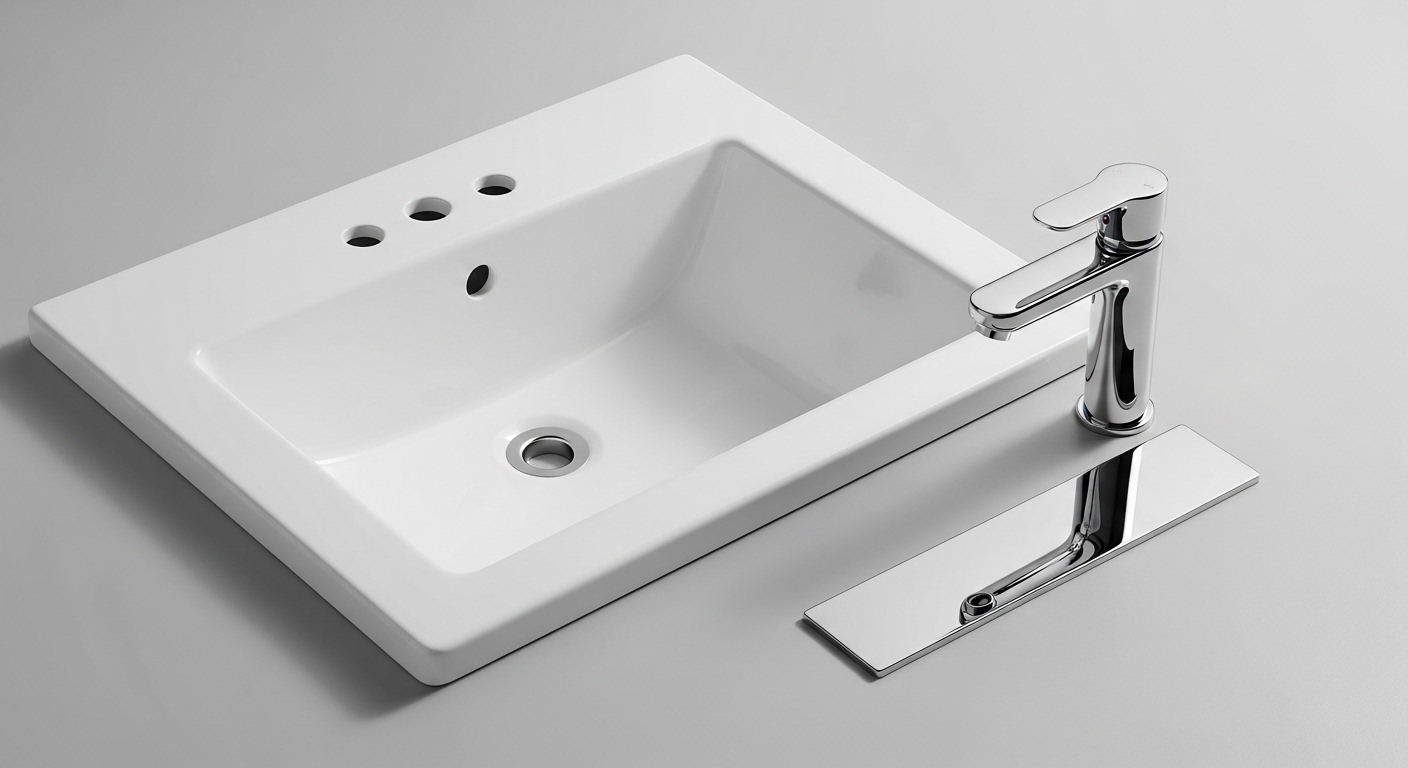
So, do I need a deck plate for my faucet? The honest answer is: it depends entirely on the mismatch between your faucet and the holes already drilled in your sink or countertop. A deck plate (also called an escutcheon or base plate) is a flat cover that hides unused mounting holes and gives a single-hole faucet a wider, finished footprint. If you’re swapping a 3-hole faucet for another 3-hole faucet, you don’t need one. If you’re putting a sleek single-hole faucet onto a sink that was drilled for three, a deck plate is what saves you from staring at two open holes for the rest of the faucet’s life.
At Afinion Home, we get this question constantly from customers mid-remodel — usually right after they’ve already bought the faucet and are holding it over the sink wondering why it doesn’t cover the holes. This guide walks through exactly when a deck plate is required, when it’s optional, and when you should absolutely skip it, using real hole counts, spacing measurements, and install scenarios.
What exactly is a deck plate, and what does it do?
A deck plate is a flat metal (or occasionally plastic) plate that sits under your faucet body and spans the mounting surface — the “deck” — of your sink or countertop. Its whole job is to cover holes you’re not using and to create a clean, unified base for a faucet that would otherwise look small or expose bare holes.
There are two names you’ll see used interchangeably: manufacturers often call it a deck plate or base plate for kitchen faucets, and an escutcheon for bathroom faucets. Same idea, slightly different shapes. Here’s what it actually does:
- Covers extra holes — the number one reason. A single-hole faucet on a 3-hole sink leaves two gaps; the plate hides them.
- Adds a finished look — it gives a minimalist faucet a broader, more substantial presence on a large sink deck.
- Seals against splash and gunk — with the included gasket, it keeps water, soap scum, and debris from getting down into the unused holes and under the counter.
- Bridges spacing — on kitchen faucets it lets a single-post faucet look intentional across an 8-inch or 10-inch hole spread.
What a deck plate does not do: it doesn’t change how the faucet functions, and it doesn’t add or remove faucet holes. It’s purely a cover-and-cosmetic part.
How do I know if my sink needs a deck plate? (The hole-count test)
Count the holes in your sink or countertop, then count the holes your new faucet requires — if the sink has more, you need a deck plate to cover the difference. That’s the entire decision in one sentence. Everything else is detail.
Flip your sink over or look under the deck if the holes are hidden by the old faucet. Most kitchen and bathroom sinks come pre-drilled in one of these configurations:
| Your sink has… | Your faucet needs… | Deck plate? |
|---|---|---|
| 1 hole | 1 hole (single-hole faucet) | No — perfect match |
| 3 holes (8″ spread) | 1 hole (single-hole faucet) | Yes — to cover 2 extra holes |
| 3 holes (4″ spread) | 3 holes (centerset faucet) | No — faucet already covers them |
| 3 holes (8″ spread) | 3 holes (widespread faucet) | No — separate pieces fill each hole |
| 1 hole | 3 holes | Can’t install — not enough holes |
| 2 holes | 1 hole + sprayer or soap dispenser | Optional — fill or use the spare |
The two spacing numbers that matter most: 4 inches center-to-center is “centerset” spacing, and 8 inches center-to-center is “widespread” spacing. If you’re fuzzy on which faucet style fits which hole layout, our breakdown of centerset vs. widespread faucets explains the spacing and mounting differences in plain terms — it’s the single best thing to read before you buy.
What if I’m not sure how far apart my holes are?
Measure from the center of the far-left hole to the center of the far-right hole. Roughly 4 inches means centerset; roughly 8 inches (anywhere from 6 to 16 inches, technically) means widespread. For a single center hole with two outer holes at 4-inch spread, a single-hole faucet plus deck plate is the classic fix — the plate is sized to span exactly that 4-inch or 8-inch layout.
Do I need a deck plate for a single-hole kitchen faucet on a 3-hole sink?
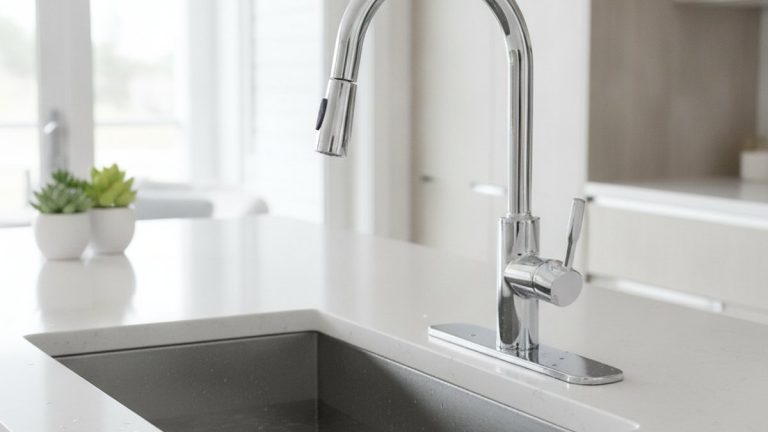
Yes — this is the exact situation deck plates were invented for, and it’s the most common one in kitchens. A modern single-hole kitchen faucet (the tall pull-down style everyone loves right now) mounts through one hole, but most existing kitchen sinks were drilled with three or four holes for an older faucet plus a side sprayer and a soap dispenser.
Without a deck plate, you’d have your sleek faucet in the middle and two or three empty holes flanking it. The deck plate — usually a long, narrow plate around 10 inches wide — snaps or slides over the faucet base and covers all of them at once.
The good news: most quality single-hole kitchen faucets, including Afinion Home models, include a deck plate in the box precisely because manufacturers know 3-hole sinks are everywhere. Check the spec sheet — if it says “escutcheon included” or “deck plate optional,” you’re covered. If you’d rather show off a minimalist look and fill the side hole with a soap dispenser instead, that’s a legitimate alternative we cover below.
If you’re doing the swap yourself, walk through our full step-by-step kitchen faucet installation guide — it shows exactly where the deck plate and its gasket go in the mounting sequence so you don’t have to disassemble anything twice.
When should I skip the deck plate entirely?
Skip the deck plate when your faucet’s holes match your sink’s holes, or when you specifically want the exposed, minimalist look on a single-hole setup. Forcing a deck plate where it isn’t needed just adds a seam that collects grime.
Here are the clear skip-it scenarios:
- Single-hole faucet on a single-hole sink — nothing to cover, so no plate. The faucet base sits flush.
- Centerset faucet on a 4-inch 3-hole sink — the faucet is built on its own base that already spans all three holes.
- Widespread faucet on an 8-inch 3-hole sink — the spout and each handle mount in their own hole; there’s nothing left uncovered.
- Intentional minimalist look — some designers mount a single-hole faucet on a 3-hole sink and use the extra holes for an air gap, a soap dispenser, or a filtered-water tap. In that case you don’t cover the holes; you use them.
That last point is worth pausing on. If you have a spare hole, you don’t have to hide it — you can turn it into a feature. A separate faucet water filter hose or a dedicated drinking-water tap slots neatly into an unused hole and puts it to work. It’s often a better move than covering a perfectly good hole you paid to have drilled.
What size deck plate do I need, and will it fit my counter?
Match the deck plate length to your hole spacing: a plate for a 4-inch centerset layout runs about 6 inches long, and one for an 8-inch widespread layout runs about 10 to 12 inches. Almost all single-hole faucet deck plates are designed to bridge the standard 8-inch spread found on most kitchen and bathroom sinks.
Before you buy a separate deck plate, confirm three things:
- Hole spacing — measure center-to-center as described above so you buy the right length.
- Finish match — the plate must match your faucet finish exactly. A brushed nickel plate under a chrome faucet looks off. If you’re choosing finishes, our take on whether brushed nickel faucets are worth it covers how finishes wear and hide water spots over time.
- Faucet compatibility — deck plates aren’t always universal. A plate designed for one brand’s base may not seat correctly on another’s threaded shank. Buy the plate made for (or included with) your faucet when possible.
One more counter-specific note: on thick stone countertops (granite or quartz over 1.5 inches), make sure your faucet’s mounting hardware and any deck plate are rated for that thickness. Some faucets ship with a standard shank that’s too short for a thick slab plus a deck plate stacked underneath, and you’ll need an extension kit.
Can I install a faucet without a deck plate if it came with one?
Yes, in most cases the deck plate is optional even when it’s included — as long as your sink has only the holes your faucet actually uses. Manufacturers include the plate for people with extra holes; if you don’t have extra holes, you can leave it in the box.
The reverse is the real problem: if your faucet did not come with a deck plate and you have extra holes to cover, you’ll need to buy a matching one separately, use hole covers (small button-style plugs), or repurpose the holes for accessories. Don’t leave open holes exposed — water and debris will work down into the cabinet and can cause damage or mold over time.
Deciding between faucet styles at this stage? Since the deck plate question is really a “which faucet fits my sink” question, our guide on how to choose the right bathroom faucet helps you match faucet type to your existing hole layout so the deck plate question mostly answers itself.
Deck plate vs. hole cover vs. repurposing: which is best?
A deck plate is best when you want one clean, finished surface; individual hole covers are best when the holes are far apart or you only need to plug one; repurposing is best when the extra hole can do a job. There’s no single right answer — it comes down to your layout and how you use the sink.
| Option | Best for | Look | Cost |
|---|---|---|---|
| Deck plate / escutcheon | Single-hole faucet on 3-hole sink | Seamless, traditional | Often free (included) or $10–$30 |
| Individual hole covers | Plugging one stray hole | Discreet buttons | $5–$15 for a set |
| Soap/lotion dispenser | Kitchens, frequent hand-washing | Functional feature | $15–$40 |
| Filtered water tap | Homes wanting cleaner drinking water | Functional feature | $40–$120 |
My rule of thumb after years of installs: cover holes with a deck plate when they’re clustered under the faucet, plug a lone outlier hole with a matching button cover, and repurpose a hole whenever you’d actually use what goes in it. A hole filled with a working soap dispenser beats a hole hidden under a plate you’ll be cleaning around forever.
How do I install a deck plate correctly?
Install the deck plate before you set the faucet: lay its gasket on the sink deck, set the plate on top aligned over the holes, then feed the faucet shank through the plate and tighten the mounting nut from underneath. The plate gets sandwiched between the sink and the faucet base.
- Clean the deck — wipe the sink surface so the gasket seals against a clean, dry surface.
- Set the gasket — most deck plates use a rubber or foam gasket underneath; place it first. Some installers add a thin bead of plumber’s putty or silicone for a watertight seal, but check your manual — many modern gaskets don’t need it.
- Position the plate — center it over the hole cluster so it covers all unused holes evenly.
- Drop in the faucet — feed the supply lines and shank down through the plate and the center hole.
- Tighten from below — hand-tighten the mounting nut, check that the plate is straight, then snug it with a basin wrench. Don’t overtighten — you can crack a plate or distort the gasket.
Take your time on step 3. A crooked deck plate is the most common cosmetic complaint, and it’s much easier to fix before the mounting nut is torqued down than after.
A quick note on quality and standards
Not all deck plates are equal. A cheap plastic plate with a thin chrome coating will start to peel or discolor within a couple of years, especially in a kitchen. Look for solid brass or stainless deck plates with the same finish rating as the faucet. Reputable faucet finishes are tested against corrosion and abrasion standards such as ASME A112.18.1 / CSA B125.1, the same standards that govern the faucet body itself. If your faucet is certified to that standard, the matching deck plate from the same manufacturer will be too.
Every Afinion Home faucet ships with a coordinating deck plate and gasket that meet the same finish and lead-free standards as the faucet, and they’re all backed by our limited lifetime warranty on finish and function — so the plate won’t be the weak link that ages faster than the faucet it sits under.
FAQ
Do all faucets come with a deck plate?
No. Single-hole kitchen and bathroom faucets usually include an optional deck plate because they’re often installed on 3-hole sinks. Centerset and widespread faucets typically don’t include one because they already cover their own holes. Always check the product’s spec sheet for “deck plate included” or “escutcheon included.”
Can I use a deck plate to cover just one extra hole?
You can, but a small individual hole cover (a button-style plug) is usually cleaner and cheaper for a single stray hole — especially if that hole is far from the faucet. Use a deck plate when the extra holes are clustered right beside the faucet base so one plate covers them all.
Is a deck plate the same as an escutcheon?
Essentially yes. “Deck plate” and “base plate” are the terms used for kitchen faucets; “escutcheon” is the term more common for bathroom faucets and for the trim plate on shower and tub valves. All of them are covers that hide holes and finish the mounting surface.
Will a deck plate fit any sink?
No — deck plates are sized to specific hole spacings, most commonly the 8-inch widespread spread and the 4-inch centerset spread. Measure your holes center-to-center and buy a plate that matches. Also match the finish and, ideally, the faucet brand so the plate seats correctly on the faucet base.
What happens if I leave the extra sink holes uncovered?
Water, soap, and debris fall through the open holes into the cabinet below, which over time can damage the counter substrate, warp cabinet wood, or encourage mold. Cover unused holes with a deck plate or hole cover, or put them to use with a soap dispenser or filtered-water tap.
Do I need plumber’s putty under a deck plate?
Usually not. Most modern deck plates include a rubber or foam gasket that seals on its own. Some installers still add a thin bead of silicone or putty for extra protection against splash, but check your faucet’s manual first — over-applying sealant can make future removal messy and isn’t necessary with a good gasket.
Author note: This guide was written by the Afinion Home fixtures team, drawing on hundreds of real kitchen and bathroom faucet installs and customer support calls. Afinion Home designs and sells faucets, shower heads, and bathroom fixtures direct to homeowners, and every product is tested to ASME/CSA finish and lead-free standards and backed by our limited lifetime warranty.
2 Comments