What Is the Best Handheld Shower Head for Elderly Users in 2026?
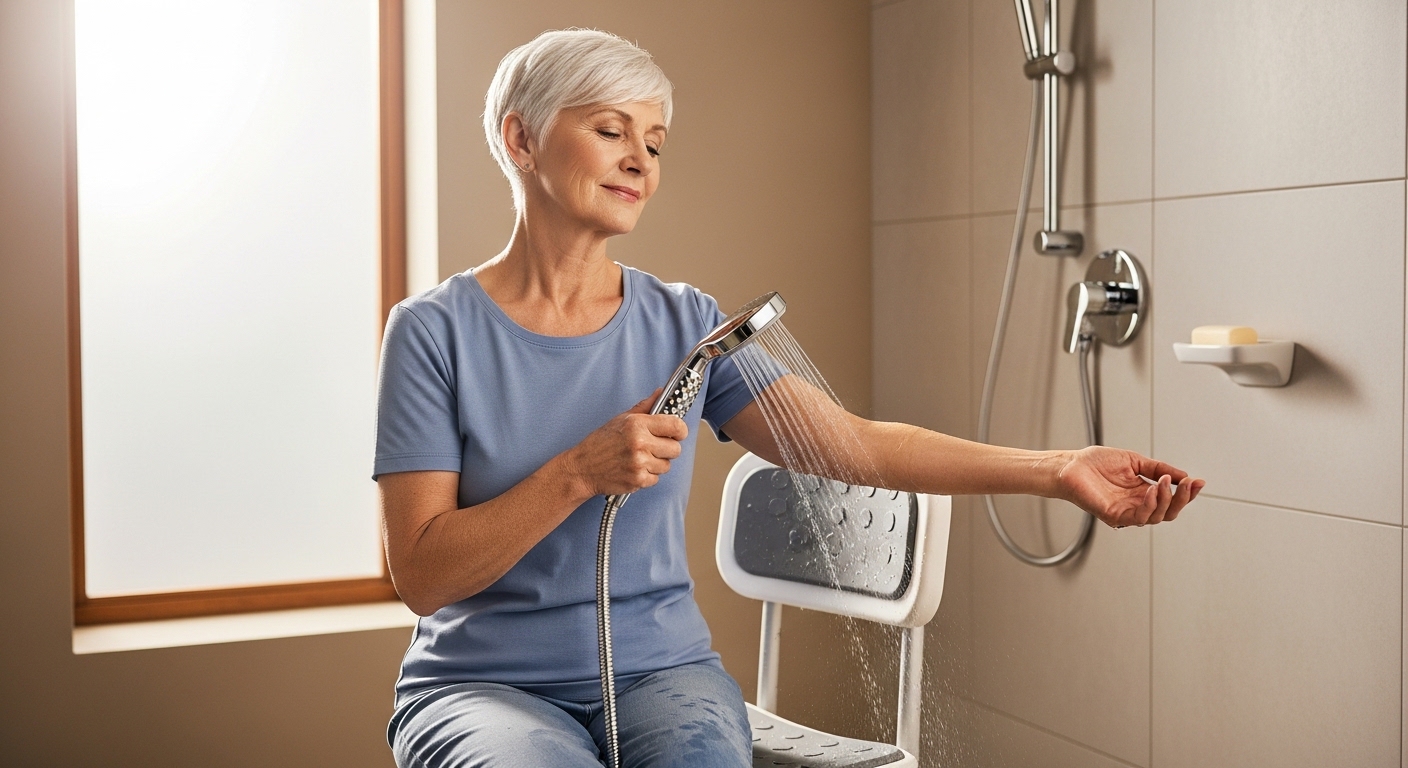
A good handheld shower head for elderly family members solves one core problem: it brings the water to the person instead of forcing the person to move, twist, and reach toward a fixed showerhead. For anyone with limited balance, arthritis, reduced grip strength, or a shower chair, that single change makes bathing safer, faster, and far more comfortable. Below, we walk through exactly what to look for, which features actually matter (and which are marketing), and how to set one up correctly — in plain language, from people who test fixtures for a living.
Why is a handheld shower head better for seniors than a fixed one?
A handheld model is better for seniors because it removes the need to stand, turn, and step toward a wall-mounted head — the three motions most likely to cause a slip. Instead, the user stays planted (seated or standing with a grab bar) and simply guides the spray where they need it.
Fixed showerheads assume a mobile, balanced adult who can rotate freely under the water. That assumption breaks down with age. Roughly 80% of older-adult bathroom falls happen in or near the tub or shower, and most involve reaching or turning on a wet surface. A handheld wand with a 5-to-6-foot flexible hose lets a caregiver or the user direct water to the lower legs, back, and feet without any of that risky movement. It also makes rinsing shampoo out of hair far easier for someone who can’t tip their head back comfortably.
There’s a hygiene angle too. Because you can aim the spray precisely, a handheld makes it much easier to rinse skin folds thoroughly, which matters for skin health and reduces irritation. And if you ever need to rinse the shower walls or the chair itself, the wand does that in seconds.
What features should I look for in a handheld shower head for elderly parents?
Look for six things: a light ergonomic handle, a non-slip grip, an easy-press pause button, a long hose, a simple spray selector, and an adjustable slide bar or a secure low-mount holder. Everything else is a bonus.
Here’s why each one earns its place, especially for arthritic hands or reduced grip strength:
- Lightweight handle (under 10 oz filled): Weight is the single most overlooked spec. A heavy metal wand becomes exhausting to hold for a full shower. A well-balanced ABS or lightweight-alloy body keeps fatigue down.
- Textured, non-slip grip: Wet, soapy hands lose their hold fast. A rubberized or knurled grip zone dramatically reduces the chance of dropping the wand.
- One-touch pause / trickle button: This lets the user stop the flow to soap up without fiddling with the hot/cold valve and re-scalding themselves. It’s a genuine safety feature, not a gimmick.
- 6-foot hose: A 60- or 72-inch hose reaches a seated user’s feet easily. A short 48-inch hose forces uncomfortable bending — the exact motion we’re trying to avoid.
- Simple spray modes: Two or three clearly detented settings (a gentle rain, a wider soft spray, maybe a warm massage) beat a fussy dial with eight modes nobody can feel through the detents.
- Adjustable slide bar or low holder: So it doubles as a fixed head when hung, at a height a seated person can reach.
One more: check the flow rate. Most modern units are capped at 1.8–2.5 GPM. For seniors with thin, sensitive skin, a softer aerated spray at the lower end of that range feels much kinder than a hard, needle-like jet.
Which type of handheld shower head is best — comparison table
The best type for most elderly users is a slide-bar handheld with a pause button, because it flexes between seated and standing use. But the right pick depends on the bathroom and the person’s mobility. Here’s how the main options stack up.
| Type | Best for | Grip & handling | Watch-outs |
|---|---|---|---|
| Slide-bar handheld | Shower-chair users who also shower standing | Excellent — height adjusts, easy to re-dock | Bar must be anchored into studs/blocking, not just tile |
| Wall-bracket handheld | Standing users who want a simple upgrade | Good, but fixed height | Docking point may be too high for a seated user |
| Dual head + handheld combo | Multi-user households (senior + family) | Good — diverter switches between heads | Diverter valve is another small control to operate |
| Ultra-lightweight “spa” handheld | Arthritis, weak grip, one-handed use | Best-in-class — lowest weight, softest spray | Fewer spray modes, usually plastic body |
If you’re buying for a parent who uses a shower chair or bath bench, prioritize the slide-bar or the ultra-lightweight spa model. If they still shower standing and steady, a good wall-bracket handheld with a pause button is plenty.
How do you install a handheld shower head for an elderly person?
You can install most handheld shower heads yourself in about 15 minutes with no special tools — you’re simply swapping the existing head for a hose-and-wand kit that threads onto the same standard ½-inch shower arm. The slide bar is the only step that may need drilling.
Here’s the straightforward process:
- Remove the old showerhead. Turn it counterclockwise by hand or with a wrench (wrap the arm threads in a cloth so you don’t scratch the finish).
- Clean the threads and add plumber’s tape. Wrap the shower-arm threads 3–4 times clockwise with PTFE tape for a leak-free seal.
- Attach the mount or bracket. Thread on the wall bracket or the slide-bar’s supply elbow and hand-tighten, then snug it a quarter-turn with a wrench.
- Connect the hose. Screw one end of the hose to the mount and the other to the wand — there’s a rubber washer inside each fitting; make sure it’s seated.
- Mount the slide bar low enough. If you’re using a slide bar, position the docking cradle so a seated person can reach it — usually 40–48 inches off the floor. Anchor into a stud or add blocking; don’t rely on tile plugs alone if the bar might ever be grabbed for balance.
- Test for leaks. Run the shower and check every joint. A slow drip almost always means a washer isn’t seated or the tape wrap was too thin.
That last leak check matters. If you do find a persistent drip after install, our guide on how to fix a dripping faucet at home walks through the same washer-and-seal logic that applies to shower connections. And if the old fixture left mineral crust on the arm threads, it’s worth cleaning it off first — here’s how to clean hard water stains so your new connection seals cleanly.
Important safety note: a slide bar is not a grab bar. Never let anyone use the slide bar or the shower arm to pull themselves up. Install a properly rated ADA grab bar (anchored to studs, tested to hold 250+ lbs) for that job.
What’s the best budget for a handheld shower head for seniors — is $50 enough?
Yes — $40 to $80 buys a genuinely good handheld shower head for elderly use, including a pause button, a 6-foot hose, and a slide bar. You do not need to spend $150+ to get every safety-relevant feature.
Here’s roughly what each price tier gets you:
- Under $30: A basic wand and hose. Often fine, but grips are usually smooth plastic and hoses may be short. Skip anything without a pause feature.
- $40–$80 (the sweet spot): Ergonomic grip, one-touch pause, 6-foot reinforced hose, 2–3 spray modes, and often a slide bar or adjustable holder. This is where most families should shop.
- $100+: Premium finishes (brushed nickel, matte black), all-metal builds, filtered or aerated luxury sprays. Nice, but you’re paying for finish and feel, not extra safety.
Finish does matter for longevity and cleaning, though. A brushed finish hides water spots and fingerprints better than polished chrome, which is a real quality-of-life win when an older adult or a caregiver is doing the cleaning. If you’re weighing finishes across the whole bathroom, our take on whether brushed nickel faucets are worth it applies to shower fixtures too. And if you’re upgrading the bathroom more broadly, how to choose the right bathroom faucet pairs naturally with a shower refresh.
Does water pressure or hard water affect a handheld for elderly users?
Yes — low household pressure makes a handheld feel weak, and hard water slowly clogs the nozzles until the spray turns patchy and uneven. Both are fixable and both matter more for seniors, who benefit from a steady, predictable stream.
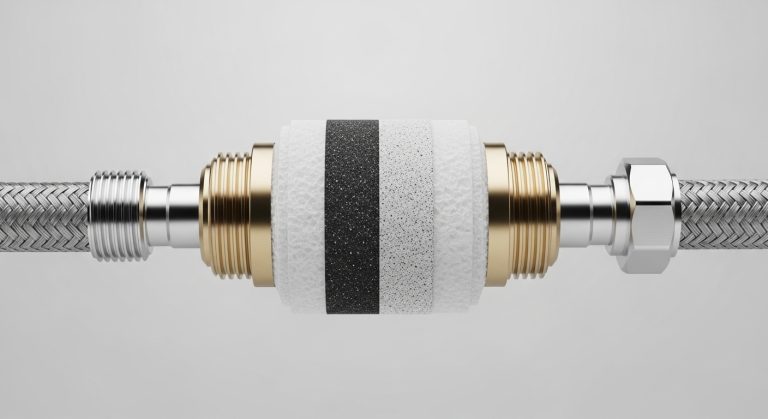
Most quality handhelds have soft silicone spray nubs specifically so you can rub off mineral buildup with a thumb — a small but important feature in hard-water regions. If the spray starts spitting sideways or losing force, that’s almost always limescale, not a failing head. A quick soak of the wand face in warm white vinegar for 20–30 minutes clears it. For homes on very hard water, consider adding an inline filter; the same principles we cover in our guide to faucet water filter hoses apply to shower supply lines and help keep spray nozzles clear longer.
FAQ
Can a handheld shower head be used with a shower chair or bath bench?
Yes — that’s one of its biggest advantages. Mount the slide-bar cradle at a seated-reachable height (around 40–48 inches), use a 6-foot hose, and the user can rinse every part of the body without standing. It’s the single most recommended shower setup for people who bathe seated.
What hose length is best for elderly use?
A 6-foot (72-inch) hose is ideal. It reaches a seated user’s feet and lets a caregiver help from outside the spray zone, while still being short enough not to tangle or drag on the shower floor. Avoid 48-inch hoses — they force the exact bending motions you’re trying to eliminate.
Is a handheld shower head safe if my parent has weak grip or arthritis?
Yes, if you choose the right one. Pick a lightweight wand (under 10 oz), a textured non-slip grip, and a one-touch pause button so they never have to wrestle the temperature valve mid-shower. Many arthritis-friendly models are usable one-handed. Always pair it with a rated grab bar for standing support.
How do I stop the handheld shower head from clogging?
Clean the nozzle face monthly if you have hard water. Rub the silicone spray nubs with your thumb under running water to dislodge scale, and soak the wand in warm white vinegar for 20–30 minutes when the spray gets uneven. An inline sediment filter also slows buildup significantly.
Do I need a plumber to install one?
Usually no. Swapping the wand and hose onto the existing shower arm is a 15-minute, tool-optional job. You’d only want a pro if you’re anchoring a slide bar into a tricky tile-over-masonry wall, or adding blocking behind the wall for a grab bar at the same time.
What flow rate is gentlest on sensitive senior skin?
Look for an aerated or “rain/spa” spray in the 1.8–2.0 GPM range. Aerated sprays mix air into the water for a softer, warmer-feeling stream that’s kinder to thin, fragile skin than a high-pressure needle jet. Multi-mode heads that include a gentle setting give you flexibility as needs change.
The bottom line
For an elderly parent or spouse, the right handheld shower head is a small purchase with an outsized impact on daily safety and dignity. Prioritize a light, grippy wand with a pause button, a 6-foot hose, and a slide bar mounted at a seated-reachable height. Spend in the $40–$80 range and you’ll get every feature that actually matters. Add a properly rated grab bar, keep the nozzles clean, and you’ve built a shower setup that works for years as needs change.
Author note: This guide was written by the Afinion Home fixtures team, drawing on hands-on evaluation of handheld shower heads for grip weight, hose durability, spray comfort, and seated-use reach. We assess fixtures the way a caregiver actually uses them — soapy-handed, seated, and one-handed — not just on a spec sheet.
About Afinion Home: Afinion Home designs and tests faucets, shower systems, and bathroom fixtures for everyday durability and accessible use. Our shower components are built to standard ½-inch NPT connections for universal fit, tested for leak-free performance, and backed by a limited warranty. We recommend choosing models that meet recognized low-flow and accessibility standards (such as WaterSense flow limits and ADA-aligned grab-bar installation) for the safest setup.