What Is a Bar Faucet, and Do You Actually Need One for Your Prep Sink in 2026?
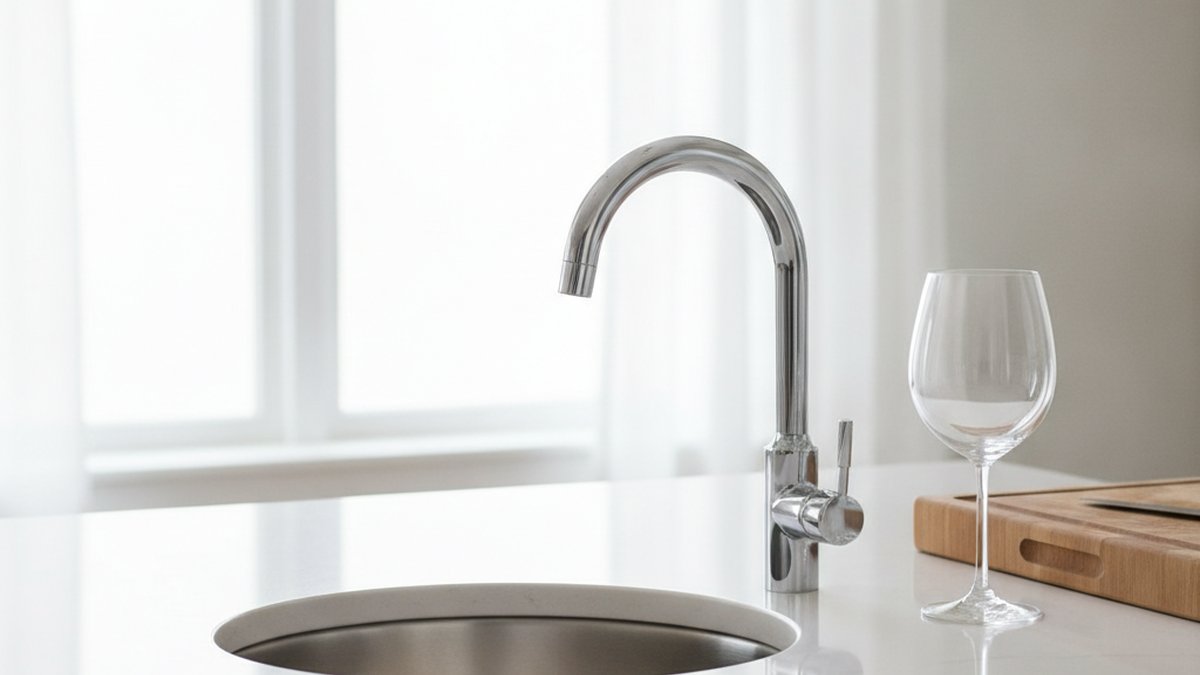
A bar faucet is the small, tall faucet you see on prep sinks and wet bars — the ones too petite for a full-size kitchen faucet but too “real” for a bathroom tap. If you’ve just added a bar sink to your island, or you’re staring at a second sink in a butler’s pantry wondering why your kitchen faucet looks comically oversized on it, this is the fixture that solves the problem. Below, I’ll walk you through exactly what a bar faucet is, how it differs from a kitchen faucet, how to size and choose one, and whether it’s worth buying at all — in plain language, with the specs that actually matter.
What exactly is a bar faucet, and how is it different from a kitchen faucet?
A bar faucet is a scaled-down kitchen faucet designed for small secondary sinks that hold 3.5–15 gallons — not your main basin. The core difference is size and flow: bar faucets are shorter, have a tighter spout reach, and often use a lower flow rate because you’re rinsing a cocktail shaker or a handful of berries, not scrubbing a stockpot.
Here’s the practical breakdown. A standard kitchen faucet typically stands 14–18 inches tall with an 8–10 inch spout reach and a 1.5–1.8 GPM (gallons per minute) flow. A bar faucet usually stands 9–13 inches tall, reaches 6–8 inches, and flows 1.0–1.5 GPM. That smaller footprint isn’t just cosmetic — a bar sink basin is often only 9–15 inches wide, and a full kitchen spout would overshoot the drain or crowd the countertop.
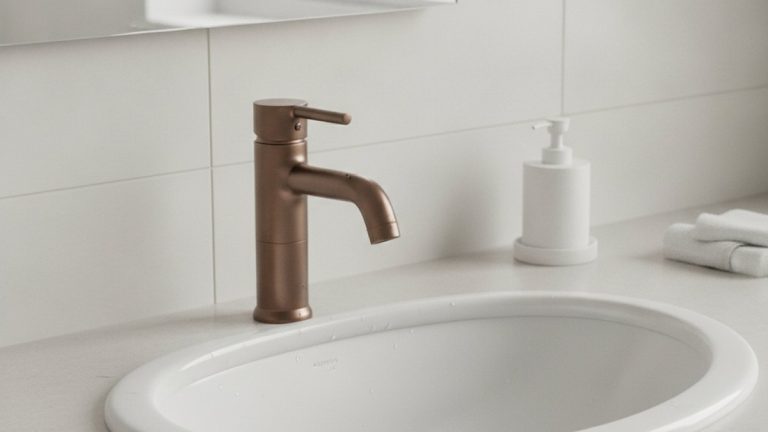
Bar faucets almost always mount in a single hole with a single lever handle, which keeps the look clean on a compact deck. Many use a “high-arc” gooseneck shape so you can still fit a tall glass or pitcher underneath despite the smaller overall size. Some include a pull-down or pull-out spray head; most don’t, because bar tasks rarely need one.
Do I actually need a bar faucet, or can I just use a regular kitchen or bathroom faucet?
You need a bar faucet only if you have a genuine second sink — a bar sink, prep sink, or wet-bar basin. If you have just one main sink, skip it. But don’t substitute a bathroom faucet for a bar sink, and here’s why it matters.
Bathroom (lavatory) faucets are built for a totally different job. Their spouts are short and angled down toward a shallow sink, so you physically can’t fit a pitcher, a coffee carafe, or a tall glass underneath. They also usually mount in a 4-inch centerset or widespread configuration with two handles and multiple holes — the wrong hole pattern for a typical single-hole bar sink. A bar faucet’s tall clearance and single-hole mount are exactly what a prep or bar sink is drilled for.
Could you install a full kitchen faucet on a bar sink? Physically, sometimes — but it usually looks oversized and its long spout can splash right out of a small basin. The bar faucet exists to hit the sweet spot: kitchen-grade function, sink-appropriate scale.
- Get a bar faucet if: you have a dedicated bar, prep, or island sink separate from your main kitchen sink.
- Get a bar faucet if: you entertain and want a spot to rinse glassware, fill pitchers, or wash produce away from the main cleanup zone.
- Skip it if: you only have one sink — buy a properly sized main kitchen faucet instead.
- Don’t substitute: a bathroom faucet on a bar sink — the low spout clearance will frustrate you daily.
What size bar faucet do I need for my prep sink?
For most prep and bar sinks, choose a faucet 9–13 inches tall with a 6–8 inch spout reach, mounted in a single 1⅜-inch hole. The goal is for the water stream to land near the center of the basin, not at the front edge or against the back wall.
Three measurements decide the fit. First, spout reach: measure from the center of your faucet hole to the center of the sink drain, and pick a reach close to that number so water hits the drain area. Second, spout height and clearance: if you fill tall pitchers or ice buckets, look for a high-arc model with 8+ inches of clearance between the spout and the sink deck. Third, the deck hole: nearly all bar faucets need a single hole, typically 1⅜ inches (35 mm) in diameter — confirm your sink or countertop is drilled to match.
One more scenario people forget: the wall behind the sink. If your bar sink sits under a window or against a low backsplash, measure the height from the countertop to the sill. A tall gooseneck bar faucet can swing back and hit a window crank or ledge. In tight spots, a mid-height (9–10 inch) model or one with a side-mounted handle clears better. If you’re also debating whether to add a deck plate to cover extra holes, our guide on whether you need a deck plate for your faucet walks through single-hole vs. three-hole setups in detail.
Bar faucet vs. kitchen faucet vs. bathroom faucet: how do they compare?
The quick answer: a bar faucet is a shrunk-down kitchen faucet for small secondary sinks, a kitchen faucet is the workhorse for your main basin, and a bathroom faucet is a low, short tap for hand-washing. Here’s how the key specs line up side by side.
| Feature | Bar Faucet | Kitchen Faucet | Bathroom (Lavatory) Faucet |
|---|---|---|---|
| Typical height | 9–13 in | 14–18 in | 4–9 in |
| Spout reach | 6–8 in | 8–10 in | 4–5 in |
| Flow rate | 1.0–1.5 GPM | 1.5–1.8 GPM | 1.0–1.2 GPM |
| Mounting | Single hole | 1–3 holes | 1 hole or 4″/8″ spread |
| Spray head | Sometimes | Usually | Rare |
| Best for | Bar / prep / island sink | Main cooking & cleanup sink | Hand-washing, brushing teeth |
The takeaway: match the faucet to the sink’s job. A bar faucet gives you real kitchen-style clearance and a high-arc spout in a body small enough to look intentional on a compact basin. That balance is the entire point.
What finishes and materials should I look for in a durable bar faucet?
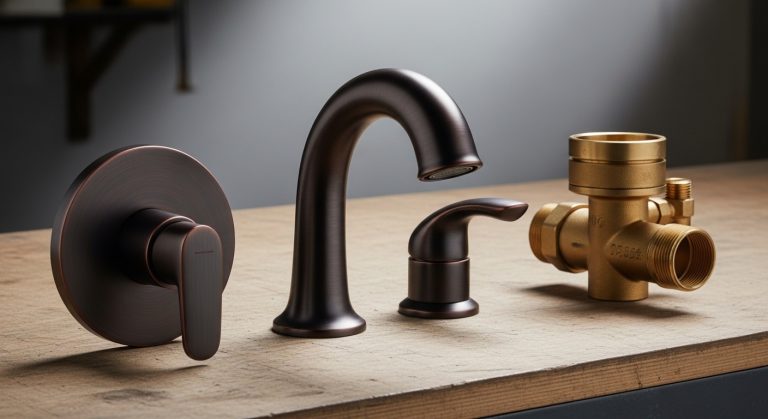
Prioritize a solid brass body with a lead-free waterway, and pick a finish that matches your main kitchen faucet — chrome, brushed nickel, matte black, or brushed gold are the popular four. Brass resists corrosion far better than the zinc-alloy bodies you find on budget models, and it’s the single biggest predictor of how long the faucet lasts.
On finish, the smart move at a bar sink is to coordinate — not necessarily match exactly — with your main faucet, cabinet hardware, and pendant lights. Chrome is the easiest to clean and hides water spots reasonably well; if you’re weighing it, our rundown on whether brushed nickel faucets are worth it covers the fingerprint-and-cleaning trade-offs that also apply to bar faucets. Matte black and brushed gold read more modern but show hard-water spotting sooner, so they reward regular wiping.
Two material specs matter more than marketing does:
- Lead-free certification. Because a bar faucet often dispenses drinking water — filling glasses, making cocktails, rinsing produce — you want one that meets the U.S. lead-free standard (NSF/ANSI 61 and 372, and the Safe Drinking Water Act’s 0.25% weighted-average lead limit). If drinking-water safety is a priority across your home, see our roundup of the best lead-free faucet brands to buy in 2026.
- Ceramic disc cartridge. This is the valve that controls flow. Ceramic discs outlast rubber-washer designs by years and are the main reason a good faucet doesn’t drip. If a faucet’s spec sheet doesn’t mention its cartridge, treat that as a red flag.
How hard is it to install a bar faucet myself?
Most single-hole bar faucets are a genuine 30–45 minute DIY job because there’s only one mounting hole and one supply set to deal with. If your bar sink already has a faucet and working shutoff valves underneath, you can usually swap it yourself with a basin wrench and an adjustable wrench.
The steps mirror a standard kitchen faucet install, just on a smaller scale — turn off the supply valves, disconnect the old faucet’s lines, drop the new faucet through the single hole, tighten the mounting nut from below, connect the flexible supply lines, then run water and check for leaks. For a full walkthrough with torque and sealing tips, follow our step-by-step guide on how to install a kitchen faucet — the process is nearly identical for a bar model.
Two situations do call for a plumber: if your bar sink has no shutoff valves under it (you’ll need them added), or if the countertop isn’t drilled and you have to bore a new hole in stone or solid-surface material. Drilling granite or quartz without the right diamond bit is how expensive countertops crack — leave that to a pro.
How much should a good bar faucet cost in 2026?
Expect to pay $60–$120 for a reliable mid-range bar faucet with a brass body and ceramic cartridge, $120–$250 for a premium model with a pull-down spray or designer finish, and under $50 for budget zinc-body faucets you’ll likely replace within a few years. For most homeowners, the $80–$150 range is the sweet spot.
What you’re paying for as the price climbs: a solid-brass (not zinc) body, a genuine ceramic-disc cartridge, a physical-vapor-deposition (PVD) finish that resists scratching, and a longer warranty. The jump from a $40 faucet to a $100 one usually buys years of extra service life and no drips — a bar faucet gets used every time you entertain, and a leaky one at a wet bar is annoying and, over time, wasteful.
One cost note specific to bar faucets: because they use less water than a main faucet and are often smaller, a quality one isn’t much more expensive than a cheap one. There’s little reason to bottom-feed here. Spend the extra $40 for the brass body and the warranty.
FAQ
Can a bar faucet be used as a regular kitchen faucet?
In a pinch on a very small kitchen sink, yes — but it’s not ideal. A bar faucet’s shorter spout reach and lower flow rate make it slow for filling large pots and washing big cookware. If it’s your only sink, buy a full-size kitchen faucet. Reserve the bar faucet for a genuine secondary or prep sink where its compact scale is an advantage, not a limitation.
What size hole does a bar faucet need?
Almost all bar faucets need a single mounting hole about 1⅜ inches (35 mm) in diameter, the same standard as most single-hole kitchen faucets. Always check the specific model’s spec sheet, and confirm your sink or countertop is drilled to match before you buy. If your deck has extra holes from an old faucet, a matching deck plate can cover them.
Do bar faucets come with a sprayer?
Some do, most don’t. Pull-down or pull-out bar faucets exist and are handy for rinsing produce or spraying out a shaker, but the majority of bar faucets are fixed-spout because bar and prep tasks rarely need a sprayer. If you want one, look specifically for a “pull-down bar faucet” — just confirm it still fits the height clearance under your window or cabinet.
Is a bar faucet safe for drinking water?
Yes, as long as it’s certified lead-free to NSF/ANSI 61 and 372 and meets the 0.25% weighted-average lead limit — which reputable brands’ bar faucets are, because these faucets so often fill drinking glasses. Check the packaging or spec sheet for the certification. Avoid uncertified no-name faucets for any tap you’ll drink from.
What’s the difference between a bar faucet and a prep faucet?
They’re essentially the same category, and the terms are used interchangeably. “Bar faucet” emphasizes use at a wet bar or entertaining area, while “prep faucet” emphasizes food prep at an island prep sink — but both describe the same compact, tall, single-hole secondary-sink faucet. Shop them together; there’s no meaningful spec difference.
How tall should a bar faucet be?
For most bar and prep sinks, 9–13 inches of overall height works well, with a high-arc model offering 8+ inches of clearance if you fill tall pitchers or ice buckets. The one thing to watch is a window or low cabinet behind the sink — measure that clearance first, because a tall gooseneck can swing back and hit a sill or window crank.
The bottom line: is a bar faucet worth it?
If you have a second, smaller sink, a bar faucet is absolutely worth it — it’s the only fixture correctly scaled for the job, giving you kitchen-grade function without the oversized look or splashing of a full kitchen faucet. If you have one sink, save your money and put it toward a great main faucet instead. When you do buy, prioritize a solid-brass body, a ceramic-disc cartridge, and a lead-free certification, coordinate the finish with your main faucet, and spend in the $80–$150 range for the best balance of durability and value.
Author note: This guide was written by the Afinion Home fixtures team, drawing on hands-on installation and testing of single-hole kitchen and bar faucets across a range of sink configurations. Afinion Home designs and sells faucets and bathroom fixtures direct to homeowners at afinionhome.com; our faucets are built with lead-free, NSF/ANSI-compliant waterways and ceramic-disc cartridges, and are backed by a limited lifetime warranty against leaks and finish defects. As always, confirm each model’s certifications and your own sink’s hole configuration before purchasing.