Is an Oil Rubbed Bronze Gooseneck Faucet Worth It, and Which One Should You Actually Buy in 2026?
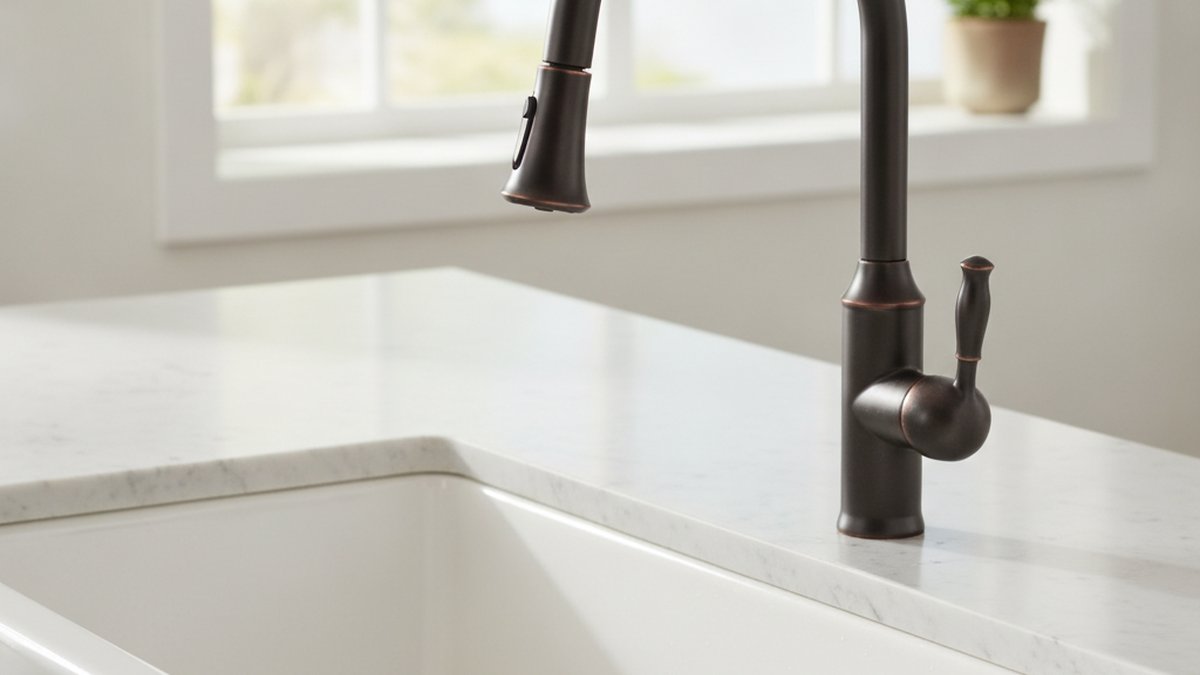
An oil rubbed bronze gooseneck faucet pairs two things people specifically go looking for: the dramatic, tall curved spout of a gooseneck (also called a high-arc or high-rise faucet) and the deep, dark, brown-black bronze finish that looks like aged metal. Put simply, it’s the faucet you choose when you want presence over a sink without going stark and modern. Below I’ll answer the real questions shoppers ask before they buy — how durable the finish is, whether it fits their sink, kitchen versus bathroom, and how to avoid the cheap ones that flake — so you can pick with confidence instead of guessing from a product photo.
What exactly is an oil rubbed bronze gooseneck faucet, and why do people want one?
A gooseneck faucet is any faucet with a tall, curved spout that arcs up and back down like a swan’s neck — usually 8 to 16 inches of clearance under the spout. “Oil rubbed bronze” (often shortened to ORB) is the finish: a dark brown-to-near-black coating meant to mimic hand-aged bronze, typically with slightly lighter high points where “wear” would naturally show.
People want this combination for three concrete reasons. First, clearance — the high arc gives you room to wash a stockpot, fill a bucket, or rinse hair in a vessel sink. Second, the finish hides everyday mess — dark bronze doesn’t show water spots, toothpaste splatter, or fingerprints anywhere near as much as polished chrome or stainless. Third, style longevity — ORB has been popular for over two decades, so it reads as classic rather than a fad you’ll regret. It’s a natural match for farmhouse, transitional, craftsman, rustic, and warm traditional spaces, especially against white, cream, granite, butcher block, or soapstone.
Is oil rubbed bronze durable, or will the finish wear off and look bad?
It’s durable if you buy a real one — and genuinely problematic if you don’t. This is the single most important thing to get right, so let’s be specific about the difference.
There are two very different things sold as “oil rubbed bronze”:
- Living finish (traditional ORB): A chemically darkened metal surface, sometimes waxed, designed to age and lighten at high-touch spots over years. Purists love it; it develops character. But it will change over time, especially where hands and water hit it.
- Sealed / PVD-style ORB (most modern faucets): The dark color is locked under a clear protective topcoat or applied as a physical vapor deposition layer. This resists wear, scratches, and corrosion far better and looks the same in year five as it did on day one. For most buyers, this is what you actually want.
The finishes that fail are the cheap ones: a thin bronze paint or powder sprayed over pot metal (zinc alloy). Those chip at the aerator, flake around the handle base, and go blotchy under hard water. The fix is to check the spec sheet, not the photo. If the listing won’t tell you the base material or the finish process, treat that as a red flag. If you specifically want a finish that lasts near a splashy sink, read our deeper take on where to find an oil rubbed bronze faucet that actually lasts before you commit.
How do I keep an oil rubbed bronze finish looking good?
Wipe it dry after use, and clean it with only a soft, damp cloth — plus mild dish soap if needed. That’s genuinely all it needs, and it’s easier to maintain than chrome. What ruins ORB is the stuff people reach for on chrome: never use abrasive pads, scouring powders, ammonia, bleach, or acidic descalers, and skip anything labeled “polishing.” Those strip the topcoat or the color. If you battle hard water, dab plain white vinegar on a rag for problem spots only, then rinse and dry immediately — and see our full method for how to clean hard water stains from a faucet without wrecking the finish.
Gooseneck vs. standard vs. pull-down: which spout should I actually get?
Get a gooseneck for clearance and looks; get a pull-down gooseneck for kitchen practicality; skip the tall arc if you have a shallow sink or a window right behind it. Here’s how the common shapes compare so you can match the faucet to your sink instead of the other way around.
| Spout type | Typical clearance | Best for | Watch out for |
|---|---|---|---|
| Gooseneck / high-arc (fixed) | 10–16 in | Filling tall pots, vessel/farmhouse sinks, statement looks | More splash in shallow sinks; may hit a low window |
| Gooseneck with pull-down sprayer | 10–16 in | Kitchens — rinsing dishes, cleaning the whole basin | Slightly more moving parts; hose/weight to maintain |
| Standard / low-arc | 3–8 in | Sinks under windows, small baths, tight cabinets | Can’t clear big cookware |
| Commercial spring/coil | 18–28 in | Heavy-use pro-style kitchens | Overwhelms small rooms; needs deep sink |
Two quick reality checks before you buy. Splash: the higher the arc, the farther the water falls, so a tall gooseneck over a shallow (6-inch) bar or bathroom sink can splash — pair it with a deeper basin, or aim the aerator toward the drain. Windows and cabinets: measure the height from the deck to the bottom of any window or upper cabinet; a 16-inch faucet needs the window to open outward or sit high enough to clear.
Is an oil rubbed bronze gooseneck faucet better for a kitchen or a bathroom?
Both — but they’re different products, so buy for the room. The word “gooseneck” describes the shape, and you’ll find it in kitchen and bathroom versions with different mounting and hole requirements.
In the kitchen, a gooseneck almost always means a single-hole, single-handle faucet, often with a pull-down or pull-out sprayer built into the spout. You want a flow rate around 1.5–1.8 GPM, a magnetic docking sprayer that snaps back cleanly, and a solid brass body. Match it with an ORB soap dispenser and cabinet hardware and it looks intentional.
In the bathroom, a gooseneck is usually a taller “vessel” faucet built to rise over a bowl that sits on top of the counter — or a single-hole lav faucet for a standard sink. Flow is lower (1.2 GPM or less to meet water-efficiency rules), and the reach is shorter. If you’re specifically doing a bathroom sink, our guide to the best oil rubbed bronze bathroom faucet in a one-hole configuration walks through sizing and the models worth your money, and the Moen Eva in oil rubbed bronze is a good real-world benchmark for what a quality ORB bathroom faucet feels like.
How many holes does my sink need for a gooseneck faucet?
Count the holes in your sink or countertop first — that decides what you can install without drilling. Most modern goosenecks are single-hole. If your sink has three holes (a common older layout) and you buy a single-hole faucet, use a deck plate (escutcheon) to cover the extra two. If you have one leftover hole from a removed sprayer or soap dispenser, an oil rubbed bronze faucet hole cover fills it and matches the finish. Widespread bathroom setups use three separate pieces spread 8 inches apart — that’s a different animal from a single-hole gooseneck, so don’t mix them up.
How much should I spend, and what do I get at each price?
Plan on $90–$260 for a genuinely good one; below about $70 you’re gambling on the finish and the cartridge. Price mostly tracks three things: the body material, the cartridge, and the finish process. Here’s what each budget tier realistically buys you.
| Price range | What you typically get | Good fit for |
|---|---|---|
| Under $70 | Zinc or thin-wall body, sprayed finish, unbranded cartridge | Short-term rentals only; expect finish wear |
| $90–$150 | Solid brass or heavy body, ceramic-disc cartridge, sealed ORB, basic warranty | Most homeowners — the sweet spot |
| $150–$260 | Full brass, name-brand cartridge, PVD or premium sealed finish, lifetime finish/function warranty, magnetic sprayer dock | Daily-use kitchens, forever homes |
| $260+ | Designer bodies, imported cartridges, integrated features | Design-led remodels, matching whole-suite hardware |
The takeaway: you don’t need to spend the most, but the jump from “under $70” to “$90–$150” is the one that actually protects you. That middle tier is where you stop buying a finish that flakes and start buying a faucet that lasts.
What should I check before I click buy? A quick specs checklist
Confirm these seven things on the spec sheet — not the photo — and you’ll avoid almost every common regret:
- Body material: “solid brass” or “brass” is what you want; “zinc alloy” or “metal” is a warning.
- Cartridge: ceramic-disc. It’s the part that stops drips; ceramic outlasts rubber-washer designs by years.
- Finish process: “sealed,” “PVD,” or “physical vapor deposition” for durability; “living finish” only if you want it to age.
- Clearance and reach: spout height and how far it reaches over the sink, in inches. Measure your sink first.
- Hole count and deck plate: single-hole vs. three-hole, and whether a matching deck plate is included.
- Flow rate: ~1.5–1.8 GPM kitchen, ≤1.2 GPM bathroom, ideally certified to WaterSense.
- Certifications and warranty: lead-free compliance and a real finish-and-function warranty (see below).
What certifications and warranty actually matter for a bronze faucet?
Look for lead-free compliance, independent plumbing certification, and a written finish-and-function warranty — those three separate the real products from the look-alikes. Any faucet that touches drinking water in the U.S. must meet the federal lead-free standard (weighted-average lead content ≤0.25% on wetted surfaces). Reputable faucets are also third-party certified to NSF/ANSI 61 and 372 for safety and to plumbing performance standards like ASME A112.18.1 / CSA B125.1, and water-efficient models carry WaterSense certification. If you care specifically about drinking-water safety, our roundup of the best lead-free faucet brands is a useful cross-check.
On warranty, the meaningful phrase is “lifetime warranty on finish and function.” That means the manufacturer stands behind both the ORB coating not flaking and the cartridge not dripping. A finish-only warranty, or “limited 1-year,” tells you how much confidence the maker has in their own coating.
Can I install an oil rubbed bronze gooseneck faucet myself?
Usually yes — a single-hole gooseneck is one of the easier DIY plumbing jobs, typically 30–60 minutes with basic tools. The general steps are: shut off the hot and cold supply valves, disconnect and remove the old faucet, drop the new faucet’s supply lines and mounting shank through the hole, secure it from below with the mounting nut, connect the hoses (and the sprayer hose and weight, if it’s a pull-down), then turn the water back on and check for leaks. Tighten fittings hand-tight plus a gentle turn — over-tightening cracks connections. If your under-sink space is tight or your shutoff valves are old and corroded, that’s the moment to call a plumber.
Common mistakes people make buying an ORB gooseneck faucet
- Ignoring the sink depth. A tall arc over a 5–6 inch shallow bowl throws water everywhere. Deep basin or lower arc.
- Assuming all “bronze” matches. ORB varies from warm brown to near-black between brands. Buy your faucet, drain, and hardware in one line, or at least eyeball them together, because “oil rubbed bronze” isn’t one exact color.
- Buying finish by the picture. Photos are edited. Read the body material and finish process.
- Forgetting the window. The classic remodel regret — the beautiful high-arc faucet blocks the window that opens inward.
- Cleaning it like chrome. Abrasives and acidic cleaners kill ORB. Soft cloth and mild soap only.
So, is it worth it? The honest verdict
For most people, yes. An oil rubbed bronze gooseneck faucet gives you real functional clearance, a finish that forgives everyday life better than chrome, and a look that won’t feel dated in five years — all for a fairly modest price if you land in that $90–$150 sweet spot. The one non-negotiable is buying a real one: solid brass, ceramic-disc cartridge, sealed or PVD finish, and a warranty that covers both finish and function. Nail those, measure your sink, and this is a faucet you’ll be happy with for a long time.
FAQ
Does oil rubbed bronze show water spots and fingerprints?
Far less than chrome or polished nickel. The dark, matte-leaning surface hides water spots, toothpaste, and fingerprints, which is a big part of why people choose it for busy kitchens and family bathrooms. Hard water can still leave chalky mineral marks over time, but a quick wipe-dry after use keeps it looking clean.
Is oil rubbed bronze out of style in 2026?
No. ORB has stayed popular for over 20 years and reads as a classic, warm neutral rather than a trend. It’s especially strong in farmhouse, transitional, craftsman, and traditional spaces. Matte black and warm brass are also popular right now, but ORB remains a safe, timeless choice that resells well.
Can I mix an oil rubbed bronze faucet with other metal finishes?
Yes, and it’s common. ORB pairs naturally with warm woods, black hardware, and aged brass or copper accents. A reliable approach is to keep your plumbing fixtures (faucet, drain, shower trim) in matching ORB, then allow one or two complementary metals elsewhere in the room, like brass lighting or black cabinet pulls.
Will an oil rubbed bronze gooseneck faucet fit my existing sink?
Check two things: the number of mounting holes and the spout clearance. Most goosenecks are single-hole and come with (or offer) a deck plate to cover three-hole sinks. Then measure from your countertop to any window or cabinet above — a gooseneck typically needs 10–16 inches of vertical space to fit and function without splashing.
How long does an oil rubbed bronze gooseneck faucet last?
A quality one — solid brass body, ceramic-disc cartridge, sealed or PVD finish — commonly lasts 15–20 years or more, and the best carry a lifetime warranty on finish and function. Cheap sprayed-finish faucets over a zinc body can start flaking within a year or two, which is why the body material and finish process matter more than the price tag alone.
Author note: This guide was written by the Afinion Home fixtures team, who specify, test, and install kitchen and bathroom faucets year-round. We evaluate finishes for wear and corrosion resistance, run cartridges through repeated cycle testing, and check every faucet against lead-free and plumbing-performance standards before we recommend it. Afinion Home designs and sells faucets and bathroom fixtures direct to homeowners at afinionhome.com, and every faucet we carry is built to independent safety certifications and backed by a written warranty. Our advice is finish-and-function first — we’d rather you buy the right faucet once than the pretty one twice.