Which Oil Rubbed Bronze Bathroom Faucet One Hole Should You Actually Buy in 2026?
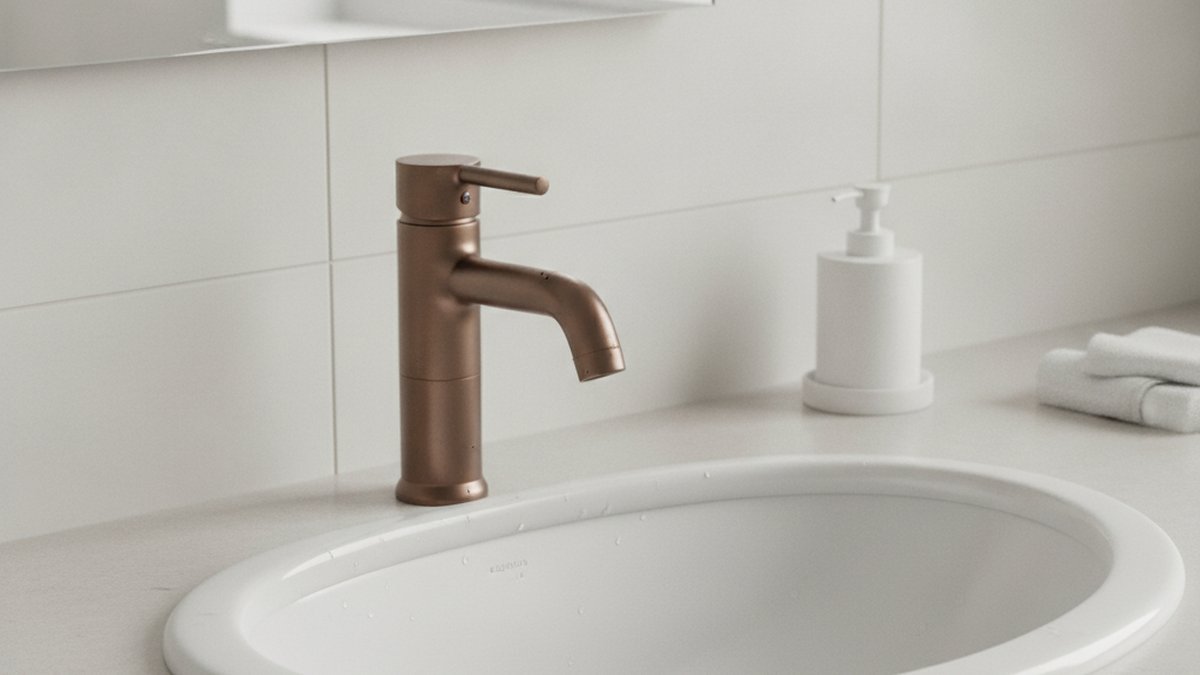
If you’ve been searching for an oil rubbed bronze bathroom faucet one hole setup, you’re almost certainly staring at a single pre-drilled hole in your sink and wondering which faucet will fit, look great, and not corrode in two years. Good news: single-hole oil rubbed bronze (ORB) faucets are one of the easiest, most forgiving upgrades in a bathroom, and they photograph as well as they wear. Below, I’ll walk you through exactly what “one hole” means, how to tell a real bronze finish from a spray-painted fake, what to spend, and how to install it — the same way I’d explain it to a friend standing in the plumbing aisle.
What does “one hole” actually mean on a bathroom faucet?
“One hole” means the faucet installs through a single hole in your sink or countertop — spout and handle are combined into one body. This is different from a centerset faucet (three holes on 4-inch centers) or a widespread faucet (three separate holes spread 8–16 inches apart). If your sink or vanity top has exactly one drilling in the middle, a single-hole faucet is what you need.
Most single-hole faucets are also single-handle, meaning one lever controls both temperature and flow. That’s why they feel so clean and modern — there’s less hardware crowding the deck. Many one-hole models ship with an optional escutcheon plate (a cover plate) so you can still mount them on a three-hole sink if you ever change sinks later. That flexibility is a quiet reason single-hole faucets are so popular: they fit one-hole sinks perfectly and adapt to three-hole sinks in a pinch.
If you’re still deciding between configurations, it’s worth reading our breakdown of centerset vs. widespread faucets and what the difference really is before you commit — the hole count on your sink is the single biggest factor that decides which faucet family you can even buy.
Is oil rubbed bronze a good finish for a bathroom faucet, or will it wear off?
Oil rubbed bronze is an excellent bathroom finish — as long as you buy a real one. A quality ORB faucet uses either a durable PVD (physical vapor deposition) coating that’s essentially scratch-proof, or a genuine “living finish” that’s meant to gradually lighten at high-touch spots over years, revealing warmer copper tones. Both are legitimate. What you want to avoid is a cheap electroplated or spray-lacquered ORB that chips within a year and exposes shiny metal underneath.
Here’s the practical difference that matters in a real bathroom: oil rubbed bronze hides water spots, fingerprints, and toothpaste splatter far better than chrome or polished nickel. The dark, matte surface simply doesn’t show mineral scale the way a mirror finish does. For a busy family bathroom or a home with hard water, that’s a genuine day-to-day advantage — you’ll wipe it down less often and it’ll still look intentional.
One caveat worth knowing: hard water is still hard water. Bronze hides the spots, but heavy mineral buildup can eventually crust around the aerator and base. If you’re on well water or a hard-water city supply, skim our guide on how to clean hard water stains from a faucet so you know the gentle way to do it — abrasive pads and acidic cleaners will strip an ORB finish faster than the water ever would.
How do I know a one-hole ORB faucet is actually good quality?
Check three things: the body material, the cartridge, and the finish type. A faucet that gets all three right will outlast a bathroom remodel. Here’s what to look for and why each one matters.
- Solid brass body. Brass resists corrosion and gives the faucet real heft. Avoid faucets built on zinc alloy (often labeled “metal” vaguely) or plastic internals — they crack at threaded joints and feel hollow. A solid-brass single-hole faucet typically weighs 2.5–4 lbs.
- Ceramic-disc cartridge. This is the valve that opens and closes when you move the handle. Ceramic discs are the industry standard for drip-free performance and smooth handle feel; they routinely survive 500,000+ open/close cycles. Cheaper rubber-washer or ball valves start dripping within a year or two.
- Genuine PVD or living finish. Ask (or read the spec) whether the ORB is PVD-coated or a living finish, not spray lacquer. PVD is the most durable finish coating available on consumer faucets.
- Lead-free certification. Look for a fixture certified to NSF/ANSI 372 and compliant with the U.S. Safe Drinking Water Act’s lead-free rule (≤0.25% weighted lead). This is non-negotiable for anything that touches drinking water.
- Included aerator with a sensible flow rate. A good bathroom faucet flows around 1.2 GPM — enough pressure to feel strong while meeting WaterSense efficiency standards.
If lead-free construction is a priority for you (and it should be), our roundup of the best lead-free faucet brands to buy in 2026 is a good sanity-check before you hand over your card.
Oil rubbed bronze vs. other popular finishes: which lasts and looks best?
For a single-hole bathroom faucet, oil rubbed bronze wins on hiding water spots and adding warmth, while brushed nickel wins on being the most fingerprint-forgiving neutral, and chrome wins on lowest price and easiest cleaning. Here’s how the four most common finishes stack up.
| Finish | Best for | Hides water spots? | Typical price (one-hole) | Durability |
|---|---|---|---|---|
| Oil Rubbed Bronze | Warm, traditional & farmhouse baths | Excellent | $60–$180 | High (PVD) / ages gracefully (living finish) |
| Brushed Nickel | Transitional, everyday neutral | Very good | $55–$160 | High |
| Chrome | Budget builds, bright modern look | Poor (shows everything) | $40–$120 | High but scratches show |
| Matte Black | Contemporary, high-contrast baths | Good | $70–$190 | High (usually powder-coated) |
The short version: if your bathroom leans warm, traditional, farmhouse, or Mediterranean, oil rubbed bronze is the natural choice and it pairs beautifully with cream, beige, wood, and stone. If your palette is cool and gray, brushed nickel or matte black may sit better. Want to weigh the alternatives directly? We cover the trade-offs in whether brushed nickel faucets are worth it and whether a chrome faucet is the right choice.
Can I really install a single-hole ORB faucet myself in under an hour?
Yes — a single-hole faucet is the easiest type to install, and most people finish in 30–45 minutes with basic tools. Because there’s only one hole and usually one mounting nut, there’s far less to align than with a widespread faucet. Here’s the step-by-step.
- Turn off the water. Shut both supply valves under the sink and open the old faucet to release pressure. If there are no shutoffs, turn off the main.
- Remove the old faucet. Disconnect the supply lines, loosen the mounting nut underneath, and lift the old faucet out.
- Clean the deck. Wipe away old putty, silicone, and mineral scale so your new faucet seats flat.
- Set the new faucet. Feed the supply lines and mounting shank through the single hole. If your sink has three holes, add the included escutcheon (deck plate) now.
- Tighten from below. Thread on the mounting nut and snug it — hand-tight plus a quarter turn with a basin wrench. Don’t overtighten; you can crack ceramic sinks.
- Connect the supply lines. Attach hot to hot, cold to cold. Use plumber’s tape on threaded connections if they aren’t compression-fitted.
- Turn water on and test. Run both temperatures, check under the sink for drips, and remove the aerator for 30 seconds to flush out debris.
If it’s your first plumbing job, the mechanics carry over almost exactly from a kitchen swap — our step-by-step kitchen faucet installation guide shows the supply-line and mounting-nut steps in more detail, and the principles are identical for a bathroom single-hole model.
How much should I spend, and where do the extra dollars go?
For a genuinely good single-hole ORB bathroom faucet, budget $60–$180. Under about $50 you’re usually looking at zinc bodies and lacquered finishes that won’t age well; above $180 you’re paying for designer branding, fancier handle geometry, or premium living finishes — not necessarily better everyday function.
Here’s where the money actually matters. The jump from a $40 faucet to an $80 one almost always buys you a solid brass body and a real ceramic cartridge — that’s the upgrade that determines whether your faucet drips in year two. The jump from $80 to $150 buys finish quality (true PVD or a hand-applied living finish), a smoother handle action, and a more substantial spout. Beyond that, you’re mostly paying for the name on the box. For most bathrooms, the $80–$130 range is the sweet spot.
Where should I buy an oil rubbed bronze one-hole faucet that lasts?
Buy from a source that publishes real specs — body material, cartridge type, finish process, and certifications — and backs the faucet with a warranty. If a listing won’t tell you what the faucet is made of, that silence is usually the answer. A trustworthy oil rubbed bronze bathroom faucet one hole model will state “solid brass,” “ceramic disc,” “PVD” or “living finish,” and a lead-free certification right on the page.
At Afinion Home, every single-hole ORB lavatory faucet we carry is built on a solid brass body with a ceramic-disc cartridge, finished with a durable oil rubbed bronze coating, and certified lead-free to NSF/ANSI 372. If you’d rather see options in person first, our guide on where to find an oil rubbed bronze bathroom faucet nearby that actually lasts helps you vet local stockists. And if you want a specific, widely-loved model comparison, our take on the Moen Eva oil rubbed bronze faucet is a useful benchmark for what a good single-hole ORB fixture should cost and deliver.
What if my sink has extra holes I’m not using?
No problem — a single-hole faucet with an included deck plate covers a three-hole sink cleanly, and dedicated hole covers handle any leftover openings. If you switch from a three-hole faucet to a one-hole model, you’ll typically use the faucet’s escutcheon to hide the outer holes. If you have a separate soap-dispenser or sprayer hole you want to close off, a matching cover finishes the job.
Match the cover to your faucet finish so it disappears. We break down the best options in our guide to the best oil rubbed bronze faucet hole cover for covering an unused sink hole — a $10 part that keeps your install looking deliberate instead of patched together.
FAQ
Will an oil rubbed bronze faucet finish fade or turn green over time?
A quality PVD-coated ORB faucet won’t fade or oxidize — it stays consistent for the life of the fixture. A “living finish” ORB is intentionally designed to lighten at high-touch areas over years, exposing warmer copper tones, which many people love. Neither should turn green; verdigris (green corrosion) is a sign of a cheap coating over raw brass, which is why the finish process on the spec sheet matters.
Does a one-hole faucet fit a three-hole sink?
Yes. Most single-hole bathroom faucets include an optional escutcheon (deck plate) that covers the two outer holes on a standard 4-inch centerset sink. Just confirm the deck plate is included or available in your finish before buying.
Is oil rubbed bronze out of style in 2026?
No. Oil rubbed bronze remains a top seller because it’s warm, hides water spots, and pairs with traditional, farmhouse, transitional, and Mediterranean bathrooms. It’s less trend-driven than matte black — it has stayed popular for over two decades, which makes it a safe long-term choice.
What’s the difference between oil rubbed bronze and Venetian or dark bronze?
They’re closely related dark-brown bronze tones, and names vary by brand. “Oil rubbed bronze” typically has more contrast — darker recesses with lighter high points — while “Venetian bronze” (Delta’s term) tends to read as a slightly warmer, more uniform brown. When mixing brands, check them side by side, because the same name can differ between manufacturers.
How long should a good single-hole ORB bathroom faucet last?
A solid-brass faucet with a ceramic-disc cartridge should last 10–15 years or more with basic care. The cartridge is usually the first part to wear, and it’s inexpensive and easy to replace — so even at end of life, you’re often looking at a cheap fix, not a new faucet.
Can I use standard cleaners on an oil rubbed bronze faucet?
Stick to mild soap and water and a soft cloth. Avoid abrasive pads, acidic cleaners (vinegar, lime removers), and ammonia — these can strip or dull the bronze finish. For mineral buildup, wrap the aerator in a cloth dampened with a mild solution rather than scrubbing the finish directly.
About the author: This guide was written by the Afinion Home fixtures team, who spec, install, and pressure-test bathroom faucets year-round. Afinion Home has helped thousands of homeowners choose faucets that meet U.S. lead-free drinking water standards (NSF/ANSI 372) and carry manufacturer-backed warranties. Every single-hole oil rubbed bronze faucet we recommend is evaluated for body material, cartridge durability, and finish integrity before it earns a spot on our site.