
Is an Oil Rubbed Bronze Shower Faucet With Valve Worth Buying for My Bathroom Remodel?
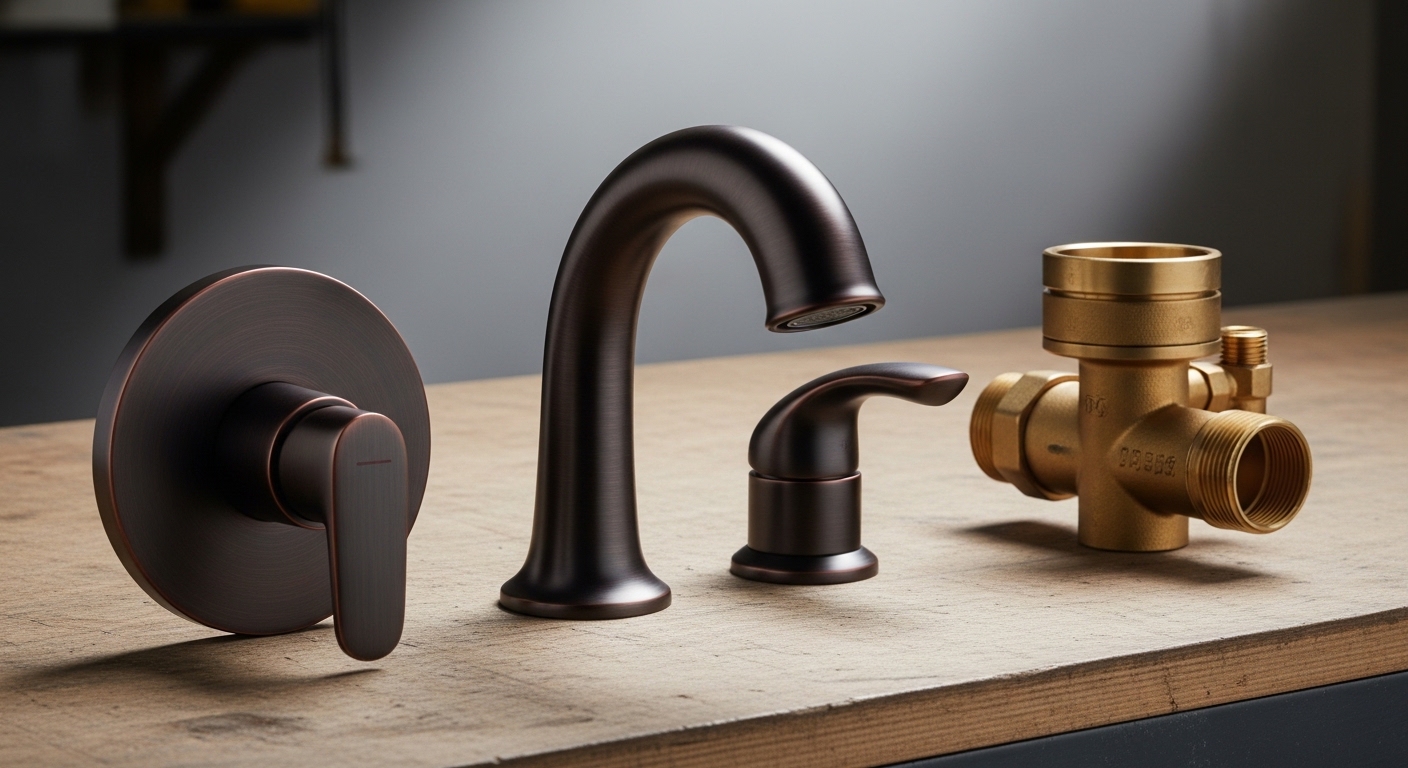
An oil rubbed bronze shower faucet with valve is a matched set that includes both the visible trim (the handle, escutcheon plate, tub spout, and shower head or arm) and the pressure-balancing or thermostatic valve that actually lives inside your wall and controls the water. Buying them together is the smart move, because a “trim only” kit is useless if it doesn’t fit the valve cartridge already behind your tile — and mixing brands is where most DIY shower projects go sideways. This guide walks through what you actually get, how oil rubbed bronze holds up in a wet shower, valve types, real pricing, and how to install one without ripping open a wall you didn’t need to open.
What exactly comes in an oil rubbed bronze shower faucet with valve?
You get everything from the wall out, plus the part that hides inside the wall. A complete kit almost always includes: the rough-in valve body (the brass block that connects to your hot and cold supply lines), the cartridge that mixes and controls water, the decorative trim plate and handle, and usually a tub spout and/or a shower head and arm. In other words, it’s a full shower valve system — not just the shiny bits you see.
This matters because retailers often sell “trim only” kits at a tempting price. Those assume you already have a compatible valve buried in your wall. If you’re doing a fresh remodel, a new construction bathroom, or you’re not sure what brand of valve is back there, buy the complete package so the cartridge, valve, and trim are all designed to fit each other. Here’s the typical contents list:
- Rough-in valve body — usually forged brass with 1/2″ IPS or CPVC/PEX connections.
- Pressure-balancing or thermostatic cartridge — the anti-scald brain of the system.
- Trim plate (escutcheon) and handle — the oil rubbed bronze face you see and touch.
- Tub spout and/or shower head with shower arm and flange — depending on tub-shower vs. shower-only.
- Diverter — on tub/shower combos, to send water up to the head.
- Mounting hardware, plaster guard, and a template for setting valve depth in the wall.
Does oil rubbed bronze hold up in a wet shower, or will it wear off?
Quality oil rubbed bronze holds up very well in a shower, and it ages more gracefully than almost any other finish — but the finish quality varies a lot by manufacturer. Oil rubbed bronze (ORB) is a dark brown-black finish with copper and bronze undertones that peek through on the high points. On better fixtures it’s a durable living finish, meaning it’s designed to develop slight highlights over years of use, which reads as character rather than damage.
The real question is how the finish is applied. There are two broad approaches, and they behave very differently in a daily-use shower:
| Finish method | How it looks over time | Durability in a shower | Best for |
|---|---|---|---|
| Sealed / powder-coated (PVD-style) ORB | Stays uniform dark bronze for years | Very high — resists chlorine, soap, and abrasion | People who want a consistent look with zero surprises |
| Chemically-aged “living” ORB | Develops copper highlights on handles and spout | High, but high-touch spots lighten over time | Traditional / farmhouse fans who like patina |
| Painted / sprayed budget ORB | Can chip or flake at the edges | Low — avoid for daily showers | Very low-traffic or purely decorative use only |
One underrated bonus: oil rubbed bronze hides water spots and toothpaste splatter far better than chrome or polished nickel. If you have hard water, this is a genuine daily-cleaning advantage — the dark finish simply doesn’t showcase mineral film the way a mirror-bright surface does. That said, hard water can still leave chalky buildup around the spray face and handle base, so it helps to know how to clean hard water stains from a faucet before they set in — the same gentle, no-acid approach applies to bronze shower trim.
Pressure-balancing vs. thermostatic valve — which do I actually need?
For most homes, a pressure-balancing valve is all you need and it’s the more affordable choice; upgrade to a thermostatic valve only if you want to set an exact temperature or run multiple sprays at once. Both are legitimate anti-scald technologies required by modern plumbing code (ASSE 1016) — the difference is how precisely they protect you and how much you control.
A pressure-balancing valve reacts to sudden pressure changes — like a toilet flushing elsewhere in the house — and keeps the hot/cold ratio steady so you don’t get blasted with cold or scalding water. You set temperature and volume with a single handle. It’s simple, reliable, and covers 90% of bathrooms.
A thermostatic valve senses actual water temperature and holds it to within a couple of degrees, regardless of pressure swings. It usually has two controls: one dial for temperature, one for volume (or for switching between shower head, hand shower, and body sprays). It costs more and takes a larger valve body, but it’s the right call for a spa-style shower with multiple outlets or for anyone who wants to dial in the exact same temperature every morning.
- Single shower head, standard bathroom? Pressure-balancing. Done.
- Tub-and-shower combo? Pressure-balancing with an integrated diverter.
- Shower head + handheld + body jets? Thermostatic, so each outlet stays at temp.
- Household with kids or elderly users? Either works for anti-scald, but thermostatic gives the tightest temperature safety margin.
If accessibility is a priority in your remodel, it’s worth pairing the valve with the right spray, too — our guide to the best handheld shower head for elderly users pairs perfectly with a thermostatic or pressure-balancing oil rubbed bronze set.
How much should I spend on an oil rubbed bronze shower faucet with valve?
Plan on $120–$400 for a quality complete set, with the sweet spot for most homeowners around $180–$280. Below about $100 you’re usually looking at painted finishes and zinc or plastic valve internals that fail early; above $400 you’re paying for thermostatic function, multiple outlets, and premium brand names. Here’s how the tiers break down in real terms:
| Price tier | What you get | Valve type | Realistic lifespan |
|---|---|---|---|
| $60–$110 (budget) | Painted ORB, zinc/plastic parts, trim-only common | Basic pressure-balance | 2–5 years |
| $120–$280 (best value) | Solid brass valve, ceramic-disc cartridge, sealed finish, complete kit | Pressure-balancing | 10–15+ years |
| $300–$500+ (premium) | Thermostatic, multi-outlet, heavier brass, lifetime finish | Thermostatic | 15–20+ years |
The single most important spec at any price is a solid brass valve body and a ceramic-disc cartridge. Brass resists corrosion and handles heat; ceramic discs are what let a good cartridge run for a decade without dripping. When a shower “won’t stop dripping,” it’s almost always a worn cartridge, not the valve — which is why a serviceable, replaceable cartridge matters so much. (If you’re fighting a drip right now, here’s how to fix a dripping faucet at home; the cartridge logic is the same for shower valves.)
Will an oil rubbed bronze finish match the rest of my bathroom?
Oil rubbed bronze matches warm, traditional, farmhouse, industrial, and transitional bathrooms beautifully, and it pairs especially well with cream, beige, sage, warm gray, and natural stone or wood tones — but it can look muddy against very cool, stark, all-white modern rooms. The trick is to commit to the finish family across the room so it looks intentional.
To keep everything cohesive, match your shower trim to the rest of your bronze hardware — the bathroom faucet, cabinet pulls, towel bars, and even the drain. If you’re sourcing coordinating pieces, our roundup of where to find an oil rubbed bronze bathroom faucet nearby that actually lasts covers exactly what to look for so your sink and shower read as one set. A few pairing rules that always work:
- Warm neutrals win: cream, taupe, greige, and warm white tile let bronze glow.
- Natural materials amplify it: wood vanities, stone counters, and matte tile.
- Avoid clashing metals: keep one dominant finish; if you must mix, pair bronze with matte black, not polished chrome.
- Lighting matters: warm (2700K–3000K) bulbs bring out the copper undertones; cool daylight bulbs can flatten them.
Still deciding on the overall fixture strategy for the room? Our primer on how to choose the right bathroom faucet covers finish, mounting, and sizing decisions that carry straight over to shower fixtures.
How do I install an oil rubbed bronze shower faucet with valve?
If the valve is already roughed in and compatible, installing the trim is a 30–60 minute DIY job with basic tools. Setting a brand-new valve into an open wall is more involved and often best left to a licensed plumber, because it usually requires soldering or PEX connections and setting the valve at the exact right depth for your finished wall. Here’s the realistic sequence:
- Shut off the water to the bathroom (or the whole house) and open the shower to relieve pressure.
- Set the valve depth (new installs only): the valve’s plaster guard has depth marks — line them up with the finished tile surface so the trim sits flush later.
- Connect supply lines to the brass valve body — hot to hot, cold to cold — using solder, press fittings, or PEX per the instructions.
- Pressure-test before closing the wall to confirm no leaks at the joints. Never tile over an untested valve.
- Install the cartridge and remove the plaster guard once the wall is finished.
- Mount the trim: slide on the escutcheon, secure the handle, then thread on the shower arm (with plumber’s tape) and hand-tighten the shower head. Wrap tape on the tub spout nipple and press or thread the spout on.
- Turn the water back on and test hot, cold, diverter, and the anti-scald limit stop.
Pro tip: when tightening oil rubbed bronze trim, wrap wrench jaws with a cloth or use a strap wrench. The finish is durable against water and soap but can still be scratched by bare metal tools. And set the rotational limit stop on the cartridge to cap the maximum hot temperature — a two-minute step that prevents scalding.
Oil rubbed bronze vs. other popular shower finishes
Choose oil rubbed bronze for warmth and spot-hiding, brushed nickel for a warm-neutral middle ground, chrome for bright and budget-friendly, and matte black for modern contrast. Each finish has a clear personality and a clear maintenance trade-off:
| Finish | Look | Hides water spots? | Best room style |
|---|---|---|---|
| Oil rubbed bronze | Warm, dark, antique | Excellent | Traditional, farmhouse, transitional |
| Brushed nickel | Soft, warm-gray satin | Very good | Almost any style |
| Chrome | Bright, mirror-like | Poor | Modern, classic, budget |
| Matte black | Bold, contemporary | Good | Modern, minimalist |
If you’re weighing bronze against the two most common alternatives, it’s worth reading whether brushed nickel faucets are worth it and whether a chrome faucet is the right choice — both articles apply directly to shower trim, not just sink faucets, since the finish behaves the same on any fixture.
The Afinion Home take: is it the right buy?
For a warm, character-rich bathroom that you don’t want to be squeegeeing every day, an oil rubbed bronze shower faucet with valve is one of the best-value upgrades you can make — provided you buy the complete matched kit with a solid brass valve and a sealed or living finish, not a painted budget imitation. Spend in the $180–$280 range, confirm the cartridge is a serviceable ceramic-disc unit, and you’ll have a shower that looks great and works quietly for 10–15 years.
At Afinion Home, we design our oil rubbed bronze shower systems around forged-brass valve bodies and ceramic-disc cartridges, pressure-test every valve, and back the finish and function with a warranty because a shower valve lives in your wall — it has to be right the first time. Our sets are engineered as complete trim-plus-valve packages so the parts you see and the parts you don’t are built to fit each other.
FAQ
Can I use just the oil rubbed bronze trim if I already have a valve?
Only if the trim is designed for your specific valve and cartridge — trim kits are brand- and model-specific. If your existing valve is a common brand and you buy the matching trim, yes; if you’re unsure what’s behind the wall or it’s an off-brand valve, buy the complete oil rubbed bronze shower faucet with valve so everything is guaranteed to fit.
Does oil rubbed bronze shower trim fade or turn green?
Quality sealed ORB won’t fade or turn green in normal shower use. “Living finish” versions intentionally lighten to copper on high-touch spots over years, which is patina, not corrosion. Cheap painted finishes can chip or discolor — which is why finish quality and warranty matter more than price alone.
What valve type is best for a tub-and-shower combo?
A pressure-balancing valve with a built-in diverter is the standard, reliable choice for a tub-shower combo. It handles anti-scald protection and lets you switch flow between the tub spout and the shower head with the same trim. Upgrade to thermostatic only if you’re adding a handheld or body sprays.
How do I clean an oil rubbed bronze shower faucet without ruining it?
Wipe it with a soft damp cloth and mild soap, then buff dry — that’s it for daily care. Avoid vinegar, ammonia, bleach, and any abrasive or acidic cleaner, which can strip the finish. For hard-water buildup, use a gentle non-acidic approach and dry after each use to keep mineral film from forming.
Is an oil rubbed bronze shower faucet with valve hard to install myself?
Swapping trim onto an existing compatible valve is a beginner-friendly, 30–60 minute job. Installing a new valve in an open wall involves soldering or PEX connections, correct depth-setting, and a pressure test before you tile — that part is best handled by a licensed plumber unless you’re experienced with in-wall plumbing.
Will a bronze shower faucet match a bronze bathroom faucet from a different brand?
Usually close, but not always identical — “oil rubbed bronze” varies slightly between manufacturers, especially between living and sealed finishes. For the most seamless look, buy your shower and sink fixtures in the same finish family, ideally from the same brand, and view them in the same warm lighting before committing.
Author’s note: This guide was written by the Afinion Home fixtures team, drawing on hands-on installation and finish-durability testing of shower valves and oil rubbed bronze trim. Afinion Home specializes in faucets, shower systems, and bathroom fixtures, and all recommendations here reflect current U.S. plumbing standards, including ASSE 1016 anti-scald requirements for shower valves.

One Comment