
Are Faucet Water Filters Worth It, or Should You Just Buy Bottled Water in 2026?
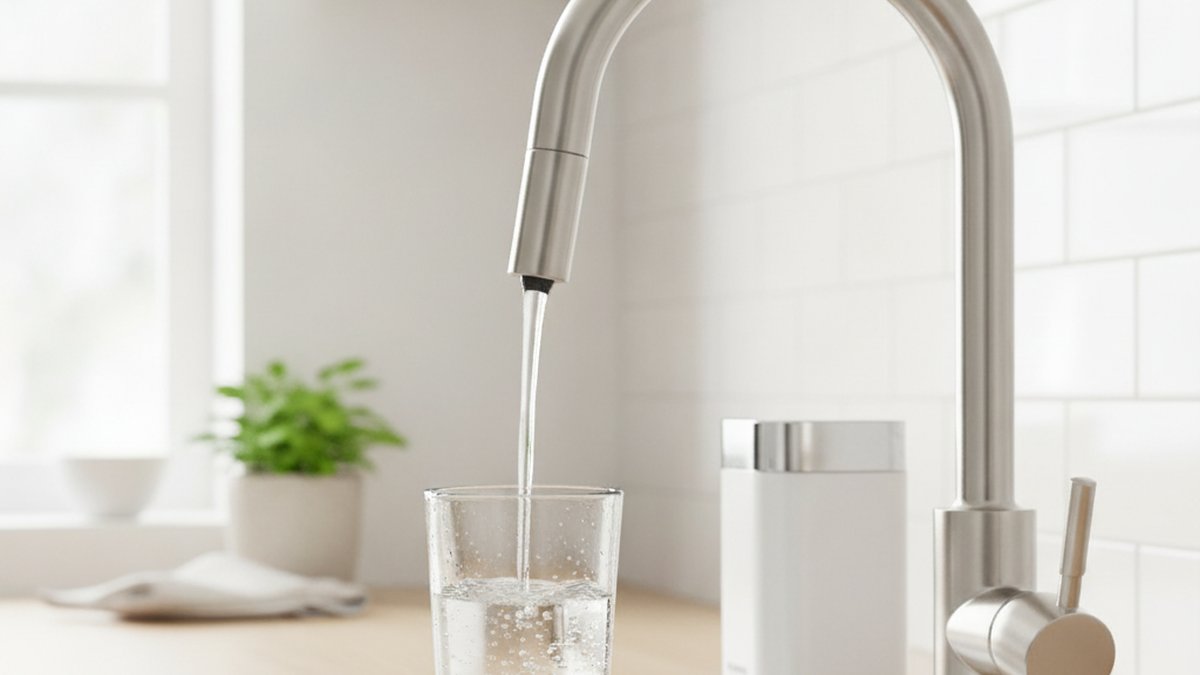
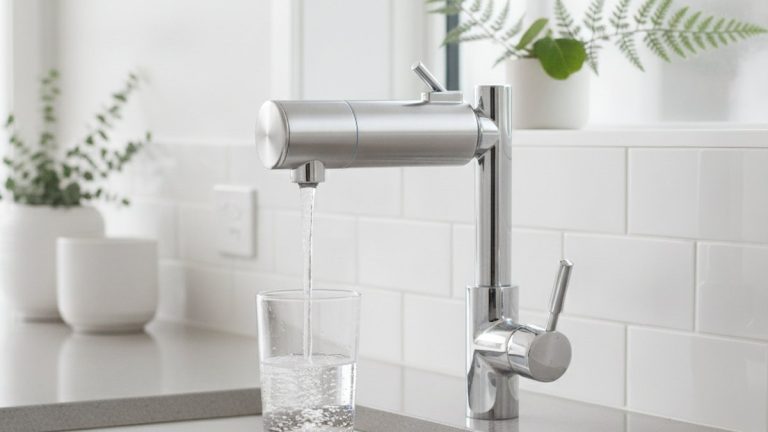
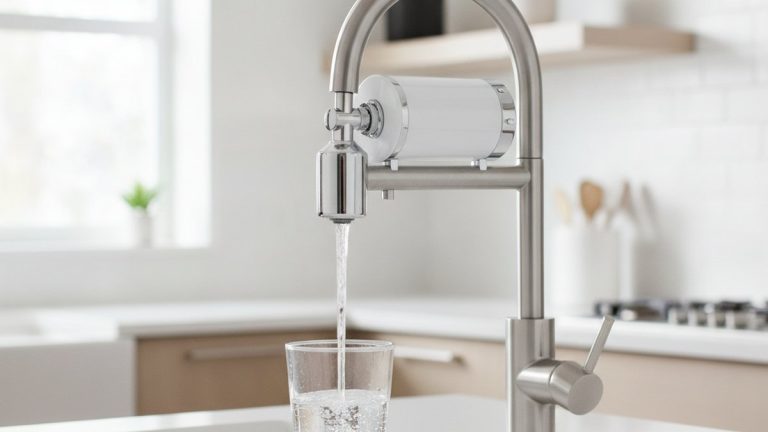
So, are faucet water filters worth it? For the vast majority of people on treated city water, the honest answer is yes — a good faucet-mounted filter is one of the cheapest, fastest upgrades you can make to your kitchen. You screw it onto the aerator threads in about two minutes, flip a lever when you want filtered water, and get noticeably better-tasting water for a fraction of what bottled costs. But “worth it” depends on your water, your budget, and what you actually want the filter to do. Below we’ll walk through the real math, what these filters remove (and don’t), how they compare to pitchers and under-sink systems, and who should skip them entirely.
At Afinion Home we sell and test faucets and filtration gear all day, so this isn’t a pitch for one magic gadget — it’s the same rundown we’d give a friend standing in the kitchen aisle trying to decide.
What does a faucet water filter actually remove from tap water?
A quality faucet water filter removes chlorine, lead, mercury, some pesticides, benzene, asbestos particles, sediment, and the compounds that cause bad taste and odor — but it does not remove dissolved minerals (so it won’t soften hard water), and standard versions won’t touch fluoride, dissolved salts, or bacteria and viruses.
The reason a faucet filter can do so much in such a small housing is a two-stage cartridge: a mechanical layer that traps sediment and rust, and an activated carbon block that adsorbs chlorine and organic chemicals. Better cartridges add ion-exchange media to grab heavy metals like lead. The trick to knowing whether a specific model is legit is the certification. Look for these on the box:
- NSF/ANSI 42 — chlorine, taste, and odor reduction (the “it tastes better” claim).
- NSF/ANSI 53 — health contaminants like lead, cysts, and VOCs (the claim that actually protects you).
- NSF/ANSI 401 — “emerging contaminants” such as pharmaceutical traces and some pesticides.
If a filter is only certified to Standard 42, it makes water taste good but doesn’t necessarily remove lead — a distinction that matters enormously if you’re in an older home with legacy plumbing. Reputable brands print the exact contaminant reduction percentages on the packaging, and you can verify the certification number directly in the NSF database. That’s a real testing standard, not marketing.
Are faucet water filters worth it compared to just buying bottled water?
Financially, it’s not close — a faucet water filter beats bottled water by a wide margin. A typical faucet filter system costs $20–$50, and replacement cartridges run about $15–$25 for roughly 100 gallons, which works out to around $0.10–$0.20 per gallon. Bottled water, even cheap store-brand cases, lands at $0.80–$1.50 per gallon and more if you buy single bottles.
Here’s what that looks like for a two-person household drinking and cooking with roughly 3 gallons a day:
| Option | Up-front cost | Cost per gallon | ~1-year cost (3 gal/day) | Removes lead? |
|---|---|---|---|---|
| Faucet-mounted filter | $20–$50 | $0.10–$0.20 | ~$110–$220 | Yes (if NSF 53) |
| Filter pitcher | $25–$45 | $0.20–$0.30 | ~$220–$330 | Some models |
| Under-sink reverse osmosis | $150–$350 | $0.08–$0.15 | ~$90–$165 (after install) | Yes |
| Bottled water | $0 | $0.80–$1.50 | ~$875–$1,640 | N/A |
The faucet filter pays for itself against bottled water in about three to six weeks. Add in the plastic waste you avoid and the fact that you never have to lug cases home from the store, and the convenience math tips even harder in the filter’s favor. Bottled water only wins in one scenario: a short-term situation like a boil-water advisory or a rental where you truly can’t attach anything to the tap.
Faucet filter vs. pitcher vs. under-sink: which one should you buy?
Buy a faucet-mounted filter if you want the cheapest, no-plumbing option and drink water throughout the day; buy a pitcher if you rent and can’t touch the faucet or only want a glass or two; buy an under-sink reverse osmosis system if you have serious contamination, hard water problems, or want the highest purity and don’t mind the install.
The everyday decision usually comes down to faucet-mount versus pitcher, and the deciding factors are flow rate and effort. A faucet filter gives you filtered water on demand — flip the diverter and it flows at close to normal speed, so filling a pasta pot or a dog bowl isn’t a chore. A pitcher makes you wait for gravity to pull water through, holds a limited amount, and needs refilling constantly. On the flip side, a pitcher requires zero installation and lives in the fridge, so cold filtered water is always ready.
If your real problem is scale buildup, spotty glassware, or crusty aerators, understand that none of these standard filters soften water — that’s a mineral issue, and it’s also why aerators clog in the first place. We break that down in our guide on whether faucet aerators get clogged, which is worth a read if your flow has been dropping. And if you want the absolute purest water with virtually all dissolved solids stripped out, that’s the territory of a zero-TDS filtration setup — genuinely great for coffee snobs and aquariums, but overkill for most kitchens.
Will a faucet water filter fit my kitchen faucet?
Most faucet water filters fit standard faucets with external aerator threads, but they generally do not fit pull-out or pull-down spray faucets, faucets with hidden internal threads, or specialty spouts — so check your faucet type before you buy.
Here’s the quick compatibility check. Unscrew your existing aerator. If the threads are on the outside of the faucet tip (male threads), a standard filter’s included adapters will almost always fit. If the threads are recessed inside the spout (female threads), you’ll need the female adapter that comes in most kits. The models that give people trouble are:
- Pull-down and pull-out sprayers — the spray head is too big and heavy to hang a filter off of. There are workarounds, and we cover them in our piece on fitting a faucet water filter for a pull-out faucet.
- Touchless or commercial-style spring faucets — usually no compatible thread at all.
- Very short or angled spouts — the filter body can hit the sink basin.
If a filter won’t mount directly, a hose-adapter kit sometimes bridges the gap by routing water to a small counter unit — we explain when that makes sense in our faucet water filter hose guide. And when you’re ready to actually put one on, our step-by-step walkthrough on how to install a faucet water filter shows the whole thing in under 15 minutes with no tools.
How often do you replace the cartridge, and what does it really cost?
Most faucet filter cartridges last about 100–200 gallons, or roughly two to three months for an average household, and cost $15–$25 each — so budget around $60–$100 a year in replacements. Many units have an indicator light or a change reminder so you’re not guessing.
The mistake people make is stretching a cartridge past its rated life to save money. Once the carbon is saturated, it stops adsorbing contaminants and can even release trapped compounds back into your water — worse than no filter. Worse, a clogged old cartridge chokes your flow to a trickle, which is exactly the frustration that makes people yank the whole thing off and give up. Set a phone reminder tied to gallons or months, whichever comes first, and the ongoing experience stays good.
A few habits that stretch cartridge life honestly and safely:
- Only run water through the filtered setting when you actually want drinking or cooking water — use unfiltered for dishes and hand-washing.
- Never send hot water through the filter; heat degrades the carbon and can crack the housing. Filters are rated for cold water only.
- If your water is sediment-heavy, a cheap inline pre-filter upstream catches grit so the main cartridge lasts longer.
Who should NOT bother with a faucet water filter?
Skip a faucet filter if your tap water already tests clean and tastes great, if you need to remove fluoride or dissolved salts, if you’re on well water with bacterial contamination, or if you have a pull-down sprayer you love and don’t want to mess with.
Well water is the big asterisk. Faucet carbon filters are designed for municipally treated water that’s already disinfected — they are not a defense against bacteria, viruses, nitrates, or heavy microbial loads common in private wells. If you’re on a well, get a proper water test first, then look at UV purification or a whole-house system sized to your actual results. A little $30 faucet filter is the wrong tool for that job.
Likewise, if you specifically need near-total purity — removing fluoride, sodium, or getting down to very low total dissolved solids — reverse osmosis is the answer, not a faucet mount. Know what problem you’re solving before you buy. For most city-water households, though, the problem is “chlorine taste, possible lead, and I hate buying bottled,” and a faucet filter nails all three cheaply.
What to look for when buying a faucet water filter
Buy a faucet filter that is NSF-certified to Standards 42 and 53, has a clear filtered/unfiltered diverter, includes multiple thread adapters, and comes from a brand with a real warranty and replaceable cartridges you can actually find in stock.
That last point trips people up. A cheap no-name filter is a bad deal if the proprietary cartridge is impossible to reorder six months later — you end up with a fancy paperweight. Stick with established brands whose cartridges are stocked widely. It’s the same logic we apply to lead-free faucet brands in general: certifications and long-term parts availability matter more than a flashy spec sheet. Also confirm the housing is BPA-free and that the whole unit carries at least a one-year warranty; the better ones back the housing for the life of the product and only ask you to replace the consumable cartridge.
FAQ
Do faucet water filters remove lead?
Yes — but only if the model is certified to NSF/ANSI Standard 53 for lead reduction. A filter certified only to Standard 42 improves taste and removes chlorine but does not guarantee lead removal. Always check the certification number on the box, especially in homes built before 1986 that may still have lead solder or service lines.
Do faucet water filters reduce water pressure?
A fresh cartridge causes only a slight, barely noticeable drop in flow. Pressure loss becomes obvious when the cartridge is near the end of its life and clogged with trapped sediment — that noticeable slowdown is actually your signal to replace it. If flow is weak even with a new cartridge, check that your aerator underneath isn’t also clogged.
Can I leave a faucet water filter on all the time?
Yes, you can leave the unit attached permanently. Just keep the diverter set to unfiltered for everyday tasks like washing dishes so you don’t waste cartridge life, and switch to filtered only for drinking and cooking water. Never run hot water through it in either mode, since heat damages the carbon media and the housing.
Is a faucet water filter better than a Brita pitcher?
For a busy household, a faucet filter is usually better — it delivers filtered water on demand at near-normal flow, filters more gallons per cartridge, and many models remove more contaminants than a basic pitcher. A pitcher wins if you rent and can’t attach anything, only need a glass or two a day, or want cold water always waiting in the fridge.
How long does it take to install a faucet water filter?
Under 15 minutes, and usually no tools are required. You unscrew the existing aerator, pick the matching thread adapter from the kit, screw the filter body on hand-tight, run water for a few minutes to flush the new cartridge, and you’re done. Our full install walkthrough covers every step and the common thread-fit snags.
Do faucet water filters soften hard water or stop limescale?
No. Standard faucet filters remove chlorine, lead, and taste-and-odor contaminants but leave dissolved calcium and magnesium — the minerals that cause hard water — untouched. If you’re fighting scale on fixtures and clogged aerators, you need a water softener or descaling system, not a carbon filter. The filter keeps your drinking water clean; it won’t stop the crust on your showerhead.
A note from the Afinion Home team: This guide was written and reviewed by the Afinion Home fixtures team, who spend their days installing, testing, and troubleshooting faucets and filtration in real kitchens and bathrooms. We stock and stand behind certified, lead-free fixtures and only recommend filters that carry legitimate NSF/ANSI certification and honest warranties. Our aim is simple: tell you what genuinely works for your water, not just what’s easiest to sell. Always confirm a product’s current certification and your local water quality report before buying.
One Comment