What Is a Faucet Water Filter Hose, and Do You Actually Need One?
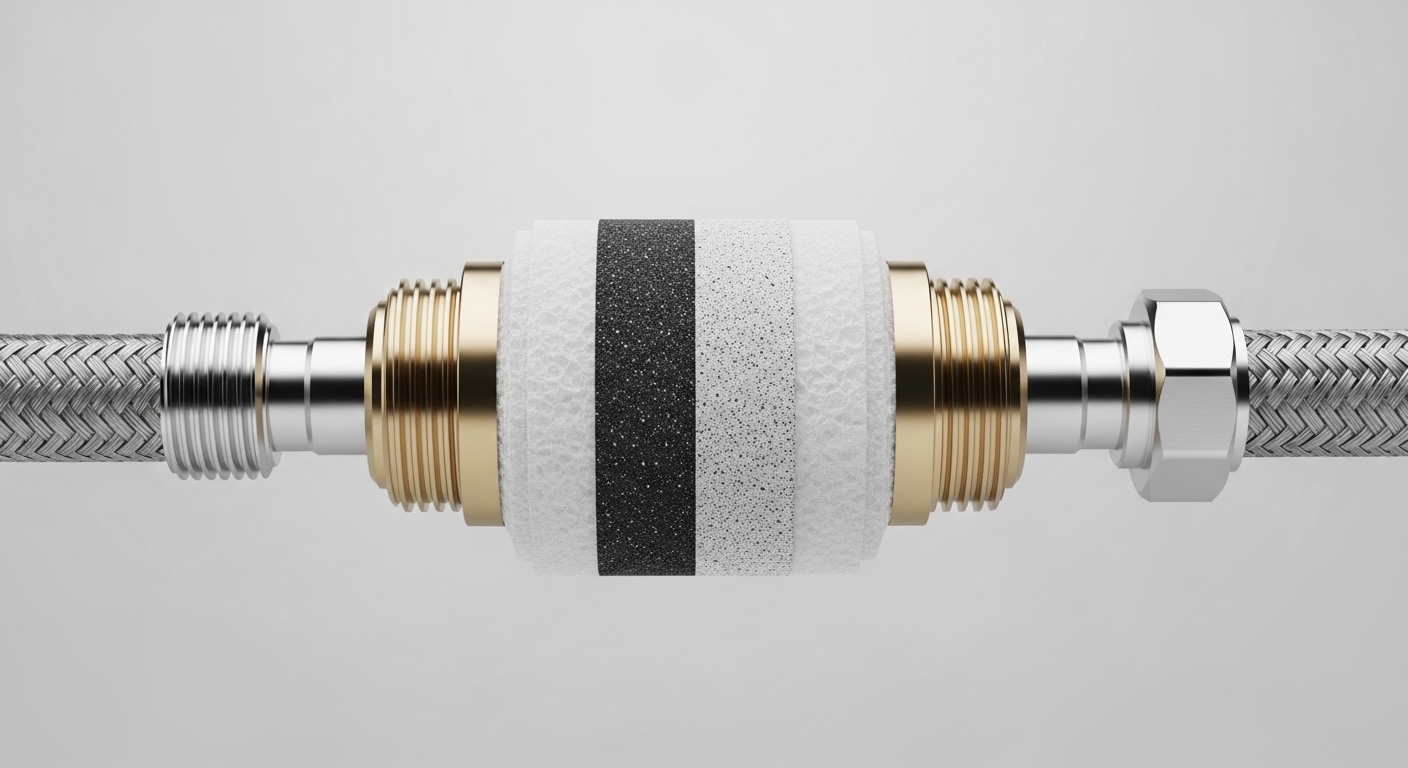
A faucet water filter hose is exactly what it sounds like: the hose that connects your faucet to the water line (or the pull-down spray hose on a kitchen faucet) with a small filter cartridge built inline, so water is filtered on its way out of the tap. Unlike a bulky under-sink system or a countertop pitcher, it hides inside your cabinet or clips onto the spray head, and most people install one in under 15 minutes with no plumber. Below, I’ll walk you through when it’s genuinely worth it, how it compares to other filtration options, what to look for on the spec sheet, and how to install and maintain one so it actually lasts.
What does a faucet water filter hose actually remove from your water?
A good inline hose filter removes chlorine, sediment, rust particles, and the taste and odor that come with them — but most do not remove dissolved minerals (hardness), lead, or heavy metals unless they specifically say so. The core of the filter is usually activated carbon (for chlorine and taste) wrapped around or paired with a PP (polypropylene) sediment membrane (for rust flakes and grit).
Here’s the honest breakdown of what these filters do and don’t handle:
- Removes well: free chlorine, chloramine byproducts, sediment down to ~5 microns, rust, sand, cloudiness, and the “pool water” smell and metallic aftertaste.
- Reduces partially: some VOCs and pesticides (depends on carbon quality and contact time), plus a little organic staining.
- Does NOT remove: water hardness (calcium/magnesium — so you’ll still get limescale), most dissolved solids (TDS), fluoride, or bacteria/viruses. If you have a well with microbial concerns, this is not the tool.
So if your complaint is “my water tastes like a swimming pool” or “there’s grit in the aerator,” a faucet water filter hose is often the perfect fix. If your complaint is white crusty buildup on the spout, that’s hardness — a filter hose won’t stop it, and you’ll want to keep reading our guide on how to clean hard water stains from a faucet instead.
Do you actually need one, or is a pitcher or under-sink system better?
You need a faucet water filter hose when you want filtered water from your existing tap without countertop clutter or a plumbing project — it’s the middle ground between a $30 pitcher and a $300 under-sink system. It’s the best value when your water is municipally treated (chlorinated) and your main goals are taste, smell, and clean-looking water.
Choose based on your real situation:
| Option | Best for | Typical cost | Flow / capacity | Install effort |
|---|---|---|---|---|
| Faucet water filter hose (inline) | Chlorine taste, sediment, rust; renters | $25–$70 | Full tap flow; 2–6 months per cartridge | 15 min, DIY, no plumber |
| Water pitcher filter | One or two people, drinking only | $25–$45 | ~1–2 L at a time; slow | None |
| Faucet-mount unit (on spout) | Drinking + rinsing at the sink | $25–$50 | Reduced flow when filtering | 10 min, DIY |
| Under-sink carbon system | Whole-kitchen filtered water | $120–$300 | Full flow; 6–12 months | 1–2 hrs, some plumbing |
| Reverse osmosis (RO) | Lead, fluoride, high TDS, heavy metals | $180–$500 | Slow; needs storage tank | Half day or plumber |
The one-line rule of thumb: if you rent, hate clutter, and mostly care about taste and grit, the inline hose wins. If you’re worried about lead or heavy metals, skip straight to RO — no inline hose will protect you there.
How much does a faucet water filter hose cost to run per year?
Expect roughly $40 to $110 per year total once you factor in the hardware and replacement cartridges — dramatically cheaper than bottled water and cheaper than most under-sink systems over their lifespan. The hose itself is a one-time $25–$70; the ongoing cost is cartridges.
Here’s the math most product pages won’t spell out for you. A typical inline cartridge is rated for 2–6 months or a set gallon count (often 300–1,000 gallons). If a two-pack of cartridges runs about $20 and you replace every 3–4 months, that’s roughly $40–$60 a year in filters. Compare that to a family buying a case of bottled water weekly — you’re saving hundreds of dollars while cutting plastic waste. A few cost tips:
- Buy multipacks. Cartridges are far cheaper in 3- or 6-packs, and they store fine sealed.
- Match cartridge life to your water. Sediment-heavy or heavily chlorinated water clogs filters faster — you may hit the low end of the range.
- Track the date. Write the install date on the cartridge with a marker so you don’t guess. Flow slowing to a trickle is your late warning sign.
- Don’t over-buy micron ratings. A 5-micron carbon block is plenty for taste and grit; ultra-fine ratings clog fast and slow your flow for little benefit on city water.
Will a filter hose reduce my water pressure or flow?
A properly sized inline hose filter causes only a small, barely noticeable pressure drop — usually a few PSI — but a clogged or undersized cartridge absolutely will choke your flow. The key is the cartridge’s micron rating and its condition.
New, correctly rated filters let full flow through. Where people run into weak, dribbling faucets is either (a) an ultra-fine micron cartridge that restricts flow from day one, or (b) an old cartridge packed with sediment that should have been swapped weeks ago. If your kitchen faucet suddenly feels weak after adding a filter hose, pull the cartridge and test the flow without it — if pressure returns, the filter is the culprit and it’s time for a fresh one. Weak flow can also be a tired aerator or a supply issue unrelated to the filter, so it’s worth understanding your faucet as a whole; our overview on how to choose the right bathroom faucet covers flow ratings (GPM) and what’s normal.
Can you install a faucet water filter hose yourself?
Yes — nearly all inline hose filters are a tool-free or single-wrench, 10–15 minute install that any renter can do, then reverse when you move out. There’s no cutting, soldering, or drilling. If you can swap a garden hose, you can do this.
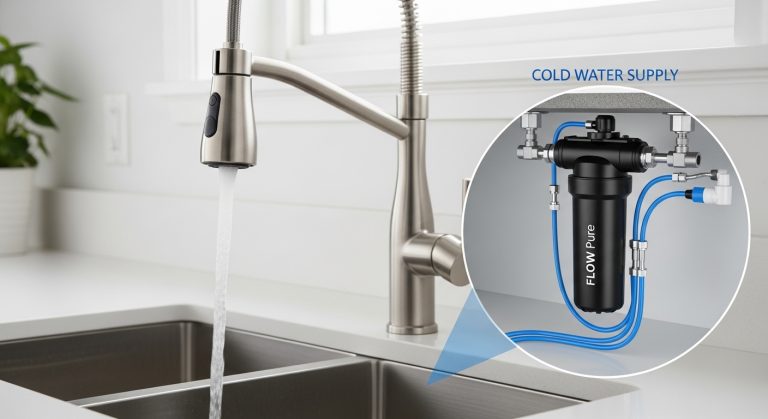
Here’s the general process for an under-sink inline supply-line filter:
- Shut off the water. Close the angle stop (shutoff valve) under the sink for the line you’re filtering, then open the faucet to release pressure.
- Disconnect the existing supply hose. Unscrew the flexible braided line from the faucet tailpiece or the shutoff. Keep a towel and small bowl handy — a little water will drip.
- Check the arrow. Every inline filter has a flow-direction arrow. Point it from the water source toward the faucet. Installing it backwards is the #1 mistake and kills performance.
- Thread the connections. Hand-tighten the fittings, then snug about a quarter turn with a wrench. Use the included washers or a wrap of PTFE (plumber’s) tape on threaded metal connections to prevent weeping.
- Turn the water back on slowly and watch every joint for drips for a full minute.
- Flush the cartridge. Run cold water for 5–10 minutes (or as the manual says) to rinse out carbon fines before you drink. The first water may look gray — that’s normal harmless carbon dust.
If you’re doing this as part of a larger faucet swap, it’s worth pairing with our full walkthrough on how to install a kitchen faucet step by step so you handle the supply lines once and correctly.
What should you look for when buying one?
Buy a filter hose with a certified filtration media, a flow-direction arrow, standard-size fittings that match your setup, and a clearly stated cartridge life and replacement cost. The cheapest option often uses low-grade carbon that exhausts fast, so the “bargain” costs more per gallon.
Run through this checklist before you buy:
- Fitting size and type. Kitchen and bath supply lines are commonly 3/8″ compression at the valve and 1/2″ at the faucet — confirm yours, or buy a hose that includes adapters.
- Certification. Look for media tested to NSF/ANSI Standard 42 (taste, odor, chlorine) — and Standard 53 if you also need lead or cyst reduction. Standards matter more than marketing adjectives.
- Cartridge life and price. A cheap hose with $18 cartridges every two months is not a deal. Do the yearly math from the section above.
- Hose material. Braided stainless over PEX inner core resists kinks and bursts far better than cheap PVC.
- Warranty. A brand confident in its product backs the hose against leaks and bursts. Afinion Home inline hoses are pressure-tested before shipping and carry a limited warranty against manufacturing defects.
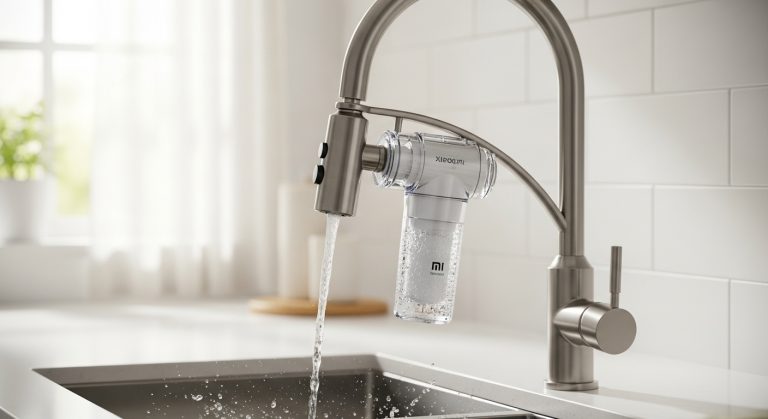
One more thing worth naming: brand fit. If you’re comparing ecosystem products, our review of the Xiaomi faucet water filter is a useful contrast — it shows how a smart-branded filter stacks up against a straightforward inline hose on cost-per-gallon and cartridge availability.
Faucet water filter hose vs. a whole-house filter — which is right?
Choose a faucet water filter hose when you only need clean water at one tap (usually the kitchen); choose a whole-house filter when you want every faucet, shower, and appliance protected from sediment and chlorine. They solve different problems and, honestly, many homes benefit from both.
A whole-house (point-of-entry) filter installs where water enters your home and treats everything — great for protecting your shower heads and washing machine from sediment. But it’s a real plumbing job and a bigger spend. A faucet hose filter is point-of-use: cheap, targeted, and perfect for the tap you actually drink from. If your only issue is drinking-water taste at the kitchen sink, don’t over-buy — the hose filter is the right tool. If rust is staining fixtures throughout the house, that’s a whole-house conversation.
FAQ
How often should I replace the filter cartridge?
Most inline cartridges last 2–6 months or 300–1,000 gallons, whichever comes first. Heavily chlorinated or sediment-rich water shortens that. The practical signals: noticeably slower flow, or the taste/smell you were filtering starts coming back. Mark the install date on the cartridge so you’re not guessing.
Does a faucet water filter hose remove hard water and limescale?
No. Standard carbon inline filters don’t remove dissolved calcium and magnesium, so you’ll still see white scale buildup on spouts and aerators. For hardness you need a water softener or a scale-inhibiting system. In the meantime, regular descaling keeps fixtures looking new — see our guide on removing hard water stains.
Is filtered water from an inline hose safe to drink right away?
Flush it first. New carbon cartridges release harmless carbon “fines” — the first water may look gray. Run cold water for 5–10 minutes (or per the manual) before drinking. After that flush, water certified to NSF/ANSI 42 is safe and pleasant for daily drinking and cooking.
Can I use a filter hose on my bathroom faucet, not just the kitchen?
Yes, as long as the fittings match your bathroom supply lines (often 3/8″ compression). Bathroom taps are lower-volume, so a cartridge can actually last longer there. It’s a nice upgrade if you fill glasses or brush teeth at the bathroom sink and dislike chlorine taste.
Will installing one void my faucet’s warranty?
Generally no — an inline hose filter connects to the supply line, not the faucet’s internal cartridge or valve, so it doesn’t alter the faucet itself. That said, always check your specific faucet manufacturer’s terms, and use a filter hose with proper washers and correct fittings so you never create a leak that could cause damage.
What’s the difference between a filter hose and a faucet-mount filter?
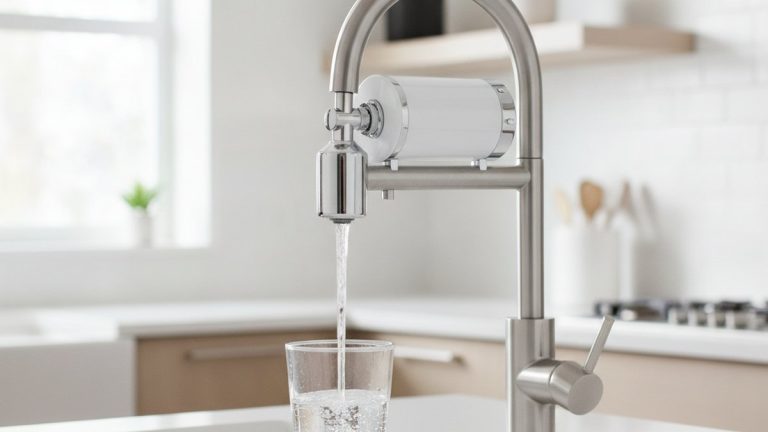
A filter hose hides under the sink and filters the whole supply line at full flow; a faucet-mount unit clamps onto the visible spout and often reduces flow when you switch it to “filter” mode. The hose is tidier and doesn’t clutter your spout, while the mount lets you toggle filtered vs. unfiltered water instantly. Both use carbon media; pick based on whether you value a clean look or on-demand toggling.
Author note: This guide was written by the Afinion Home fixtures team, drawing on hands-on testing of inline and point-of-use filters across hard-water and chlorinated municipal supplies. Afinion Home designs and sells faucets, shower heads, and filtration accessories, and every inline filter hose we ship is pressure-tested and backed by a limited warranty against manufacturing defects. We recommend confirming your local water report before buying so you match the filter to your actual water — taste and sediment problems and heavy-metal problems call for very different solutions.