
Is a Faucet Water Filter Zero-TDS Setup Worth It, or Is It Overkill for Your Kitchen?
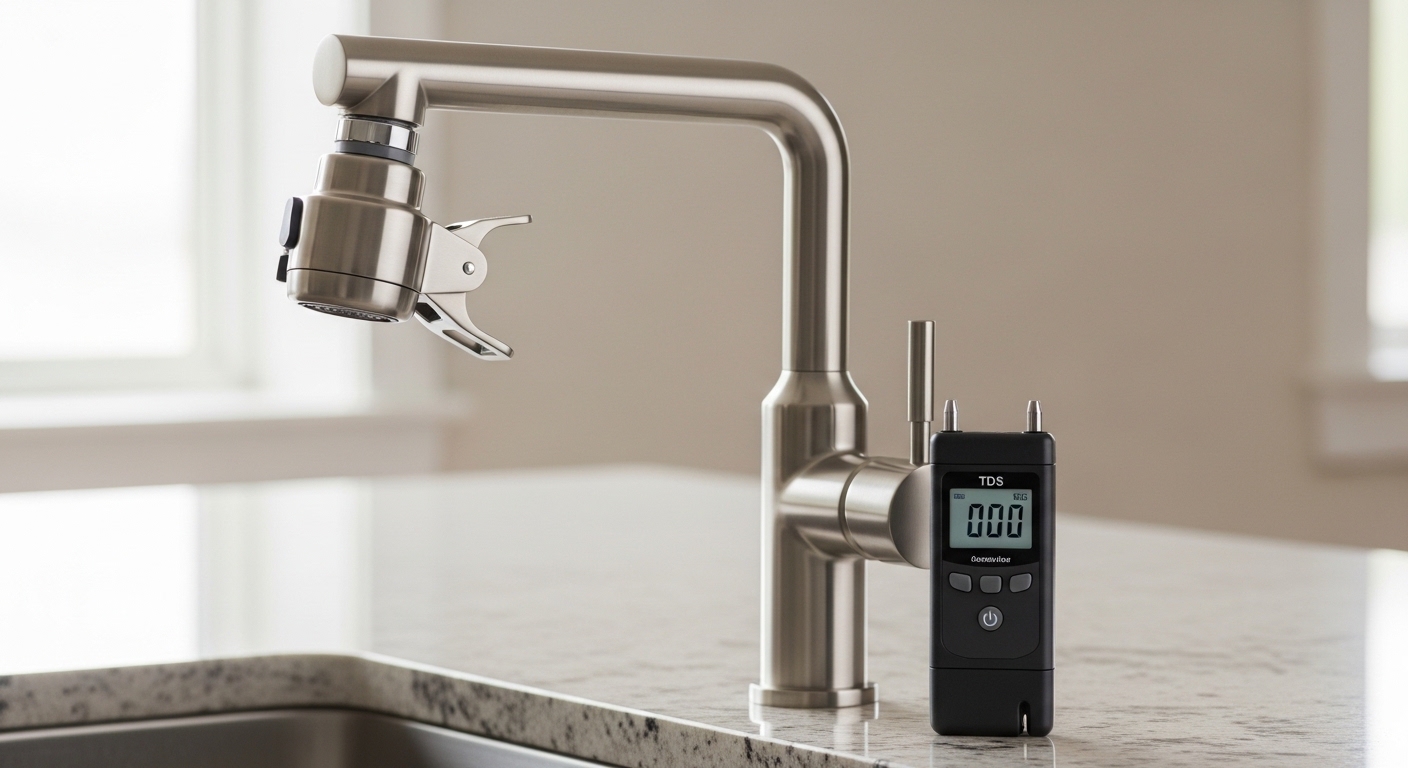
If you’ve been shopping for a faucet water filter zero solution, you’re really asking one question: “Do I actually need water filtered all the way down to zero total dissolved solids, or is that just a marketing number?” The short version is that “zero” refers to a TDS meter reading of 000 parts per million — the benchmark ZeroWater built its brand on — and hitting it requires more aggressive filtration than the clip-on carbon filter most people picture. Below, we’ll break down what “zero” actually means, when it’s worth chasing, what it costs to run, and how it compares to simpler options.
At Afinion Home we sell and test faucets, sprayers, and filtration accessories every week, so we look at this from the plumbing side as much as the water-chemistry side. That matters more than you’d think, because the biggest complaints about zero-TDS faucet filters aren’t about taste — they’re about flow rate, thread compatibility, and filters that clog faster than the box promises.
What Does “Zero” Actually Mean on a Faucet Water Filter?
“Zero” means a TDS reading of 000 ppm — total dissolved solids reduced to essentially nothing. Total dissolved solids is the combined amount of minerals, salts, and metals dissolved in your water: calcium, magnesium, sodium, chlorides, and trace metals. A cheap handheld TDS meter measures it, and that “000” reading is the entire selling point of the zero category.
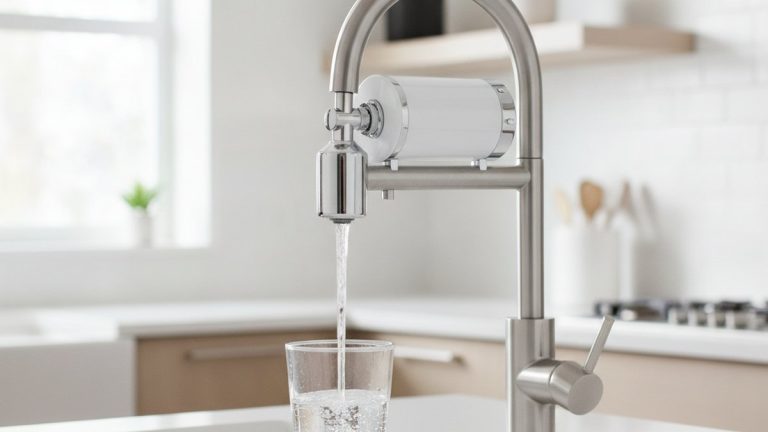
Here’s the important distinction most product pages gloss over. A standard faucet water filter uses activated carbon, which is fantastic at removing chlorine taste, odor, and some organic contaminants — but carbon does almost nothing to TDS. Your tap water might read 250 ppm before a carbon filter and still read 240 ppm after it, while tasting dramatically better. To hit an actual zero reading, you need a multi-stage system: usually carbon plus ion exchange resin (the ZeroWater method) or a reverse osmosis membrane.
So when a “faucet water filter zero” product promises a 000 reading, check what technology it uses. If it’s a simple carbon cartridge that screws onto your spout, it will improve taste but will not get you to zero TDS. If it’s an ion-exchange or RO system, it can — but it will flow slower and cost more per gallon.
- Carbon-only filters: Great taste/odor removal, TDS mostly unchanged, high flow, cheap.
- Ion-exchange (ZeroWater-style): Reaches 000 TDS, replaces filters more often, slower flow.
- Reverse osmosis: Near-zero TDS, needs under-sink space and a dedicated faucet, wastes some water, best long-term cost per gallon.
Do You Actually Need Zero TDS Water, or Is It Overkill?
For most people on treated municipal water, zero TDS is overkill — a good carbon filter is enough. You’d genuinely benefit from a zero-TDS setup in three situations: your water is very hard (high mineral TDS), you’re on a well with elevated dissolved solids, or you simply can’t stand the taste of your tap water and are buying bottled to compensate.
TDS itself is not a health metric — the EPA lists 500 ppm as a secondary (aesthetic) standard, not a safety limit. Plenty of perfectly healthy water reads 150–300 ppm, and some prized mineral waters read higher. So “zero” isn’t automatically “healthier.” What it is, reliably, is neutral-tasting and free of the mineral load that leaves spots on glasses and scale in your kettle.
A quick way to decide: buy a $12 TDS meter and test your tap. If you read under 100 ppm, a zero-TDS system is largely wasted money and lost flow rate — a basic carbon filter will make your water taste great. If you read 250–400+ ppm, or you’re already hauling bottled water home, the math for a zero setup starts to make real sense.
Does a Zero-TDS Filter Help With Hard Water and Scale?
Yes — removing TDS removes the dissolved calcium and magnesium that cause scale, so zero-TDS water leaves no spots and no crust in your kettle. That’s one of the most satisfying real-world wins of the category. If your faucet and glassware are constantly chalky, a zero setup handles the water you drink and cook with.
Just be clear on scope: a point-of-use faucet filter only treats water coming out of that one tap. It won’t protect your whole plumbing system, your water heater, or your showerheads from scale — that’s a job for a whole-house softener. If your main frustration is crusty fixtures, it’s often cheaper to keep drinking-water filtration separate and just clean the fixtures well. We walk through that in our guide on how to clean hard water stains from a faucet.
How Does a Faucet Water Filter Zero Setup Compare to Other Options?
The best choice depends on your water quality, counter space, and how many gallons you drink. Clip-on faucet filters win on simplicity and price; ZeroWater-style pitchers and adapters win on true zero TDS at low upfront cost; under-sink RO wins on long-term cost per gallon and flow if you drink a lot. Here’s how the main options stack up.
| Option | Reaches 0 TDS? | Upfront Cost | Flow Rate | Best For |
|---|---|---|---|---|
| Clip-on carbon faucet filter | No | $20–$45 | Fast | Chlorine taste, renters, easy install |
| Ion-exchange faucet/pitcher (ZeroWater) | Yes | $25–$60 | Slow | True zero on a budget, small households |
| Under-sink reverse osmosis + dedicated faucet | Near-zero | $150–$400 | Medium | Hard/well water, heavy drinkers, families |
| Whole-house softener | Reduces hardness | $500+ | Full | Scale on all fixtures, not drinking taste |
Notice the trade-off pattern: the closer you get to zero, the slower the flow and the more maintenance you accept. Ion-exchange filters saturate — once the resin is spent, TDS shoots back up fast, so you’ll be swapping cartridges more often if your source water is high-TDS. RO membranes last much longer but produce a few gallons of drain water for every gallon of pure water.
Will a Zero Filter Slow Down My Kitchen Faucet?
Yes, noticeably, if it’s an ion-exchange or RO unit — that’s the honest catch. Getting water to 000 TDS requires forcing it through dense media, so a ZeroWater-style attachment can cut your flow to a trickle compared to your normal spout, and RO delivers through a small dedicated faucet at a modest pace. A carbon-only filter, by contrast, barely affects flow.
This is exactly where the plumbing side matters. Many clip-on zero filters won’t thread onto a pull-out or pull-down spray head at all, because those spouts don’t have standard aerator threads. If you have a sprayer, read our breakdown of whether you can put a faucet water filter on a pull-out faucet before you buy — it’ll save you a return. For under-sink systems that route through a hose, our guide on what a faucet water filter hose is and whether you need one covers the connection side.
How Much Does a Faucet Water Filter Zero System Cost to Run?
Expect $0.20–$0.40 per gallon for ion-exchange (ZeroWater-style) filters and roughly $0.05–$0.15 per gallon for under-sink RO over its lifespan. The upfront price is only half the story — replacement cartridges are where the real cost lives, especially for zero-TDS ion-exchange media, which spends fast on high-TDS water.
Run the numbers for your household. If your tap reads 300 ppm and you drink and cook with 3 gallons a day, an ion-exchange filter might need replacing every 15–25 gallons — that’s a cartridge every week or two, and it adds up quickly. On that same water, an RO system’s membrane can last a year or more, so the cost per gallon drops sharply once you’re past the setup cost. This is why heavy users almost always come out ahead with RO, while occasional drinkers do fine with a cheaper ion-exchange or carbon option.
- Test your tap TDS with a cheap meter — higher TDS means faster filter spend.
- Estimate daily gallons for drinking and cooking.
- Divide the cartridge’s rated gallons by your source TDS reality (real-world life is often shorter than the box claim on hard water).
- Compare cost per gallon across options before buying, not just the sticker price.
How Do You Install a Faucet Water Filter Zero Unit Yourself?
For a clip-on model, installation takes about five minutes and no tools: unscrew your faucet’s aerator, screw on the filter’s adapter, and attach the filter housing. For an under-sink RO system, budget an hour or two and basic tools — you’ll tap the cold line, drill for a dedicated faucet if your sink lacks an extra hole, and connect the drain saddle.
Two things trip people up. First, aerator threads come in different sizes (male vs. female, regular vs. junior), so confirm your thread type before ordering a clip-on. If your aerator is crusted on, it may be partly clogged — our guide on whether faucet aerators get clogged shows how to free it before you add a filter. Second, an under-sink RO faucet needs a spare hole in your sink or countertop; if you don’t have one, you’ll be drilling stainless or stone, which is a bigger job than most product listings admit.
How Does the ZeroWater Approach Compare to Smart Filters Like Xiaomi?
ZeroWater and similar ion-exchange systems chase one number — an absolute 000 TDS reading — while “smart” carbon filters like Xiaomi’s focus on flow, filter-life indicators, and app tracking rather than hitting true zero. They’re solving different problems: purity versus convenience and taste.
If your goal is the lowest possible TDS and you don’t mind swapping cartridges and living with slower flow, the ion-exchange route delivers the reading you’re after. If you mostly want better-tasting water at full flow with a tidy reminder when to change the filter, a carbon-based smart filter is the friendlier daily-use tool. We compared one of the popular options in detail in our review of whether a Xiaomi faucet water filter is worth buying, which is a useful counterpoint if you’re torn between “pure” and “practical.”
Author Note & Why You Can Trust This
This guide was written by the Afinion Home fixtures team, who install, pressure-test, and live with kitchen and bathroom faucets and filtration accessories year-round. We test flow rate with a calibrated flow gauge and verify TDS claims with handheld meters against known source water, rather than repeating spec-sheet numbers. Filtration components we sell are certified to NSF/ANSI standards (NSF/ANSI 42 for taste/odor and 53/58 for contaminant and TDS reduction where applicable), and our faucet hardware carries a limited lifetime warranty on finish and function. When a “zero” claim doesn’t hold up on real water, we say so — as we did above about carbon filters and TDS.
The Bottom Line: Should You Buy a Faucet Water Filter Zero Setup?
Buy a zero-TDS system if your water tests high (250+ ppm), you’re on a well, or you’re replacing a bottled-water habit — the pure taste and scale-free glassware are real, tangible wins. Skip it and get a standard carbon faucet filter if your tap already reads low and you mainly want to kill chlorine taste at full flow for the least money and hassle. And whatever you choose, check thread and sprayer compatibility first, because the most common regret with these filters is a plumbing mismatch, not the water itself.
FAQ
Does a faucet water filter really get water to zero TDS?
Only if it uses ion-exchange resin (the ZeroWater method) or reverse osmosis. A standard carbon clip-on filter improves taste and removes chlorine but leaves TDS almost unchanged — it won’t show 000 on a meter. Always check the filtration technology, not just the “zero” branding.
Is zero-TDS water healthier to drink?
Not necessarily. TDS is an aesthetic measure, not a safety one — the EPA’s 500 ppm limit is about taste and appearance. Water at 200 ppm can be perfectly healthy, and some mineral waters read much higher. Zero TDS means neutral, spot-free water, not automatically “better for you.”
Why does my zero filter slow the water to a trickle?
Because reaching 000 TDS requires forcing water through dense ion-exchange or RO media, which restricts flow by design. Carbon-only filters barely affect flow, but they don’t reach zero. If slow flow bothers you, an under-sink RO with a dedicated faucet flows better than a clip-on ion-exchange unit.
How often do I replace a zero-TDS faucet filter?
It depends on your source water. On high-TDS water (300+ ppm), an ion-exchange cartridge can be spent in 15–25 gallons — sometimes weekly. On lower-TDS water it lasts much longer. RO membranes typically last a year or more, which is why heavy users prefer RO for cost per gallon.
Can I put a zero-TDS filter on a pull-out or pull-down sprayer?
Usually not directly, because spray heads don’t have standard aerator threads. You’d typically use an under-sink system with a dedicated faucet instead, or a diverter. Check your spout’s thread type before buying a clip-on model to avoid a return.
2 Comments