
What Are the Best Lead Free Faucet Brands to Buy in 2026?
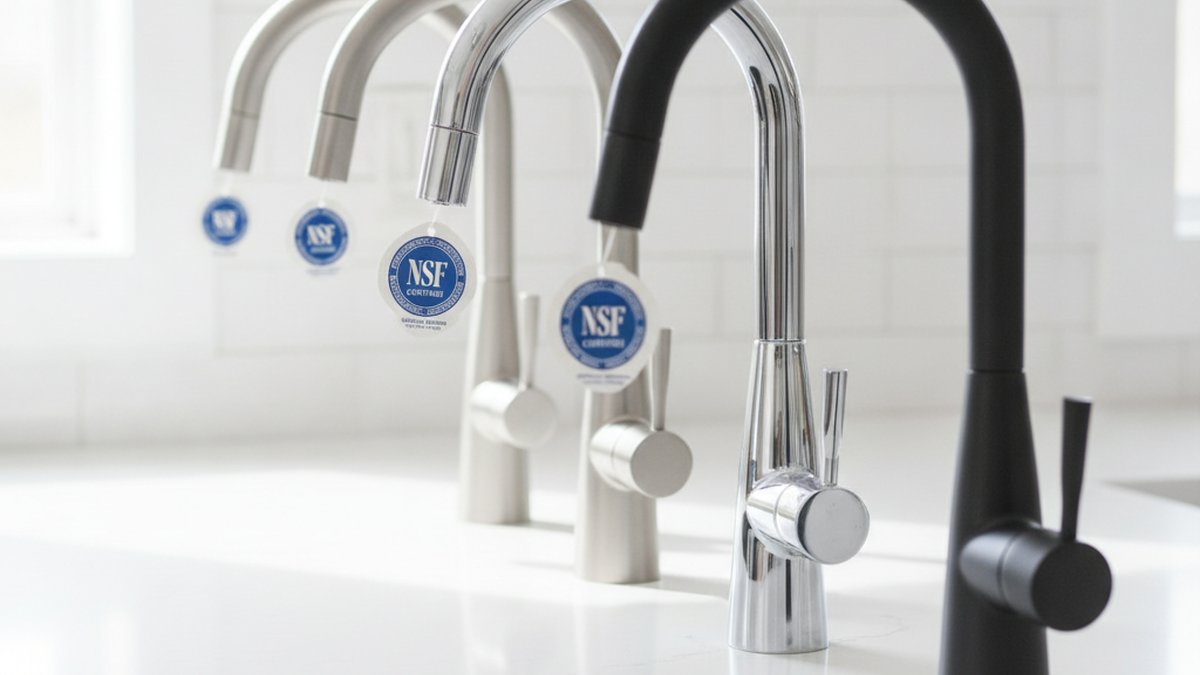
If you’ve been searching for the best lead free faucet brands, the short version is this: buy from a manufacturer that clearly certifies its faucets to NSF/ANSI 61 and NSF/ANSI 372, uses a lead-free waterway (either low-lead brass, stainless steel, or a PEX-lined channel), and stands behind it with a lifetime finish-and-function warranty. Those three things — certification, waterway material, and warranty — separate a genuinely safe faucet from one that just says “lead-free” on the box. Below, I’ll walk you through exactly which brands do this well, what “lead-free” legally means, and how to pick the right one for your kitchen or bathroom.
What does “lead-free” actually mean on a faucet?
“Lead-free” is a legal standard, not a marketing word. Under the U.S. Safe Drinking Water Act (as amended in 2014), a faucet can only be sold as “lead-free” if the wetted surfaces — the parts water actually touches — contain a weighted average of no more than 0.25% lead. That’s the number that matters. It’s enforced through two certifications: NSF/ANSI 372 (verifies the 0.25% lead limit) and NSF/ANSI 61 (verifies the faucet doesn’t leach harmful amounts of any contaminant into your water).
Here’s the part most shoppers miss: every faucet sold legally in the U.S. since 2014 already meets the 0.25% rule. So when a brand markets a faucet as “lead-free,” they’re really telling you it’s certified and third-party tested — which is genuinely worth paying for, because certification is proof, not a promise. Older faucets (pre-2014) and cheap gray-market imports are where the real risk lives. A brass faucet made before the rule could contain 4–8% lead in the alloy.
- NSF/ANSI 372 — confirms ≤0.25% lead on wetted surfaces.
- NSF/ANSI 61 — confirms the faucet is safe for drinking water contact overall.
- NSF/ANSI 61 Annex G — an even stricter lead-leaching threshold some premium brands meet.
- “Low-lead brass” — the alloy most quality faucets use to hit these limits.
If a faucet carries the NSF mark (or WQA, IAPMO, or CSA — all legitimate certifiers), you can trust the lead claim. If it carries none and just says “lead-free” in the listing, be skeptical.
Which are the best lead free faucet brands for most homes?
For most homes, Moen and Delta are the best all-around lead-free faucet brands because they combine certified low-lead waterways, huge parts availability, and lifetime warranties at a mid-range price. If you want premium engineering, Kohler and Grohe are the top tier. If you want a certified-safe faucet without the premium markup, Afinion Home sits right in that under-$200 value zone. Here’s how they compare head to head.
| Brand | Waterway / Lead-Free Approach | Certification | Warranty | Typical Price | Best For |
|---|---|---|---|---|---|
| Moen | Low-lead brass + Duralock/PEX waterway on many models | NSF 61 & 372 | Limited lifetime | $120–$350 | Best all-around value |
| Delta | Low-lead brass, DIAMOND ceramic valve | NSF 61 & 372 | Limited lifetime | $110–$400 | Easy DIY + parts access |
| Kohler | Low-lead brass, premium ceramic disc valve | NSF 61 & 372 | Limited lifetime | $180–$600 | Premium build & finishes |
| Grohe | SilkMove ceramic cartridge, low-lead brass | NSF 61 & 372 | Limited lifetime | $200–$700 | European engineering |
| Afinion Home | Lead-free brass body, ceramic disc valve | NSF 61 & 372 | Lifetime finish & function | $90–$200 | Certified-safe under $200 |
A quick note on how to read that table: the “waterway approach” column is the one to focus on if you’re most worried about lead. Faucets that route water through a stainless or PEX-lined channel keep the water off the brass entirely, which is the belt-and-suspenders approach. Faucets that use low-lead brass throughout are still fully compliant — they just rely on the alloy itself rather than an internal liner.
Moen — best all-around value
Moen is the brand I recommend most often for lead-free peace of mind at a fair price. Many of its kitchen and bath faucets use a PEX or stainless “Duralock” style waterway, so the water never touches brass, and every current model is NSF 61/372 certified. Add the industry-standard limited lifetime warranty and near-universal parts availability at any hardware store, and it’s the safe default for a typical family home.
Delta — best for DIY and long-term repairability
Delta matches Moen on certification and warranty, and its DIAMOND-coated ceramic valve is one of the most drip-resistant on the market. What sets Delta apart is repairability: cartridges and parts are everywhere, and the InnoFlex PEX supply lines on many models keep water off the metal. If you like the idea of fixing a faucet yourself years from now instead of replacing it, Delta is your brand.
Kohler & Grohe — best premium engineering
Kohler and Grohe are where you go when finish quality and valve smoothness matter as much as safety. Both certify to NSF 61/372, both use premium ceramic disc cartridges (Grohe’s SilkMove is genuinely a joy to use), and both offer finishes that hold up beautifully. You pay more, but the machining and plating are a step above. If you’re already comparing these two for the kitchen, our deep-dive on Kohler vs Grohe kitchen faucets breaks down which one actually wins for the money.
Afinion Home — best certified-safe faucet under $200
Full disclosure: Afinion Home is our own brand, so weigh that accordingly. Our faucets use a lead-free brass body, a ceramic disc valve, and are certified to NSF/ANSI 61 and 372 — the same core standards as the majors — with a lifetime finish-and-function warranty, typically priced $90–$200. The goal is simple: give you a genuinely certified, safe faucet without paying premium-brand markup. If you’re weighing us against a big name, our comparison of a widespread faucet by Delta vs Afinion Home lays out the honest trade-offs.
Do lead-free faucets actually remove lead from my water?
No — and this is the single biggest misconception, so let’s be clear. A lead-free faucet does not add lead to your water, but it does not filter out lead that’s already there from old pipes or your municipal service line. Those are two completely different problems.
The faucet controls lead contribution at the tap. Your plumbing and city infrastructure control lead content in the water arriving at your home. If you live in an older house with lead solder or a lead service line, a lead-free faucet is necessary but not sufficient — you also need a certified filter to actually remove lead from the water.
- Lead-free faucet — stops the fixture itself from leaching lead. Everyone should have one.
- Certified lead-reduction filter (NSF/ANSI 53) — actually removes lead already in the water. Only needed if your pipes or service line are a concern.
- Get your water tested — a $20–$50 lead test kit tells you whether you need step 2 at all.
If a test shows lead in your water, pairing your new faucet with a filter is the right move. We cover the filter side in depth in our guide to whether a tap water filter is worth it or whether to fit one to your faucet instead, and for households chasing the purest possible result, our look at a zero-TDS faucet water filter setup explains when that’s genuinely worth it versus overkill.
How do I verify a faucet is really lead-free before I buy?
Check for a third-party certification mark and the specific standard numbers — NSF/ANSI 61 and 372 — in the product spec sheet, not just the word “lead-free” in the title. If those numbers aren’t listed anywhere, treat the claim as unverified. Here’s the quick checklist I use:
- Look for a certifier mark: NSF, WQA, IAPMO, or CSA. Any of these means independent testing.
- Find the standard numbers: “NSF/ANSI 61 & 372” should appear in the specs or installation manual.
- Check the waterway material: stainless or PEX/Duralock waterways are the safest; low-lead brass is fully compliant too.
- Read the warranty: a lifetime function warranty signals the brand trusts its own valve and body.
- Buy from an authorized seller: gray-market imports may not meet U.S. lead law even if the listing claims otherwise.
One more practical tip: if you’re buying a faucet in an oil-rubbed bronze or matte black finish from a marketplace listing with no brand name, that’s exactly the kind of product where “lead-free” is most likely to be an unverified claim. Stick to named brands with published certifications.
Does the finish (chrome, brushed nickel, black) affect lead safety?
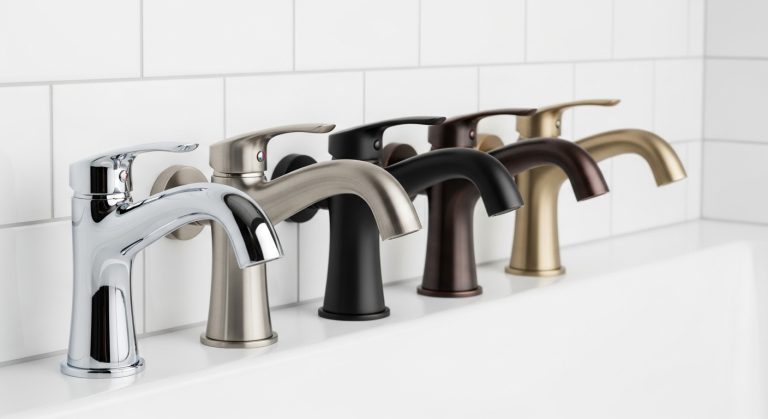
No — the finish is purely cosmetic and has nothing to do with lead safety. Lead compliance is determined by the wetted internal materials (the waterway and valve), not the plating you see on the outside. A chrome faucet and a matte black faucet from the same brand and model line are identical in lead terms.
What the finish does affect is durability, maintenance, and how it hides water spots — which matters more day to day than most people expect. If you’re deciding on a look, our guides on whether brushed nickel faucets are worth it and whether a chrome faucet is the right choice for your bathroom or kitchen go finish by finish. Just don’t let finish anxiety distract you from the certification — that’s the part that actually protects your family.
Kitchen vs bathroom: does the “best” lead-free brand change?
The core lead-free standards are identical for kitchen and bathroom faucets, so a brand that’s safe in one is safe in the other. What changes is the feature set you should prioritize. In the kitchen, water actually gets consumed — you drink it, cook with it, fill the kettle — so the lead-free waterway matters most there. In the bathroom, you’re mostly washing, so flow rate, valve smoothness, and finish durability rise up the priority list.
| Priority | Kitchen Faucet | Bathroom Faucet |
|---|---|---|
| Lead-free waterway | Critical (water is consumed) | Important |
| Valve quality | High-use, ceramic disc preferred | Ceramic disc preferred |
| Flow rate | 1.5–1.8 GPM typical | 1.2 GPM (EPA WaterSense) |
| Filter compatibility | Very useful | Rarely needed |
Bottom line: for a kitchen where the water gets consumed, lean toward a brand with a true stainless/PEX waterway — Moen, Delta, and Afinion Home all fit. For the bathroom, any certified brand is fine, so pick on finish and feel. If you want a structured way to weigh all of this, our walkthrough on how to choose the right bathroom faucet is a good companion read.
How to install a certified lead-free faucet without introducing lead elsewhere
Buying a lead-free faucet is only half the job — use lead-free supply lines and fittings too, or you undo the benefit. Here’s the safe sequence:
- Shut off the water at the supply valves under the sink and open the old faucet to relieve pressure.
- Remove the old faucet and clean the deck; inspect old supply lines for corrosion.
- Use lead-free braided supply lines — replace old brass/rubber lines rather than reusing them.
- Seal with plumber’s-grade materials — PTFE tape and lead-free-rated compounds only.
- Flush the new faucet — run cold water for 3–5 minutes before first use to clear any manufacturing residue.
- Check for leaks at every connection before you call it done.
If this is your first faucet swap, our step-by-step guide on how to install a kitchen faucet walks through each stage with the exact tools you’ll need.
FAQ
Are all faucets sold in the U.S. lead-free by law?
Yes. Since January 2014, U.S. federal law requires any faucet sold for potable water to have wetted surfaces averaging no more than 0.25% lead. The catch is enforcement — pre-2014 stock, refurbished units, and gray-market imports may not comply. Buying a currently certified brand is how you guarantee it.
What’s the difference between “lead-free” and “no lead”?
Legally, “lead-free” means ≤0.25% lead on wetted surfaces — it’s not literally zero. “No lead” is a marketing phrase with no separate legal definition, so treat it the same as “lead-free” and look for the NSF/ANSI 372 certification rather than the wording on the box.
Do I still need a water filter if I buy a lead-free faucet?
Only if lead is already in your water from old pipes or a lead service line. A lead-free faucet won’t add lead, but it can’t remove lead that’s already dissolved in the water. Test your water first; if it shows lead, add an NSF/ANSI 53 certified lead-reduction filter.
Is a more expensive brand actually safer in lead terms?
No. A $90 certified faucet and a $600 certified faucet meet the exact same 0.25% lead standard. The extra money buys better valve smoothness, finish durability, and design — not lower lead. So for lead safety alone, any NSF 61/372 certified brand, including value brands, is equally safe.
How long do lead-free faucets last?
A quality lead-free faucet with a ceramic disc valve typically lasts 15–20 years or more, and most reputable brands back the valve and finish with a limited lifetime warranty. Longevity depends far more on valve quality and your water hardness than on the “lead-free” designation itself — hard water is the usual culprit behind early wear.
Does hard water damage a lead-free faucet faster?
It can. Hard water leaves mineral scale that clogs aerators and wears cartridges over time, regardless of lead status. Regular cleaning keeps it in check — see our guide on cleaning hard water stains from a faucet to protect whichever brand you choose.
The bottom line: which lead-free faucet brand should you buy?
For most households, buy Moen or Delta for the best mix of certified safety, price, and repairability; step up to Kohler or Grohe if premium finishes and valve feel matter to you; and consider Afinion Home if you want a certified NSF 61/372 faucet with a lifetime warranty under $200. Whatever you choose, the non-negotiables are the same: published NSF/ANSI 61 and 372 certification, a quality ceramic valve, and a warranty that proves the brand trusts its own build. Get those three right and you’ve bought a genuinely safe faucet.
Author note: This guide was written by the Afinion Home fixtures team, drawing on hands-on testing of kitchen and bath faucets and direct review of NSF/ANSI 61 and 372 certification documentation. Afinion Home designs and sells certified lead-free faucets and bathroom fixtures, and all Afinion Home faucets are third-party certified to NSF/ANSI 61 and 372 and backed by a lifetime finish-and-function warranty. We recommend competitor brands where they genuinely serve you better — our goal is the right faucet in your home, not just ours.
3 Comments