Where Can You Find a Faucet Water Filter Nearby, and Which One Should You Actually Buy?
If you’ve searched “faucet water filter nearby,” you’re probably standing in your kitchen right now looking at cloudy tap water or a cartridge that finally quit — and you want a replacement today, not in five business days. The good news: a faucet water filter is one of the easiest water-treatment products to buy locally, and you rarely need to order online. The catch is that grabbing the first box on the shelf leads to a lot of returns, because roughly a third of modern kitchen faucets physically can’t accept a screw-on filter. Below is exactly where to buy one near you, how to know it’ll fit before you leave the house, and how to pick the right filter for your actual water problem — chlorine taste, lead, or hard-water scale.
At Afinion Home, we sell and test faucets and water-treatment fixtures every day, so we field this question constantly. Here’s the honest, plain-English version we’d give a friend.
Where can I buy a faucet water filter near me today?
The fastest local sources are big-box home improvement stores, general retailers, and hardware stores — and all of them stock the two or three national brands that fit standard faucets. If you want something in your hands within the hour, here’s where to look and what to expect.
- Home Depot & Lowe’s — the deepest selection. Look in the plumbing aisle near the sink parts, not the small-appliance aisle. Expect faucet-mount units from $25–$45 and replacement cartridges stocked right beside them.
- Target & Walmart — reliable for the mainstream faucet-mount brands and pitchers. Filters live in housewares or kitchen storage, sometimes near coffee makers.
- Ace Hardware, True Value, and local hardware stores — smaller selection but genuinely helpful staff, and they often carry the exact replacement cartridge you need without a special order.
- Grocery & drugstores (Kroger, Walgreens, CVS) — usually only pitcher-style filters and a single faucet-mount option. Fine in a pinch, thin on choice.
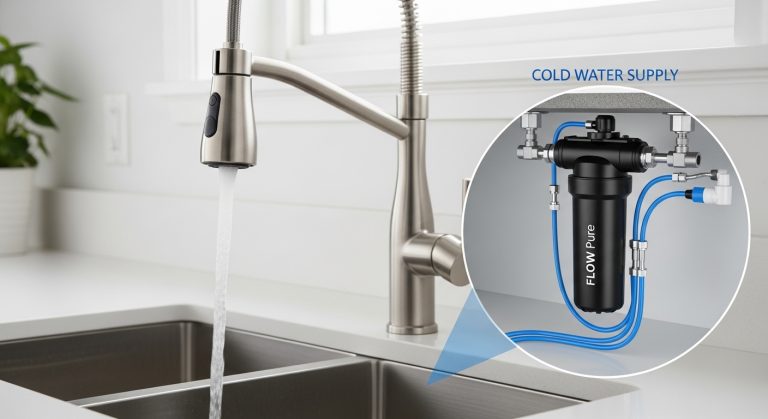
- Plumbing supply houses — best for under-sink systems and higher-flow options if you’ve decided a faucet-mount unit isn’t enough.
Before you drive anywhere, call ahead or check the store’s website for local inventory — most big-box sites show real-time stock for your specific store. That five-minute check is the difference between a quick errand and a wasted trip. If your search is really about a broader tap-filter decision rather than a specific product, our guide on whether faucet water filters are worth it versus just buying bottled water is a good gut-check before you spend anything.
Will a store-bought faucet water filter fit my faucet?
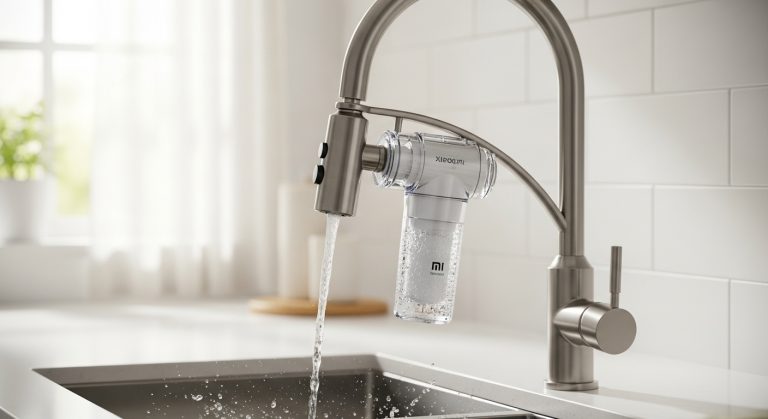
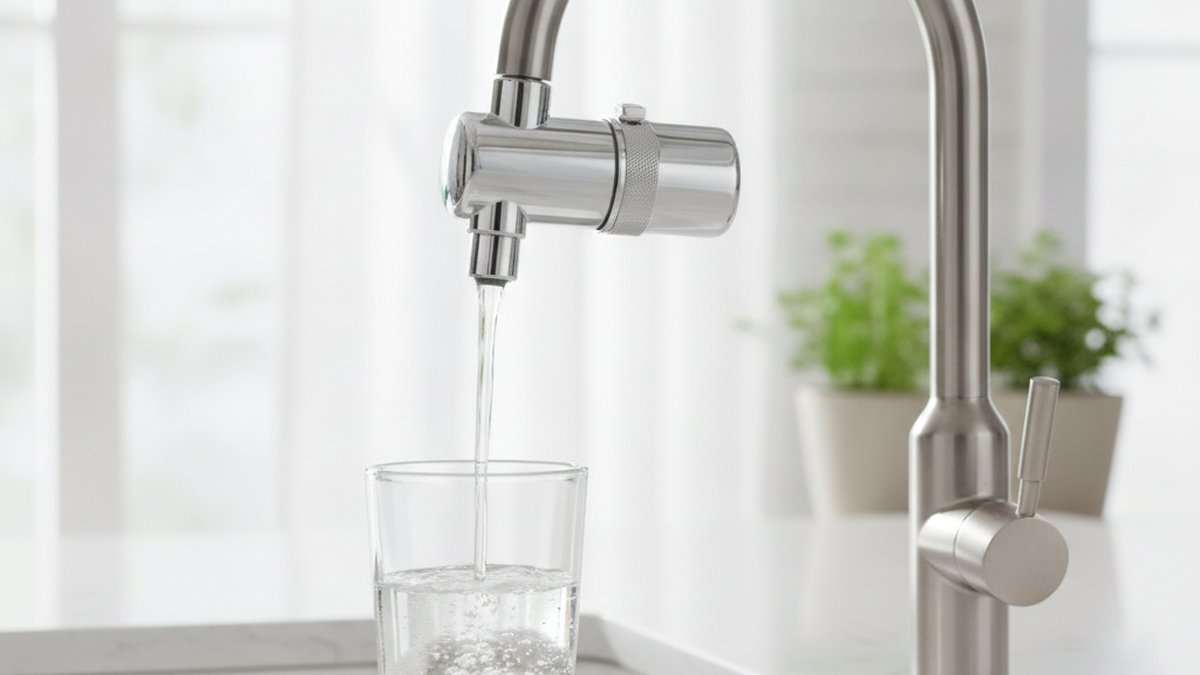
A screw-on faucet water filter only fits a faucet with a standard, threaded spout tip — which rules out most pull-down and pull-out sprayers. This is the single most important thing to confirm, and it’s why so many locally bought filters get returned.
Here’s the quick test. Unscrew your existing aerator (the little mesh insert at the tip of your spout) with your fingers or gently with pliers. If it threads off cleanly and the spout tip is a plain round threaded end, a standard faucet-mount filter will almost certainly attach. If your faucet has a sprayer head that pulls out, a hose, a spray/stream toggle button on the head, or a squared/decorative tip, a screw-on filter generally will not fit.
Faucet threads come in two common sizes — regular and junior — and quality filters ship with adapters for both, plus male and female fittings. So the fit question is rarely about thread size; it’s about whether your faucet has a threaded tip at all. If you’ve got a pull-out sprayer, don’t give up — read our walkthrough on fitting a faucet water filter for a pull-out faucet, because there are inline and under-sink workarounds that do the job. And if you’re unsure how the aerator even comes apart, our piece on whether faucet aerators get clogged shows exactly what that part looks like and how it unscrews.
Faucet-mount vs. pitcher vs. under-sink: which type should I buy?
For most people, a faucet-mount filter is the best value for chlorine, taste, and odor — but if you’re treating lead or want zero effort at the tap, an under-sink or reverse-osmosis system is worth the extra cost. Your choice comes down to what’s actually wrong with your water and how much you want to spend.
| Type | Typical price | Best for | Downsides |
|---|---|---|---|
| Faucet-mount | $20–$60 + cartridges | Chlorine, taste/odor, some lead & sediment; renters; fast local buy | Slows flow; won’t fit sprayer faucets; visible on spout |
| Pitcher / dispenser | $25–$50 | Small households, no installation, drinking water only | Slow, low capacity, frequent refills |
| Under-sink carbon | $80–$200 | Higher flow, hidden, whole-kitchen tap treatment | Needs install; takes cabinet space |
| Reverse osmosis (RO) | $200–$500 | Lead, fluoride, TDS, the widest contaminant range | Wastes some water; slower; pricier cartridges |
The honest recommendation: if your water tastes like a swimming pool (that’s chlorine) and you rent or just want something today, buy a faucet-mount unit locally. If a water report flags lead or your goal is near-zero dissolved solids, step up to under-sink or RO. We break the mineral-removal end of this down in our look at whether a zero-TDS faucet water filter setup is genuinely useful or overkill for a normal kitchen.
What should I look for on the box before I buy?
Check the box for an NSF/ANSI certification number that matches your specific problem — that’s the only claim that’s independently verified, and it’s printed right on the packaging. Marketing words like “purifies” or “advanced” mean nothing without it.
Here’s the shorthand for what those numbers actually cover:
- NSF/ANSI 42 — chlorine, taste, and odor (the reason most people buy a filter).
- NSF/ANSI 53 — health contaminants like lead, cysts, and certain VOCs. Look for this if lead is your concern.
- NSF/ANSI 401 — “emerging contaminants” such as some pharmaceuticals and pesticides.
- NSF/ANSI 58 — reverse osmosis performance specifically.
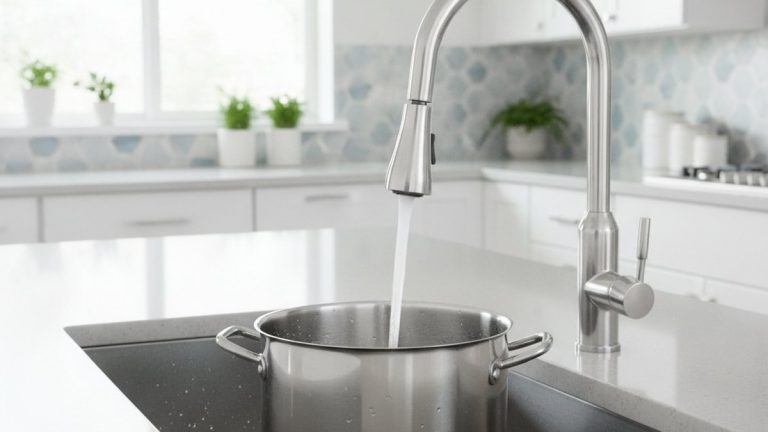
Also read two easy-to-miss specs. First, rated capacity — how many gallons the cartridge lasts (100 gallons is roughly 2–3 months for a typical household; 200+ is better value). Second, flow rate — faucet-mount filters slow your water down, usually to around 0.5–1.0 gallons per minute, which is fine for a drinking glass but noticeably slower for filling a pot. If someone in the home is concerned about lead specifically, it’s worth pairing a certified filter with lead-safe hardware; our roundup of the best lead-free faucet brands explains why the faucet itself matters as much as the filter.
How much should a faucet water filter and its cartridges cost?
Expect to pay $20–$60 for the faucet-mount unit itself and $15–$40 for replacement cartridges every 2–3 months — so the real annual cost is usually $60–$120, mostly in cartridges, not the initial device. The upfront sticker price is the cheap part; the cartridges are where your money actually goes over time.
A quick way to compare value on the shelf: divide the cartridge price by its rated gallon capacity to get cost per gallon. A $25 cartridge rated for 100 gallons costs $0.25/gallon; a $30 cartridge rated for 200 gallons costs $0.15/gallon and is the better deal even though it’s pricier on the tag. That single bit of math beats brand loyalty almost every time.
Also budget for reality: nearly everyone forgets to change cartridges on schedule, and an overdue carbon filter can actually make taste worse and harbor bacteria. Set a phone reminder, or buy a unit with a built-in change-indicator light. If you’re weighing this against a pricier built-in solution, our comparison of pitcher-versus-tap options in our tap water filter buying breakdown walks through the same cost-per-use logic.
Is it worth buying locally, or should I just order online?
Buy the initial faucet-mount unit locally when you need it now or want to confirm the box’s fit and certifications by hand — but order replacement cartridges online on a subscription, because that’s where local stores mark up the most and run out of stock. Local wins on speed and certainty; online wins on ongoing price and never running dry.
There’s one more local advantage worth naming: returns. If you get the filter home and discover your faucet won’t accept it, walking it back to a nearby store is painless compared with repackaging and mailing it. Given how common fit problems are, buying your first unit within driving distance is genuinely the smart move — then switch to online auto-delivery for cartridges once you know the model works on your faucet.
How do I install a faucet water filter once I’ve bought it?
Installing a faucet-mount filter takes about 5 minutes with no tools: unscrew your aerator, choose the adapter that matches your thread, screw the filter housing on hand-tight, then run water for a few minutes to flush the new cartridge. That’s the entire job for the common screw-on style.
The one place people go wrong is over-tightening — hand-tight plus a gentle snug is enough; cranking it with pliers cracks plastic threads and causes leaks. If the connection drips, back it off, check that the rubber washer seated flat, and try again. For a step-by-step with photos and the pull-out-faucet edge cases, follow our full guide on how to install a faucet water filter yourself in under 15 minutes. And if your slow water turned out to be a clogged aerator rather than a filter need, our fix for a clogged sink aerator may save you the purchase entirely.
FAQ
Does Home Depot or Lowe’s have faucet water filters in stock right now?
Both stock faucet-mount filters and replacement cartridges in the plumbing aisle year-round, but exact models vary by location. Check the store’s website for your local inventory before driving over — both retailers show real-time per-store stock, so you can confirm the specific unit is on the shelf.
Can I put a faucet water filter on any faucet?
No — a screw-on faucet filter only fits faucets with a standard threaded spout tip, which means most pull-out and pull-down sprayer faucets won’t work with one. Unscrew your aerator first: if it threads off cleanly, a faucet-mount filter will fit. If you have a sprayer, use an inline or under-sink filter instead.
How often do I need to replace the filter cartridge?
Most faucet-mount cartridges last 100–200 gallons, which is roughly every 2–3 months for an average household. Replace on schedule even if the water still tastes fine — an overdue carbon cartridge can stop working and even worsen taste. Many units include a change-indicator light to take the guesswork out.
Do faucet water filters remove lead?
Only filters certified to NSF/ANSI 53 for lead reduction are verified to remove it — a basic taste-and-odor filter (NSF/ANSI 42) does not. Read the box carefully and match the certification to your concern. If lead is a real worry, a reverse-osmosis system (NSF/ANSI 58) removes the widest range.
Will a faucet water filter slow down my water pressure?
Yes, somewhat — faucet-mount filters typically drop flow to about 0.5–1.0 gallons per minute, which is unnoticeable for filling a glass but slower when filling a pot. If flow really bothers you, an under-sink filter maintains near-normal pressure because the cartridge is larger and less restrictive.
Is a cheaper store-brand faucet filter as good as a name brand?
It can be, as long as it carries the same NSF/ANSI certifications for the contaminants you care about — certification, not brand, is what’s independently verified. Compare cost per gallon (cartridge price ÷ rated capacity) rather than the sticker price, and make sure replacement cartridges are easy to find locally.
Author note: This guide was written by the Afinion Home fixtures team, who specialize in faucets, sinks, and water-treatment fixtures. Afinion Home tests faucet-mount and under-sink filters against real household water conditions and backs its own fixtures with a manufacturer warranty. We reference NSF/ANSI 42, 53, 58, and 401 standards throughout because independent certification — not marketing language — is the only reliable measure of what a filter actually removes. Always confirm the certification on the box matches your specific water concern.